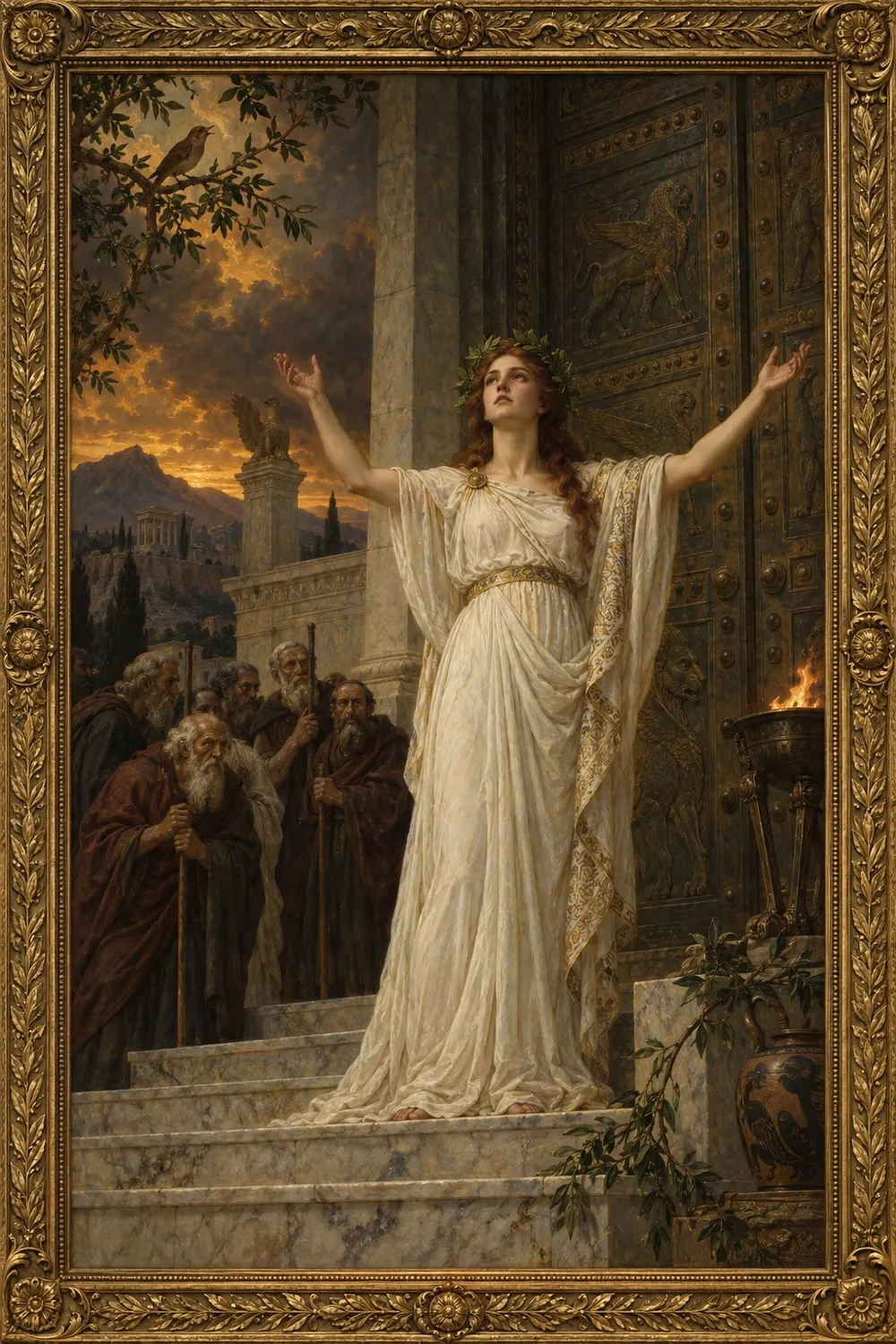
Cassandra's last prophecy at Argos
A Fragment from the Agamemnon of Aeschylos
"O my poor land laid waste with flame and fire!"
Poem
Lines 1140–1173
The scene is the court-yard of the Palace at Argos. Agamemnon has already entered the House of Doom, and Clytemnestra has followed close on his heels. Cassandra is left alone upon the stage. The conscious terror of death and the burden of prophecy lie heavy upon her; terrible signs and visions greet her approach. She sees blood upon the lintel, and the smell of blood scares her, as some bird, from the door. The ghosts of the murdered children come to mourn with her. Her second sight pierces the Palace walls; she sees the fatal bath, the trammelling net, and the axe sharpened for her own ruin and her lord’s.
But not even in the hour of her last anguish is Apollo merciful; her warnings are unheeded, her prophetic utterances made mock of.
The orchestra is filled with a chorus of old men weak, foolish, irresolute. They do not believe the weird woman of mystery till the hour for help is past, and the cry of Agamemnon echoes from the house, “Oh me! I am stricken with a stroke of death.”
Chorus
Thy prophecies are but a lying tale,For cruel gods have brought thee to this state,And of thyself and thine own wretched fateSing you this song and these unhallowed lays,Like the brown bird of grief insatiateCrying for sorrow of its dreary days;Crying for Itys, Itys, in the vale—The nightingale! The nightingale!
Cassandra
Yet I would that to me they had givenThe fate of that singer so clear,Fleet wings to fly up unto heaven,Away from all mourning and fear;For ruin and slaughter await me-—the cleaving with sword and the spear.
Chorus
Whence come these crowding fancies on thy brain,Sent by some god it may be, yet for naught?Why dost thou sing with evil-tongued refrain,Moulding thy terrors to this hideous strainWith shrill, sad cries, as if by death distraught?Why dost thou tread that path of prophecy,Where, upon either hand,Landmarks for ever standWith horrid legend for all men to see?
Cassandra
O bitter bridegroom who didst bearRuin to those that loved thee true!O holy stream Scamander, whereWith gentle nurturement I grewIn the first days, when life and love were new.
And now—and now—it seems that I must lieIn the dark land that never sees the sun;Sing my sad songs of fruitless prophecyBy the black stream Cokytos that doth runThrough long, low hills of dreary Acheron.
Chorus
Ah, but thy word is clear!Even a child among men,Even a child might seeWhat is lying hidden here.Ah! I am smitten deepTo the heart with a deadly blowAt the evil fate of the maid,At the cry of her song of woe!Sorrows for her to bear!Wonders for me to hear!
Cassandra
O my poor land laid waste with flame and fire!O ruined city overthrown by fate!Ah, what availed the offerings of my SireTo keep the foreign foemen from the gate!Ah, what availed the herds of pasturing kineTo save my country from the wrath divine!
Ah, neither prayer nor priest availèd aught,Nor the strong captains that so stoutly fought,For the tall town lies desolate and low.And I, the singer of this song of woe,Know, by the fire burning in my brain,That Death, the healer of all earthly pain,Is close at hand! I will not shirk the blow.
In brief
SummaryAn English version of lines 1140 to 1173 of the Agamemnon of Aeschylos, introduced by a prose note. Agamemnon has gone into the palace at Argos with Clytemnestra behind him, and Cassandra, left alone outside, sees visions of blood, of murdered children, and of the bath, the net and the axe that await her and her lord. In the verse the old men of the Chorus dismiss her prophecies and liken her to the grieving nightingale. Cassandra wishes for the bird's wings, mourns the Scamander of her childhood and her ruined city, and faces the death she knows is near.
Key themes
"The nightingale! The nightingale!"
Related works
Explore more of Wilde's writing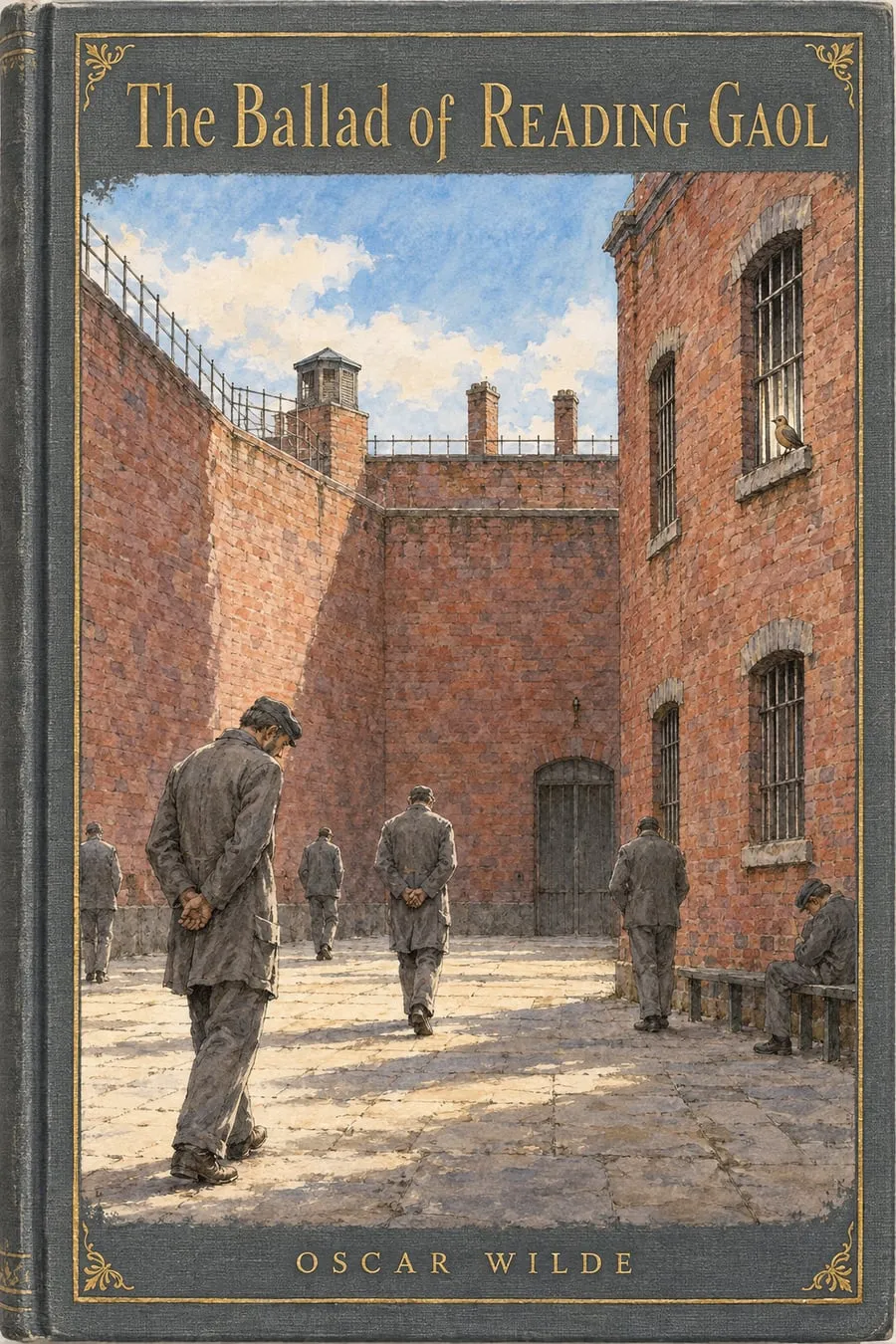 The Ballad of Reading GaolWritten after his release from prison, a long ballad about the hanging of a fellow prisoner, a trooper who had killed his wife. Wilde's last work, and his most read poem.Read more
 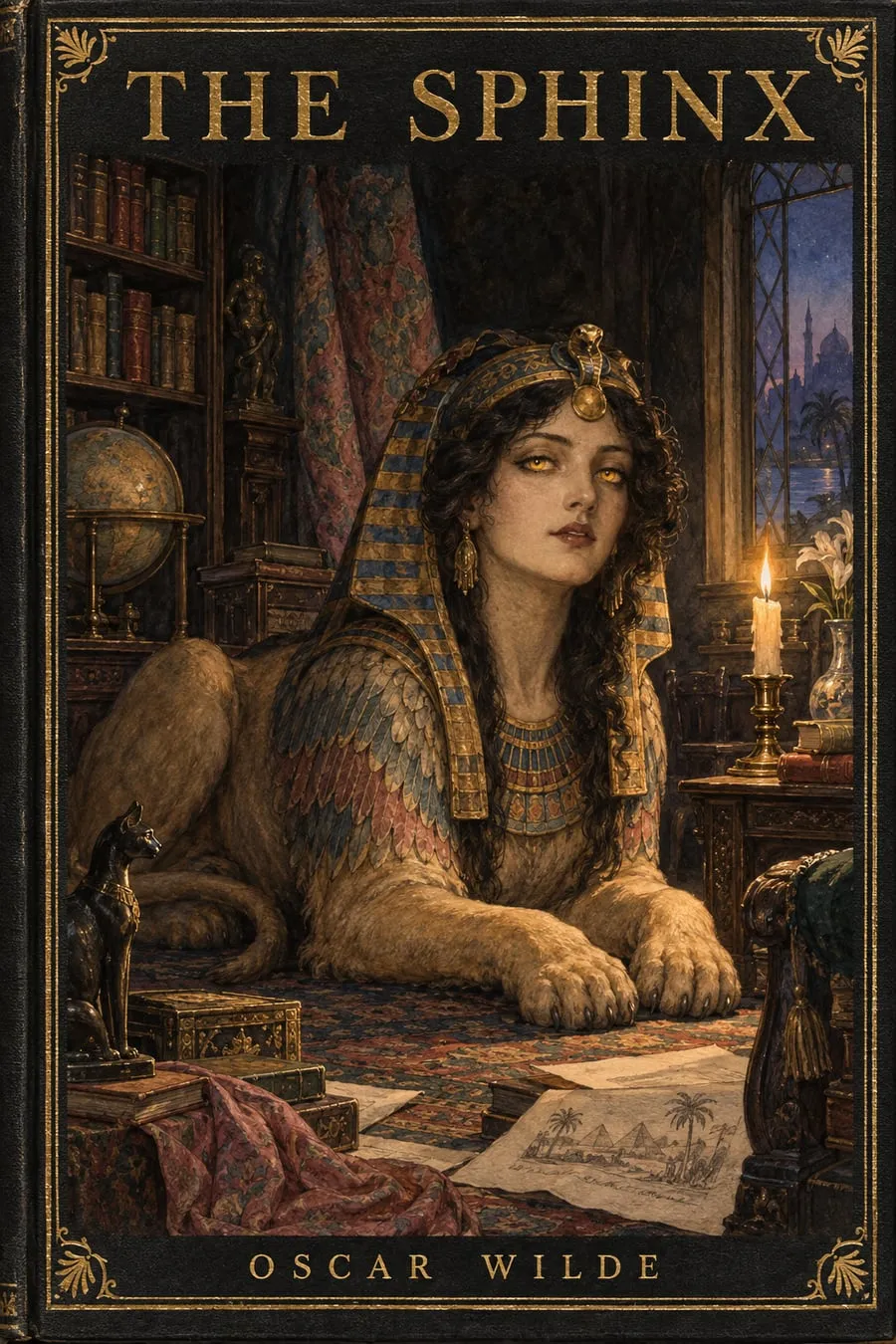 The SphinxA student in his room questions the ancient sphinx that has watched from its corner for a thousand years, and is frightened by what she knows.Read more
  Chorus of Cloud MaidensRead more
 Summary
A prose introduction sets the scene in the courtyard of the palace at Argos. Agamemnon has entered 'the House of Doom', Clytemnestra has followed, and Cassandra is left alone, weighed down by 'The conscious terror of death and the burden of prophecy'. She sees blood on the lintel and the ghosts of murdered children, and through the walls 'the fatal bath, the trammelling net, and the axe' sharpened for her and her lord. Apollo shows her no mercy: her warnings are mocked, and the Chorus of old men, 'weak, foolish, irresolute', believe her only when Agamemnon's death-cry rings from the house.
In the verse the Chorus call her prophecies 'a lying tale' and compare her song to the nightingale 'Crying for Itys, Itys, in the vale'. Cassandra answers that she wishes she had that singer's fate, 'Fleet wings to fly up unto heaven', for sword and spear await her. The Chorus ask why she sings with such 'evil-tongued refrain'. She cries out to the 'bitter bridegroom' who brought ruin to those who loved him, and to the 'holy stream Scamander' where she grew up, and foresees singing her 'fruitless prophecy' by Cokytos in the land of the dead.
Now the Chorus begin to understand: 'Ah, but thy word is clear!', they say, and they are 'smitten deep' by her fate. Cassandra mourns her land laid waste and her city 'overthrown by fate'; neither her father's offerings, nor priests, nor 'the strong captains' could save it. She ends knowing that Death, 'the healer of all earthly pain', is close, and declares: 'I will not shirk the blow.'
Characters
Cassandra
The unheeded prophetess
Left alone before the palace at Argos, she sees in visions the blood, the murdered children and the axe waiting for her and her lord. Apollo shows her no mercy, and no one believes her. She mourns her ruined homeland and the Scamander of her childhood, and meets death with resolve.
The Chorus
The doubting old men
A chorus of old men whom the introduction calls 'weak, foolish, irresolute'. They first dismiss Cassandra's prophecies as 'a lying tale', then question her, and at last admit 'thy word is clear' and are struck to the heart, but only when it is too late to help.
Agamemnon
The doomed king
Cassandra's lord, who has already entered the palace, 'the House of Doom', with Clytemnestra close behind him when the scene begins. He does not speak in the verse, but the introduction tells how his cry, 'Oh me! I am stricken with a stroke of death', echoes from the house.
Themes
Prophecy unheeded
The introduction states the tragedy plainly: Cassandra's 'warnings are unheeded, her prophetic utterances made mock of', and the Chorus believe her only 'till the hour for help is past'. Their first words are 'Thy prophecies are but a lying tale'. She calls her own songs 'fruitless prophecy', and even when the Chorus admit 'thy word is clear', nothing can be done.
The nightingale and the wish for flight
The Chorus compare Cassandra to 'the brown bird of grief insatiate', the nightingale 'Crying for Itys, Itys, in the vale'. She takes up the image and turns it: she would welcome that singer's fate, 'Fleet wings to fly up unto heaven, / Away from all mourning and fear'. The bird of endless mourning becomes, for her, a bird that can escape, which is exactly what she cannot do.
Courage before death
Cassandra's last speech moves from lament to acceptance. After mourning that 'the tall town lies desolate and low', she names Death 'the healer of all earthly pain' and faces it without flinching: 'I will not shirk the blow.' Her steadiness contrasts with the old men of the Chorus, who are 'smitten deep' and can do nothing.
Context
The title and subtitle identify the poem as a passage from the Agamemnon of Aeschylos, lines 1140 to 1173, rendered in English verse. It is preceded by a prose introduction that sets the scene, sums up the action around the passage and quotes Agamemnon's death-cry. The dialogue alternates between the Chorus and Cassandra, and the rhymed English stanzas change their length and metre from speech to speech.
About this edition
- Text: the complete work from Standard Ebooks, released into the public domain (CC0 1.0). We change only the layout.
- Download the EPUB of the whole book it comes from, free, for any e-reader.
- Every quotation and glossary word in these notes is checked against the text.