A parting between beauty and art
Her Voice
"One world was not enough for two"
Poem
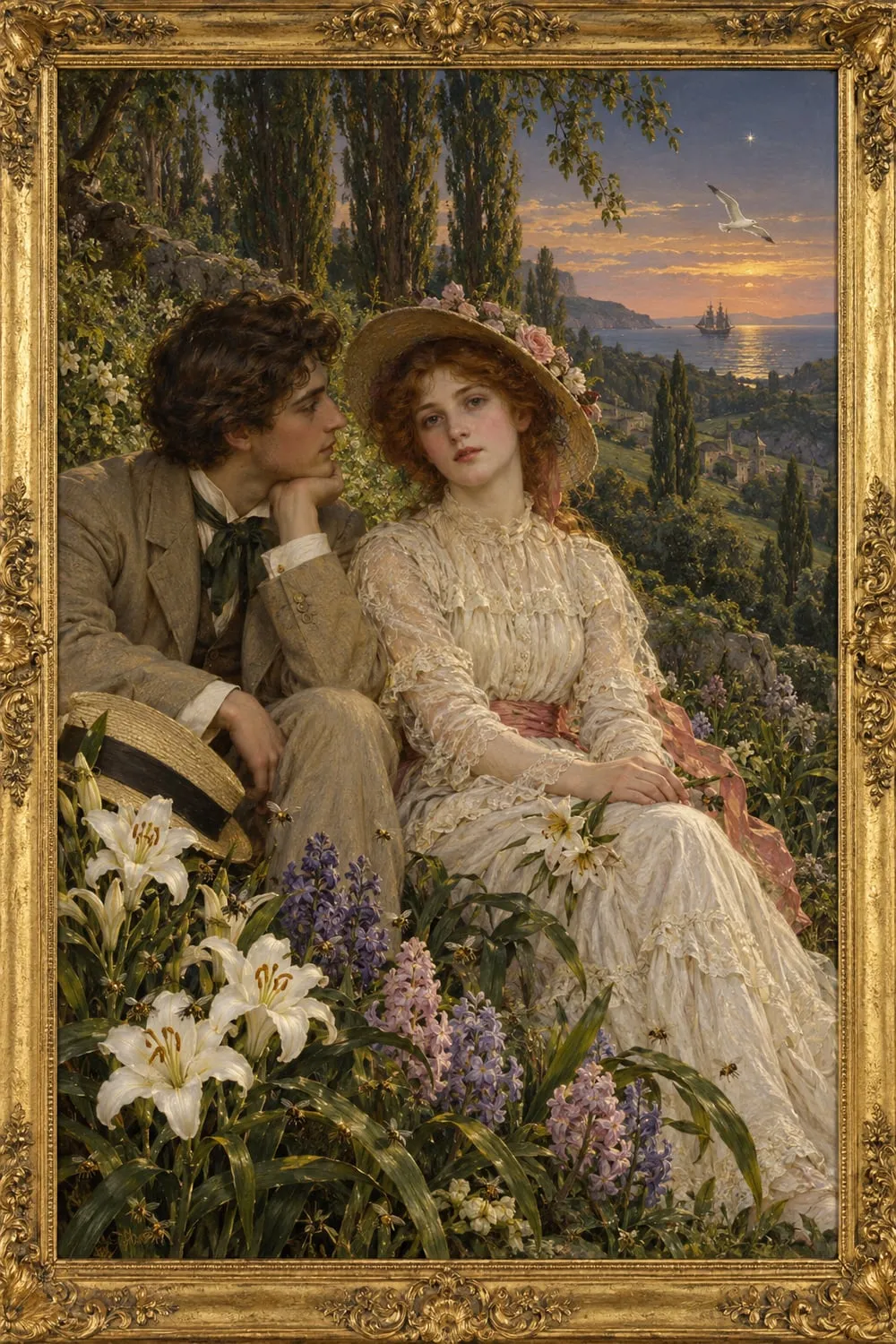
The wild bee reels from bough to boughWith his furry coat and his gauzy wing,Now in a lily-cup, and nowSetting a jacinth bell a-swing,In his wandering;Sit closer love: it was here I trowI made that vow,
Swore that two lives should be like oneAs long as the sea-gull loved the sea,As long as the sunflower sought the sun—It shall be, I said, for eternity’Twixt you and me!Dear friend, those times are over and done;Love’s web is spun.
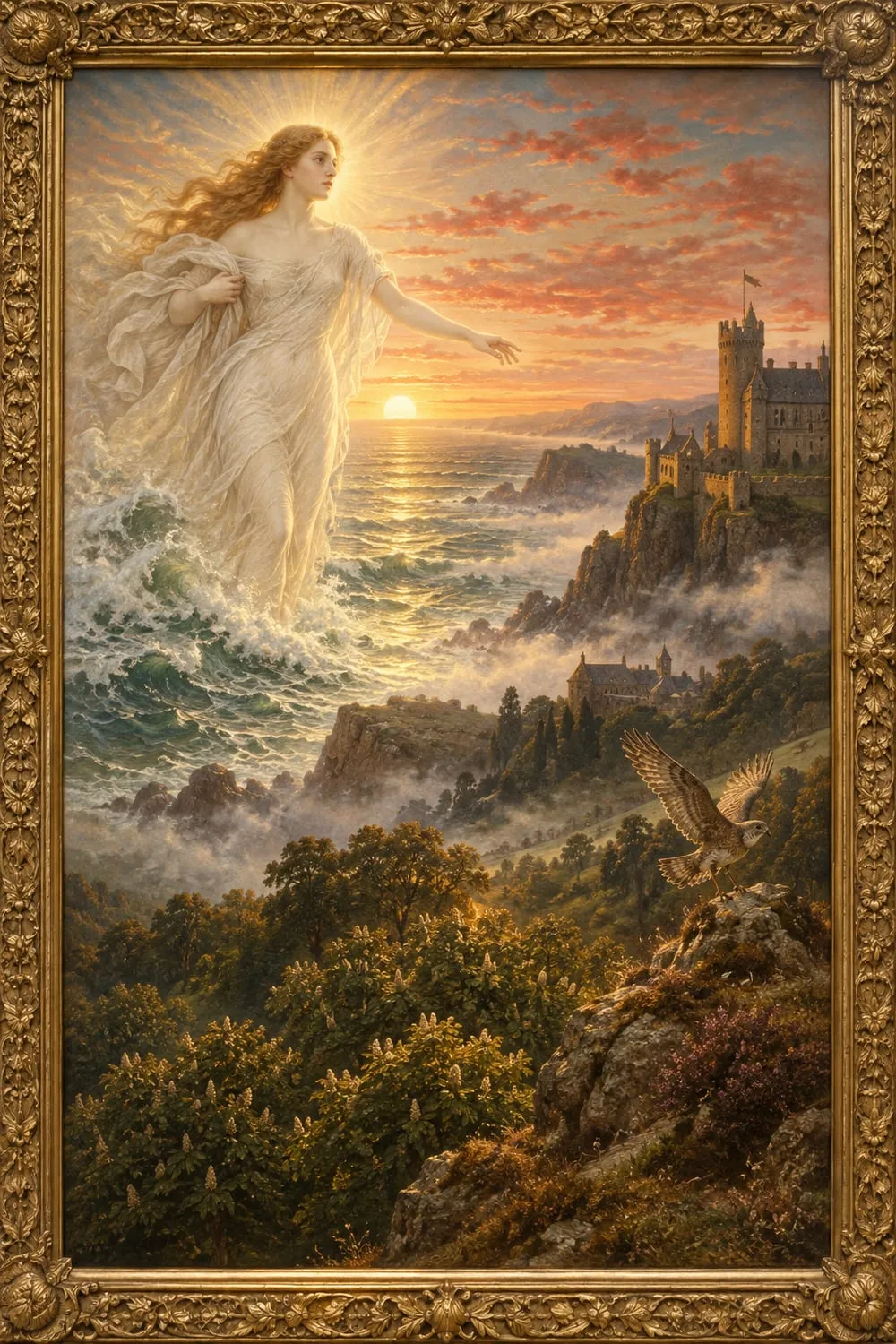
Look upward where the poplar treesSway and sway in the summer air,Here in the valley never a breezeScatters the thistledown, but thereGreat winds blow fairFrom the mighty murmuring mystical seas,And the wave-lashed leas.
Look upward where the white gull screams,What does it see that we do not see?Is that a star? or the lamp that gleamsOn some outward voyaging argosy—Ah! can it beWe have lived our lives in a land of dreams!How sad it seems.
Sweet, there is nothing left to sayBut this, that love is never lost,Keen winter stabs the breasts of MayWhose crimson roses burst his frost,Ships tempest-tossedWill find a harbour in some bay,And so we may.
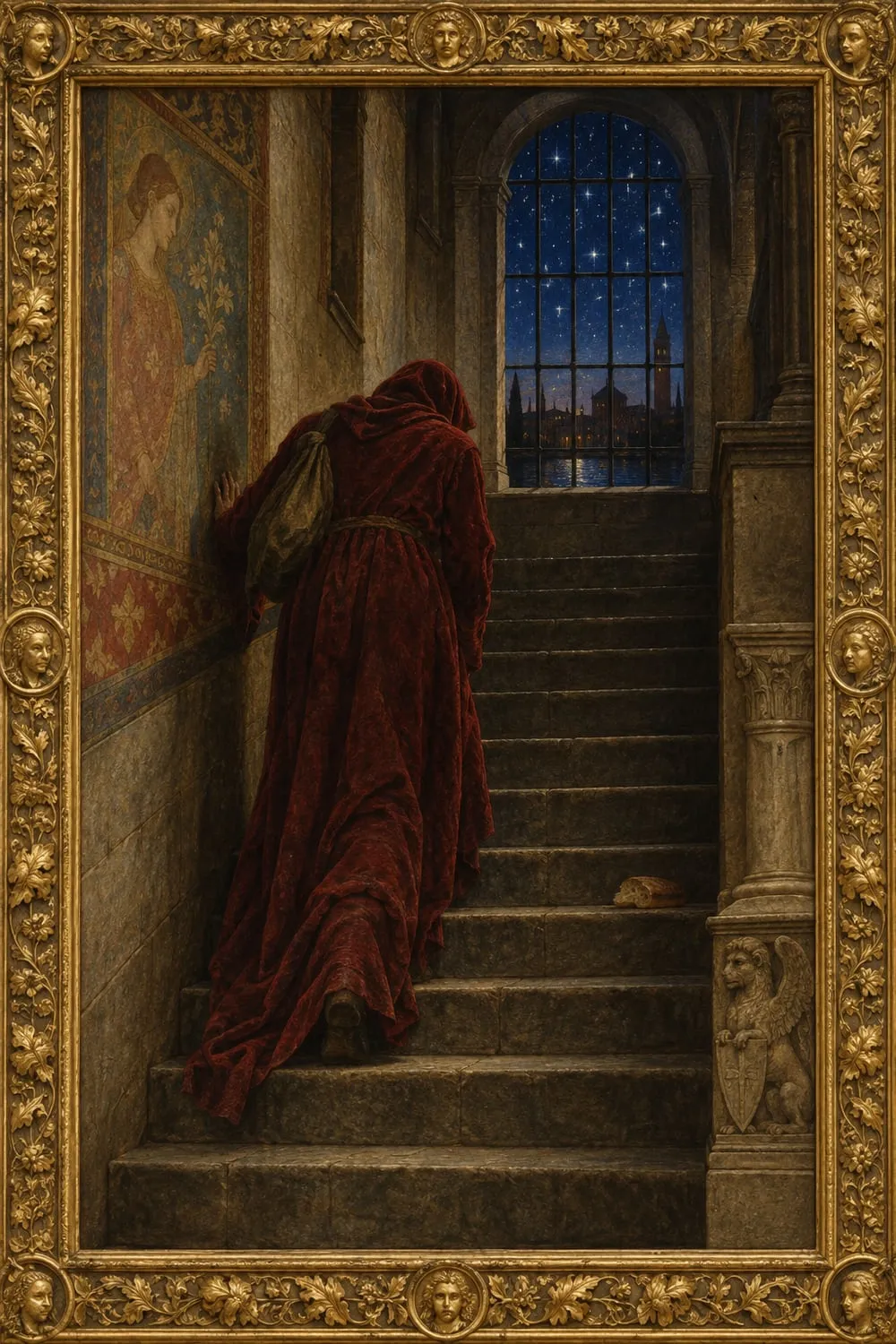
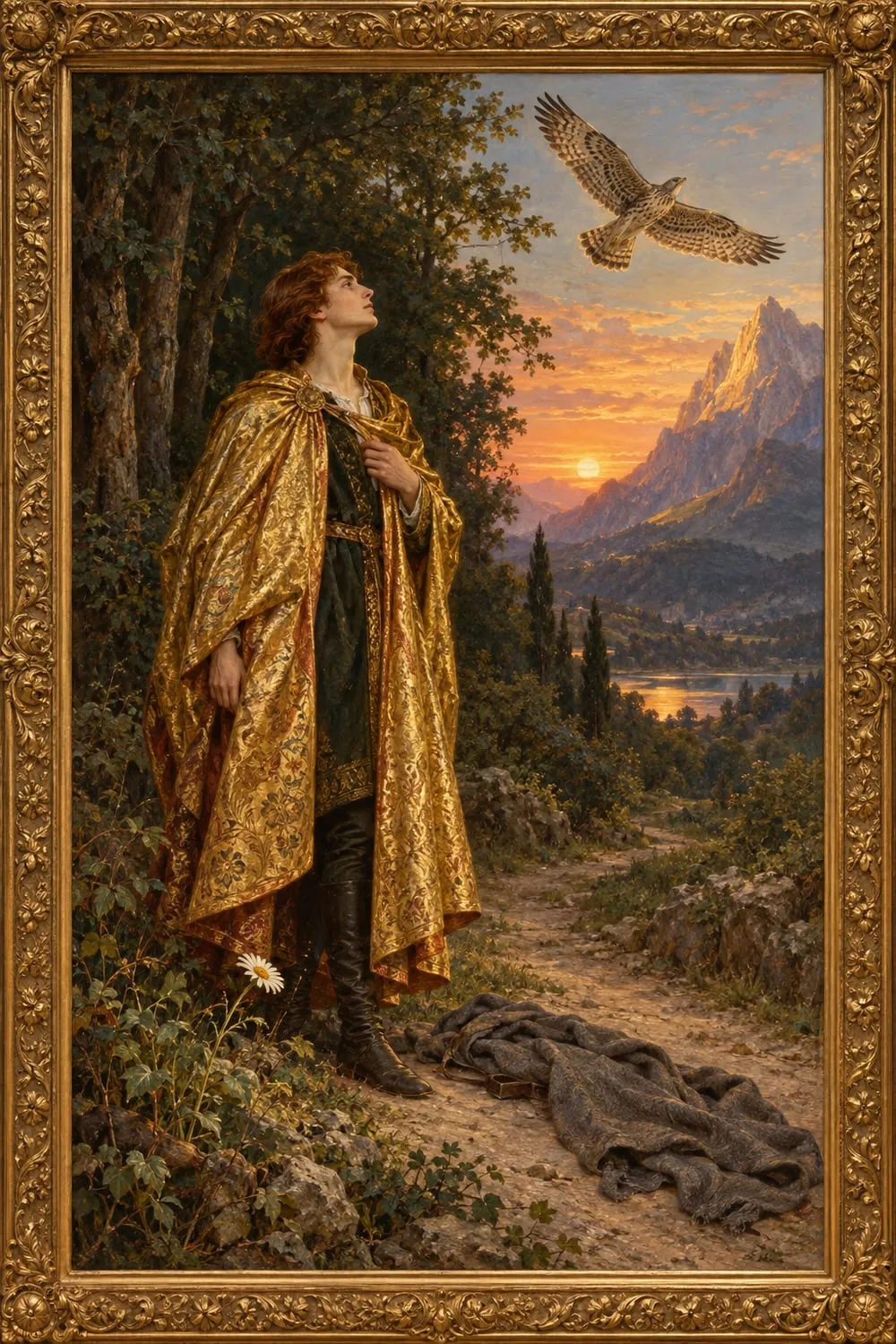
And there is nothing left to doBut to kiss once again, and part,Nay, there is nothing we should rue,I have my beauty—you your Art,Nay, do not start,One world was not enough for twoLike me and you.
In brief
SummaryA woman speaks to her lover in the valley where she once swore that their two lives would be one for ever. Those times are over: 'Love's web is spun.' She points to the poplars swaying in winds from the sea, and to a screaming gull that sees what they cannot, and wonders whether they have lived their lives in a land of dreams. Love is never lost, she says, and storm-tossed ships find harbour; but all that is left is to kiss once and part, for 'I have my beauty, you your Art', and 'One world was not enough for two'.
Key themes
"Love's web is spun."
Summary
The poem opens with a wild bee reeling from bough to bough, now in a lily-cup, now 'Setting a jacinth bell a-swing'. 'Sit closer love', the speaker says: it was here that she made her vow, and 'Swore that two lives should be like one' for as long as the sea-gull loved the sea and the sunflower sought the sun, 'for eternity'. But, she goes on, 'Dear friend, those times are over and done; / Love's web is spun.'
She asks her lover to look up at the poplars, which sway in 'Great winds' blowing 'From the mighty murmuring mystical seas', though down in the valley no breeze even scatters the thistledown. A white gull screams overhead: 'What does it see that we do not see?' A star, or the lamp of some 'outward voyaging argosy'? 'Ah! can it be / We have lived our lives in a land of dreams!'
In the last two stanzas she draws her conclusions. 'Sweet, there is nothing left to say / But this, that love is never lost': May's roses burst through winter's frost, storm-tossed ships find harbour, 'And so we may.' There is nothing left to do 'But to kiss once again, and part', and nothing to regret: 'I have my beauty, you your Art'. 'Nay, do not start', she adds; 'One world was not enough for two / Like me and you.'
Characters
The woman
The voice that ends it
The speaker whose 'voice' the title names. She once vowed that two lives would be one for ever, and now, gently and without bitterness, ends the affair. She believes love is never lost, but sees that her 'beauty' and her lover's 'Art' need separate worlds.
The lover
The artist left behind
The one addressed as 'love', 'Dear friend' and 'Sweet', whose life belongs to 'Art'. The lover never speaks, but seems to 'start' at the speaker's final reasoning, and is told there is nothing left but 'to kiss once again, and part'.
Themes
The end of a vow
The poem is set at the place where the vow was made: 'it was here I trow / I made that vow'. The promise was extravagant, to last as long as 'the sea-gull loved the sea' and 'the sunflower sought the sun', 'for eternity'. Now 'those times are over and done; / Love's web is spun.' The speaker returns to the scene not to renew the vow but to close it.
Beauty and Art
The parting is explained in the final stanza: 'I have my beauty, you your Art'. Each lover has a separate, self-sufficient world, and 'One world was not enough for two / Like me and you'. The aside 'Nay, do not start' shows the lover taken aback, but the speaker presents the separation as natural, with 'nothing we should rue'.
Beyond the valley
The middle stanzas contrast the still valley, where 'never a breeze / Scatters the thistledown', with the heights where 'Great winds blow fair / From the mighty murmuring mystical seas'. The gull sees 'what we do not see', perhaps a ship's lamp. The speaker realises 'We have lived our lives in a land of dreams', and the open sea points beyond the love affair.
Quotes
Context
'Her Voice' appears in the 'Fourth Movement' section of Wilde's collected poems, and its title pairs it with 'My Voice', which follows it. It is spoken by a woman to her lover in six seven-line stanzas, each closing on a short, ringing line such as 'Love's web is spun' or 'And so we may'.
About this edition
- Text: the complete work from Standard Ebooks, released into the public domain (CC0 1.0). We change only the layout.
- Download the EPUB of the whole book it comes from, free, for any e-reader.
- Every quotation and glossary word in these notes is checked against the text.