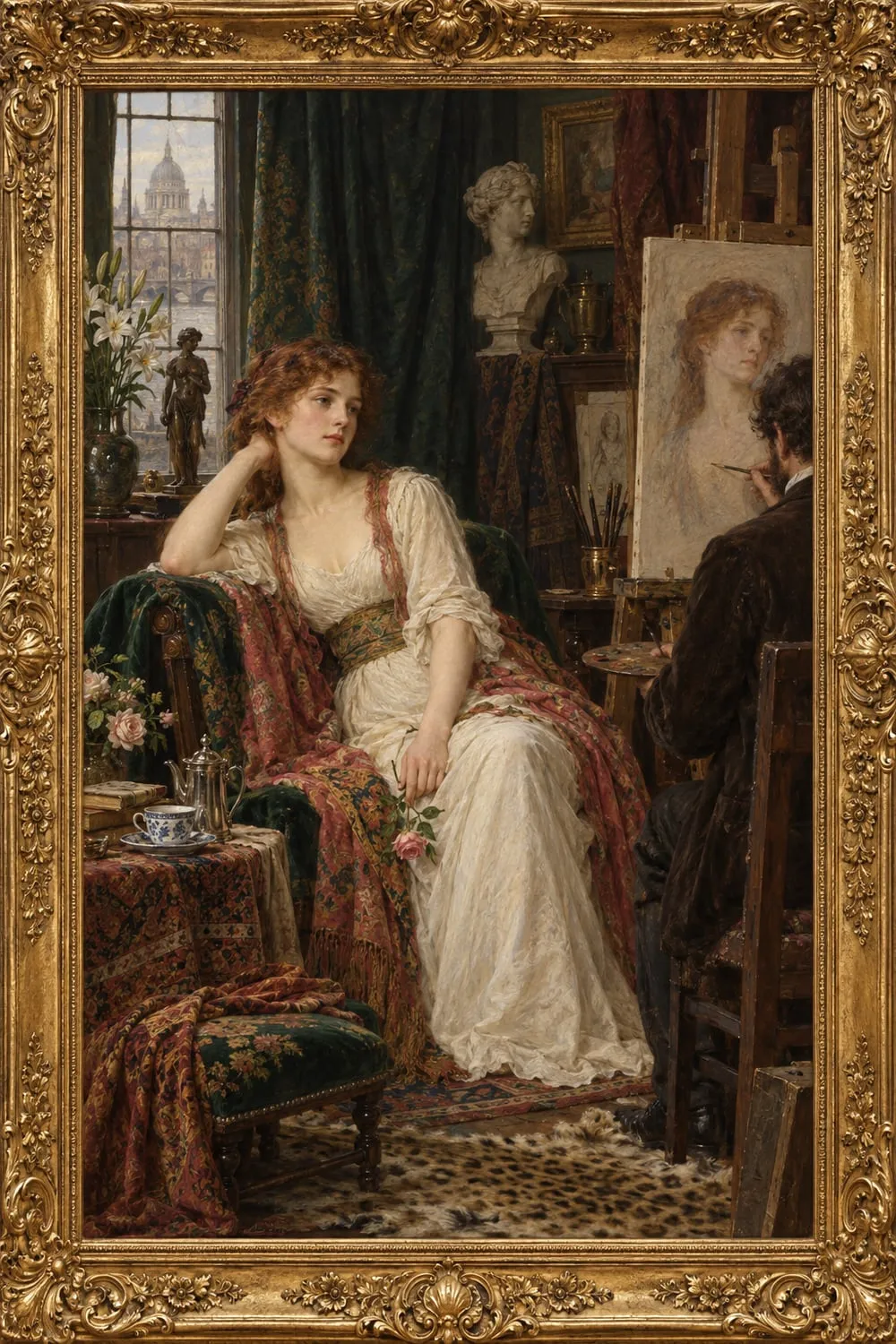
Summary
Wilde begins by calling the professional model a modern invention. The Greeks had none, though Pericles is said to have given peacocks to Athenian ladies to persuade them to sit to Phidias, and the old masters painted their pupils, friends and relations; the model proper was created by the Academic Schools. Every country now has models except America, where artists are reduced to painting Niagara and millionaires. Italian models are the most graceful, French the cleverest and most dramatic, while the English have no tradition of their own. An old veteran, told to kneel in prayer and asked whether he should be Biblical or Shakespearean, chose Shakespearean and began to wink.
The usual model now is a pretty girl of twelve to twenty-five who cares nothing for art and wants seven or eight shillings a day. English models pass no criticisms, fulfilling Whistler's idea of the art critic, and sit as readily for Mr. Pumper's pathetic modern scenes as for Mr. Phoebus's classical ones, offering to pose for 'landscape if necessary'. They are Philistines who can look Greek without talking it, kind-hearted, well behaved and punctual. One, engaged to a seller of penny ices, thanked her painter for his wedding present with the postscript 'Never eat the green ices!' They charge a shilling an hour, read penny dreadfuls during rests, live with their parents and have coarse red hands, and for an artist to marry one is as fatal as for a gourmet to marry his cook.
The male models are an odder set: the fading veteran of the grand style, the muscular Academy model who talks of his tibia and thorax, Oriental models who hold still for hours and despise English art, and the Italian youth who eats garlic but can stand like a faun. English lads never sit, and street boys fail to return, being quite unaware of their own charm. Academy models race across London to claim a sovereign from each newly elected Associate. Better than any of them, Wilde says, is the circus acrobat, graceful because he does his work in the best possible way; a good circus is 'an oasis of Hellenism', and the acrobat never speaks to his audience. The circus proprietors, Wilde admits, still bore audiences with the haute école and Shakespearean clowns, but at least they give us acrobats.
Wilde ends with the model's effect on English painting. Studying a corner of life in isolation trains eye and hand, but it also produces mannerism, posing and prettiness, and it robs the painter of a broad acceptance of life. Model-painting is practice, not perfection. The figure model is always useful, but the costume model is tiresome: a London girl in Greek robes still wears the face of Brompton, and so-called historical pictures look like fancy-dress balls. The French use the model only for study and paint the finished picture from life. The fault lies with the artists, not the sitters, who, like much of the public, care more for artists than for art.