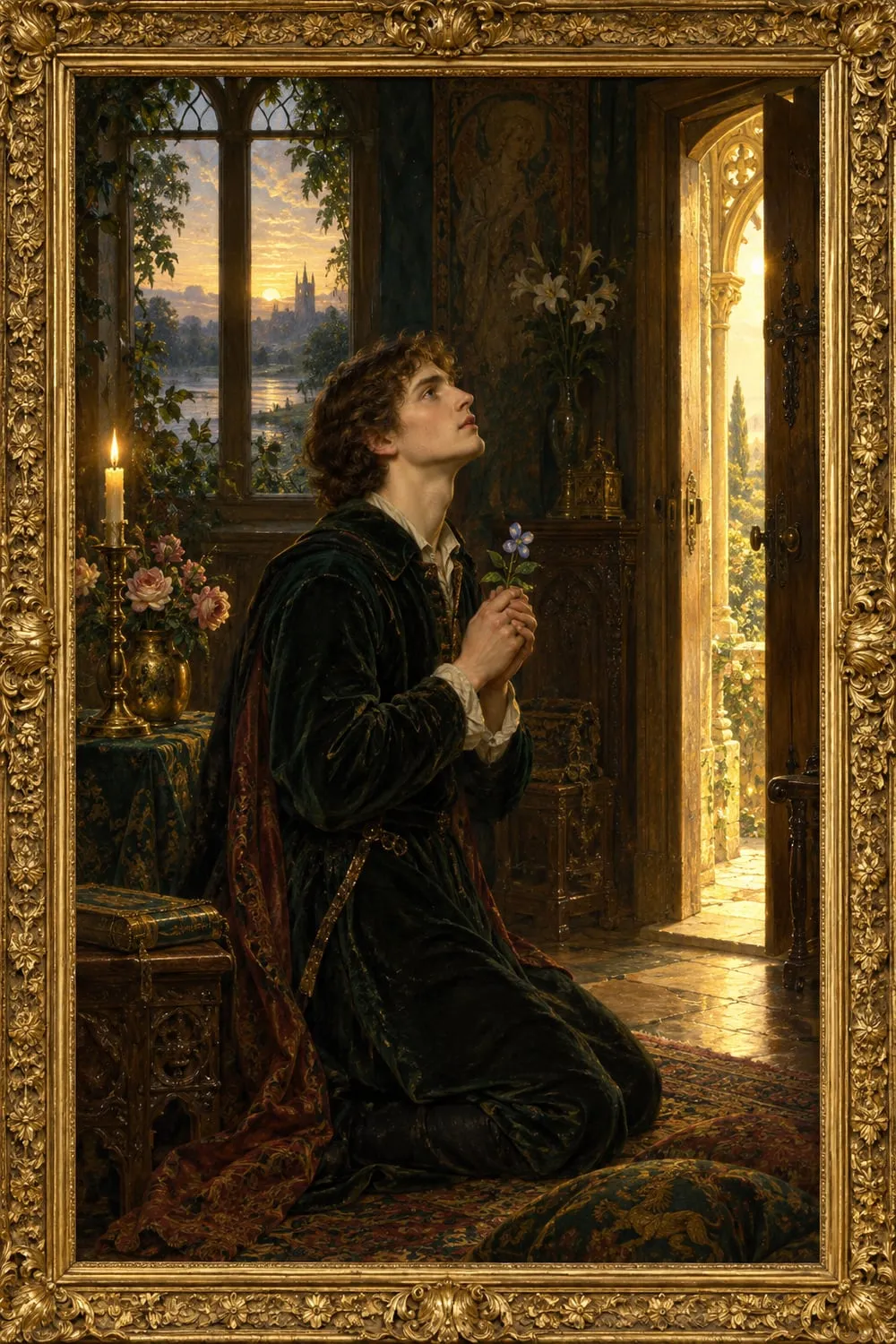
Love as worship, loss without regret
Quia Multum Amavi
"The suns that go to make one speedwell blue!"
Poem
Dear Heart, I think the young impassioned priestWhen first he takes from out the hidden shrineHis God imprisoned in the Eucharist,And eats the bread, and drinks the dreadful wine,
Feels not such awful wonder as I feltWhen first my smitten eyes beat full on thee,And all night long before thy feet I kneltTill thou wert wearied of Idolatry.
Ah! hadst thou liked me less and loved me more,Through all those summer days of joy and rain,I had not now been sorrow’s heritor,Or stood a lackey in the House of Pain.
Yet, though remorse, youth’s white-faced seneschal,Tread on my heels with all his retinue,I am most glad I loved thee—think of allThe suns that go to make one speedwell blue!
In brief
SummaryThe speaker tells a 'Dear Heart' that a young priest taking the Eucharist for the first time feels less awe than the speaker felt on first seeing the beloved, and then kneeling all night at the beloved's feet, until the beloved grew tired of such worship. Had the beloved 'liked me less and loved me more', the speaker would not now be sorrow's heir and a servant in the House of Pain. Yet, though remorse follows close behind, the speaker is glad to have loved, and ends with the many suns it takes to make one speedwell blue.
Key themes
"Ah! hadst thou liked me less and loved me more,"


Summary
The first two stanzas make one long comparison. 'I think the young impassioned priest', the speaker says, when he first takes 'His God imprisoned in the Eucharist' from the shrine, 'And eats the bread, and drinks the dreadful wine', 'Feels not such awful wonder as I felt / When first my smitten eyes beat full on thee'. The speaker knelt 'all night long before thy feet', 'Till thou wert wearied of Idolatry'.
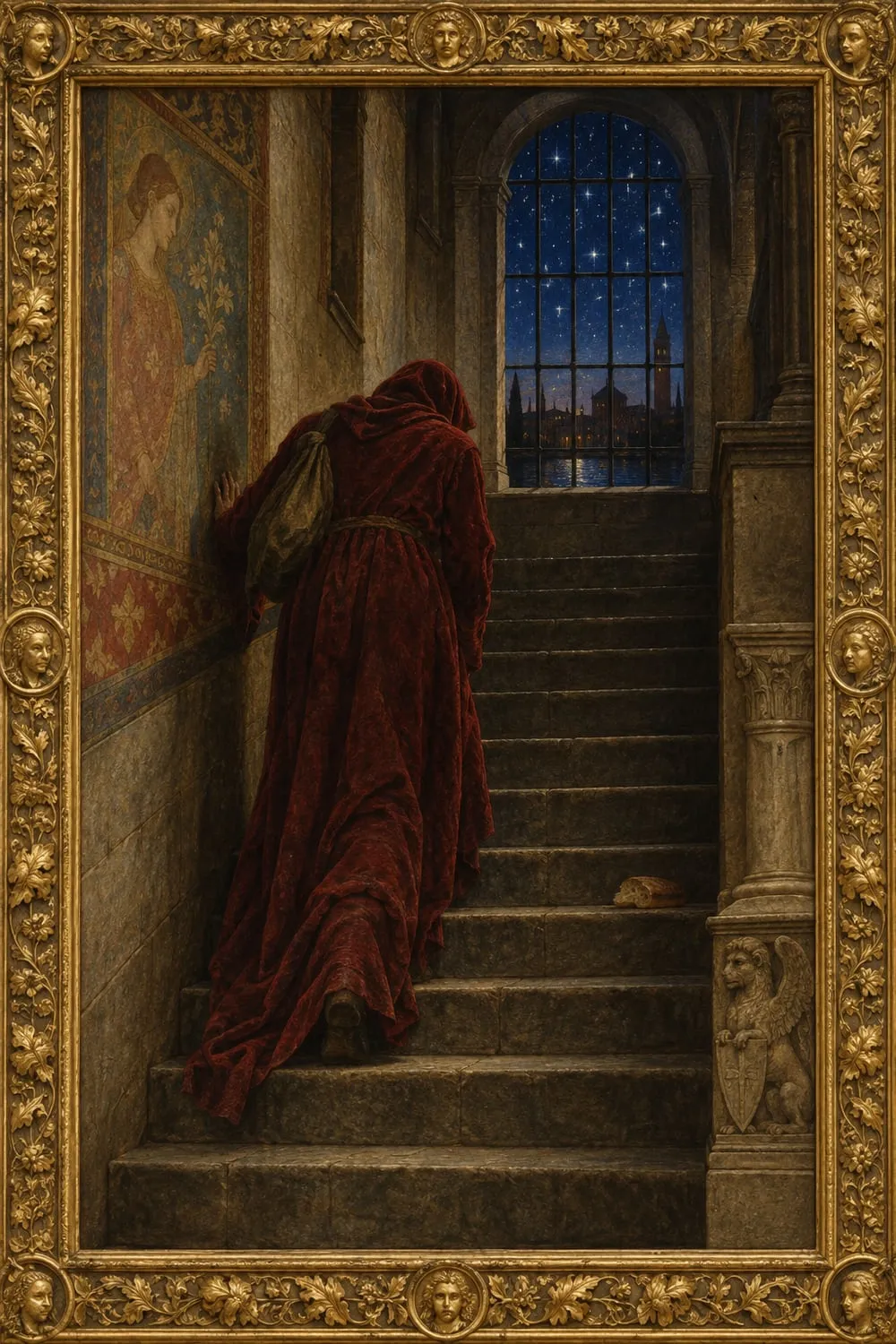
The third stanza turns to reproach. 'Ah! hadst thou liked me less and loved me more', through 'all those summer days of joy and rain', the speaker would not now be 'sorrow's heritor', or stand 'a lackey in the House of Pain'.
The last stanza ends without bitterness. Though remorse, 'youth's white-faced seneschal', treads on the speaker's heels 'with all his retinue', the poem declares 'I am most glad I loved thee', and closes with an image of patience and slow beauty: 'think of all / The suns that go to make one speedwell blue!'
Characters
The speaker
The worshipping lover
A young lover who loved with religious intensity, kneeling all night at the beloved's feet. Rejected, the speaker is now 'sorrow's heritor' and pursued by remorse, yet refuses to regret that love, declaring 'I am most glad I loved thee'.
Dear Heart
The one who liked
The beloved addressed as 'Dear Heart', whose appearance struck the speaker with 'awful wonder'. The beloved grew 'wearied of Idolatry', and the speaker's reproach is of being 'liked' more than 'loved'.
Themes
Love as worship
The poem compares falling in love to a young priest's first Mass, with its 'God imprisoned in the Eucharist', 'the bread' and 'the dreadful wine', and finds the lover's awe the greater. The speaker kneels 'all night long before thy feet', and the beloved finally tires 'of Idolatry'. The religious language shows the intensity of this love, and also its excess: worship is not what the beloved wanted.
Liking and loving
The third stanza's complaint turns on a fine distinction: 'hadst thou liked me less and loved me more'. The beloved was fond of the speaker but did not return the passion, and that mismatch has left the speaker 'sorrow's heritor'. The line suggests that affection without love can wound more than coldness would have done.
Glad despite pain
The title, Latin for 'because I have loved much', recalls the Gospel saying about the woman who 'loved much', and the poem defends loving much. Remorse follows like a steward with his retinue, but 'I am most glad I loved thee'. The closing image of the many 'suns that go to make one speedwell blue' suggests that one small, lovely thing is worth long exposure.
Quotes
"Ah! hadst thou liked me less and loved me more,"
The speaker · Read in context
"I am most glad I loved thee"
The speaker · Read in context
Context
'Quia Multum Amavi' appears in the 'Fourth Movement' section of Wilde's collected poems. The Latin title means 'because I have loved much', words that recall Christ's saying in Luke's Gospel of the woman who 'loved much'. The poem is written in four rhymed quatrains, moving from worship to reproach to acceptance.
About this edition
- Text: the complete work from Standard Ebooks, released into the public domain (CC0 1.0). We change only the layout.
- Download the EPUB of the whole book it comes from, free, for any e-reader.
- Every quotation and glossary word in these notes is checked against the text.