Themes
Pride and cruelty
The Star-Child's beauty is the root of his wickedness. Holding himself noble, 'being sprang from a Star', he calls the village children his servants, mocks the weak and ill-favoured, and lies by the well in the priest's orchard laughing at 'the marvel of his own face'. His pride spreads, too: his companions become 'hard of heart even as he was'. Its climax is his rejection of his mother, when he says he would rather kiss 'the adder or the toad' than her, and he is punished with exactly those shapes.
Punishment that fits the sin
The tale's justice works like a mirror. The creatures he hurt answer him in his own coin: the Mole asks how it could know where his mother is when he blinded its eyes, the Linnet cannot fly because he clipped its wings, and the Squirrel asks whether he means to kill his mother as he killed hers. Wherever he wanders there is 'neither love nor loving-kindness nor charity for him', for it is 'even such a world as he had made for himself in the days of his great pride'.
Pity and charity
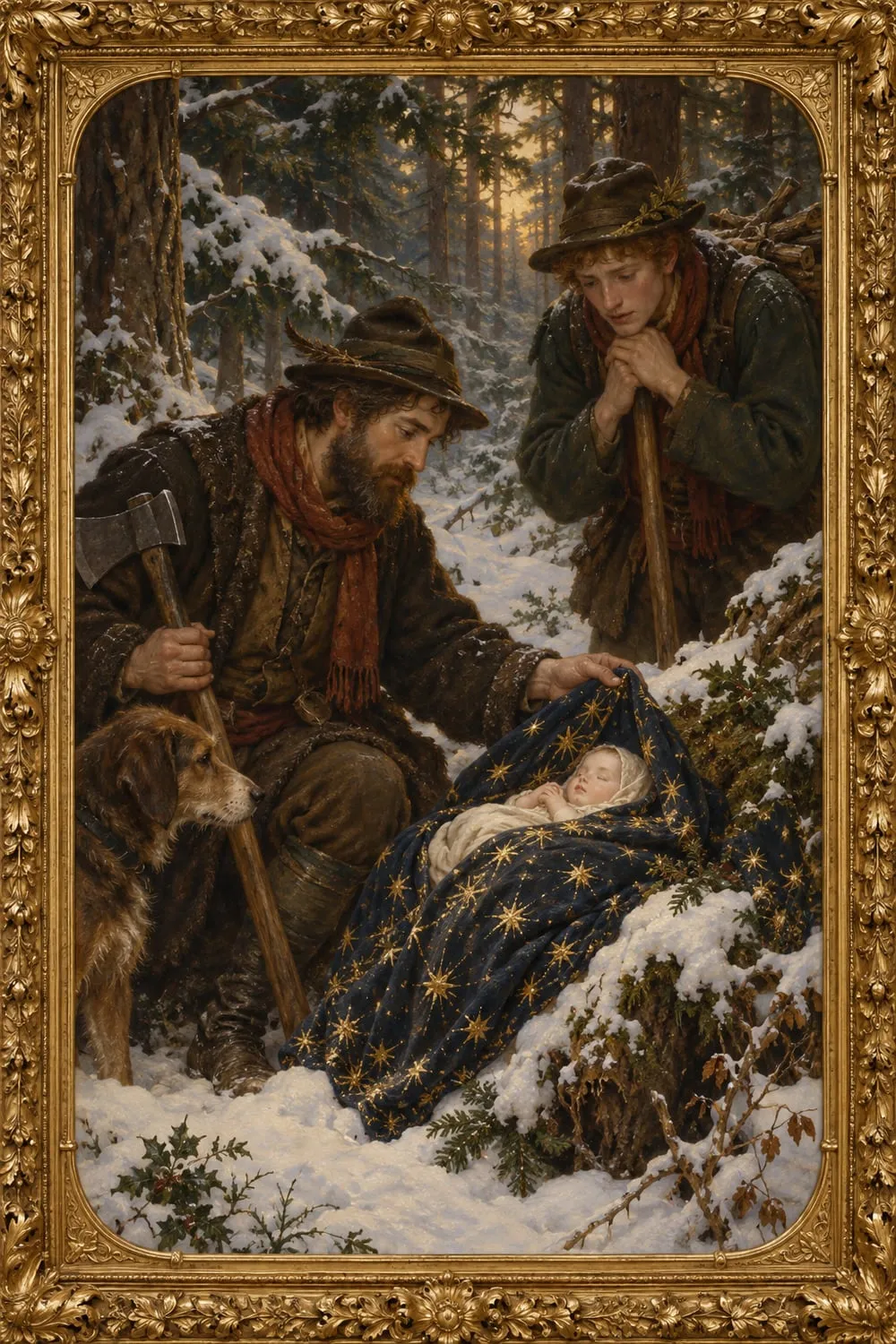
Pity saves the Star-Child twice over. The Woodcutter, poor as he is, refuses to leave a baby in the snow and shames his wife into kindness. Years later the Star-Child learns the same lesson through suffering: he frees the Hare from a trap, and three times gives the leper the gold that would save him from beating and death. The Hare's words, 'thou hadst pity on me first', and his own, 'Thy need is greater than mine', mark the change in him.
Appearance and true worth
The tale repeatedly hides worth behind a poor surface. The golden treasure the Woodcutters chase turns out to be a child, the foul beggar-woman and the leper are a Queen and a King, and the wood that looks fair from outside is full of briars, nettles and thorns. When the Star-Child's beauty returns, he sees 'that in his eyes which he had not seen there before': the same face, but a changed person looking out of it. Beauty only becomes good once he has learned to value others above it.
Poverty and injustice
The tale begins and ends with a hard view of the world. The Woodcutters complain that 'life is for the rich', and one says that 'Injustice has parcelled out the world'. The Woodcutter's wife asks whether the sparrows God feeds do not die of hunger in the winter. Even the happy ending is cut short: the Star-Child rules for only three years, 'so bitter the fire of his testing', and 'he who came after him ruled evilly'. Goodness is real in the tale, but it does not last.