A voyage through the great poets
Amor Intellectualis
"Oft have we trod the vales of Castaly"
Poem
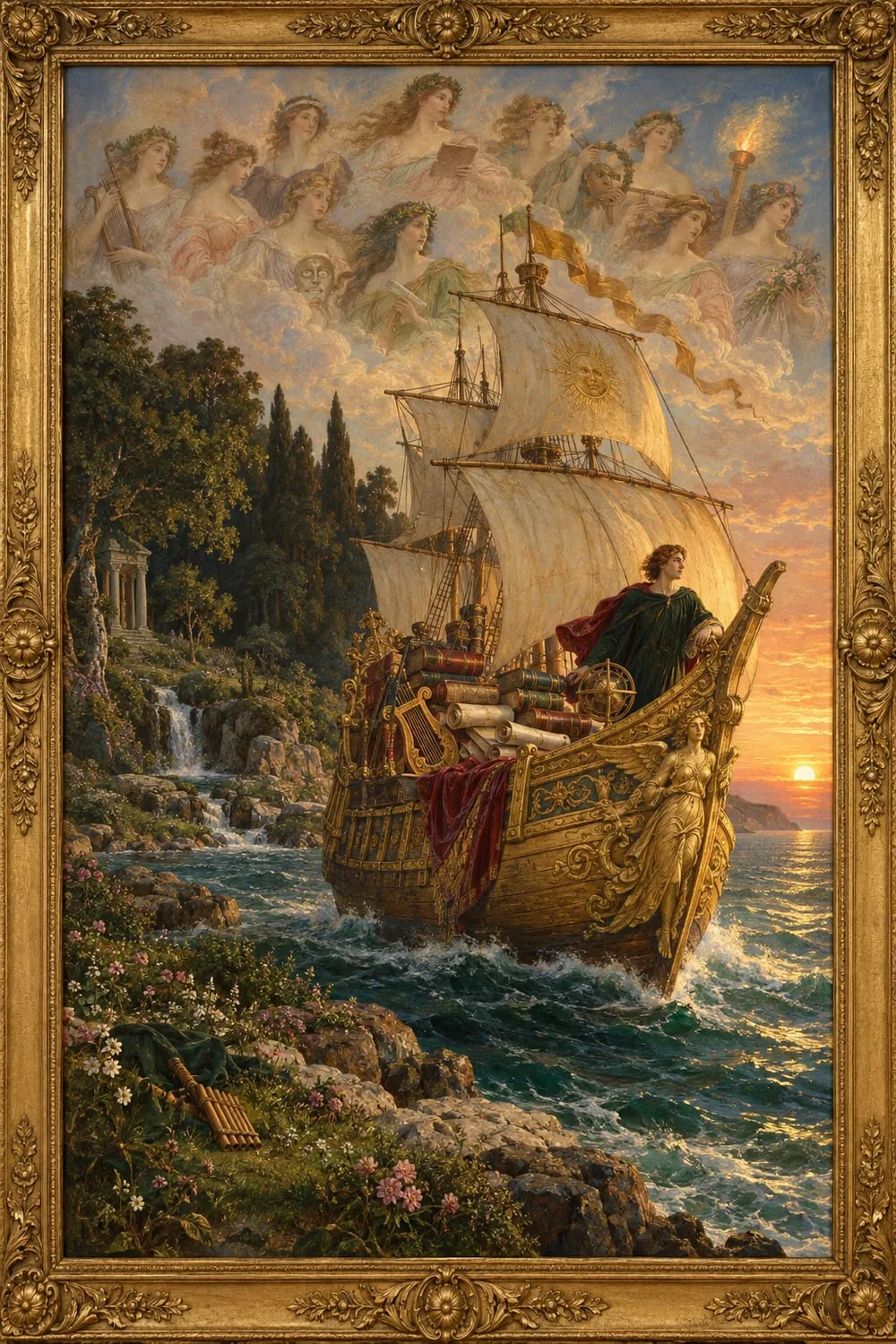
Oft have we trod the vales of CastalyAnd heard sweet notes of sylvan music blownFrom antique reeds to common folk unknown:And often launched our bark upon that seaWhich the nine Muses hold in empery,And ploughed free furrows through the wave and foam,Nor spread reluctant sail for more safe homeTill we had freighted well our argosy.Of which despoilèd treasures these remain,Sordello’s passion, and the honeyed lineOf young Endymion, lordly TamburlaineDriving his pampered jades, and more than these,The seven-fold vision of the Florentine,And grave-browed Milton’s solemn harmonies.
In brief
SummaryA sonnet about a life of reading, pictured as travel and seafaring. The speaker and his companions have often walked the valleys of Castaly, where the Muses' music plays, and sailed the Muses' sea, refusing to turn home until their ship was full of treasure. The last six lines unload that cargo: the great poems they have brought back, from Browning's Sordello and Keats's Endymion to Marlowe's Tamburlaine, Dante's vision and Milton's 'solemn harmonies'.
Key themes
"Till we had freighted well our argosy."
Summary
The first eight lines describe the journeys. 'Oft have we trod the vales of Castaly', the speaker begins, and heard 'sweet notes of sylvan music' played on ancient reeds, music unknown to common people. Just as often 'we' have launched a boat on the sea ruled by 'the nine Muses', ploughing 'free furrows' through the waves and never turning for the safety of home 'Till we had freighted well our argosy', until the ship was fully loaded.
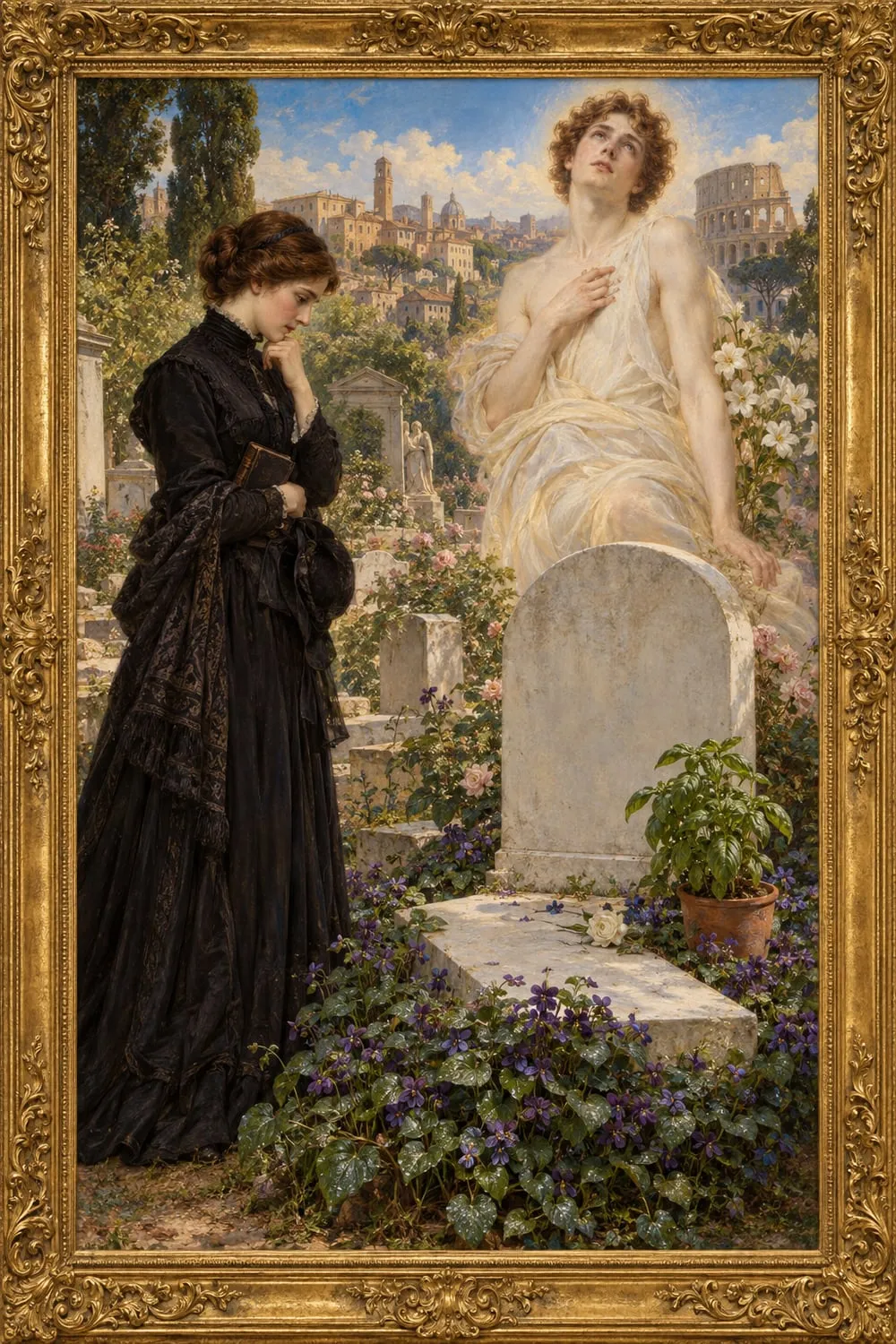
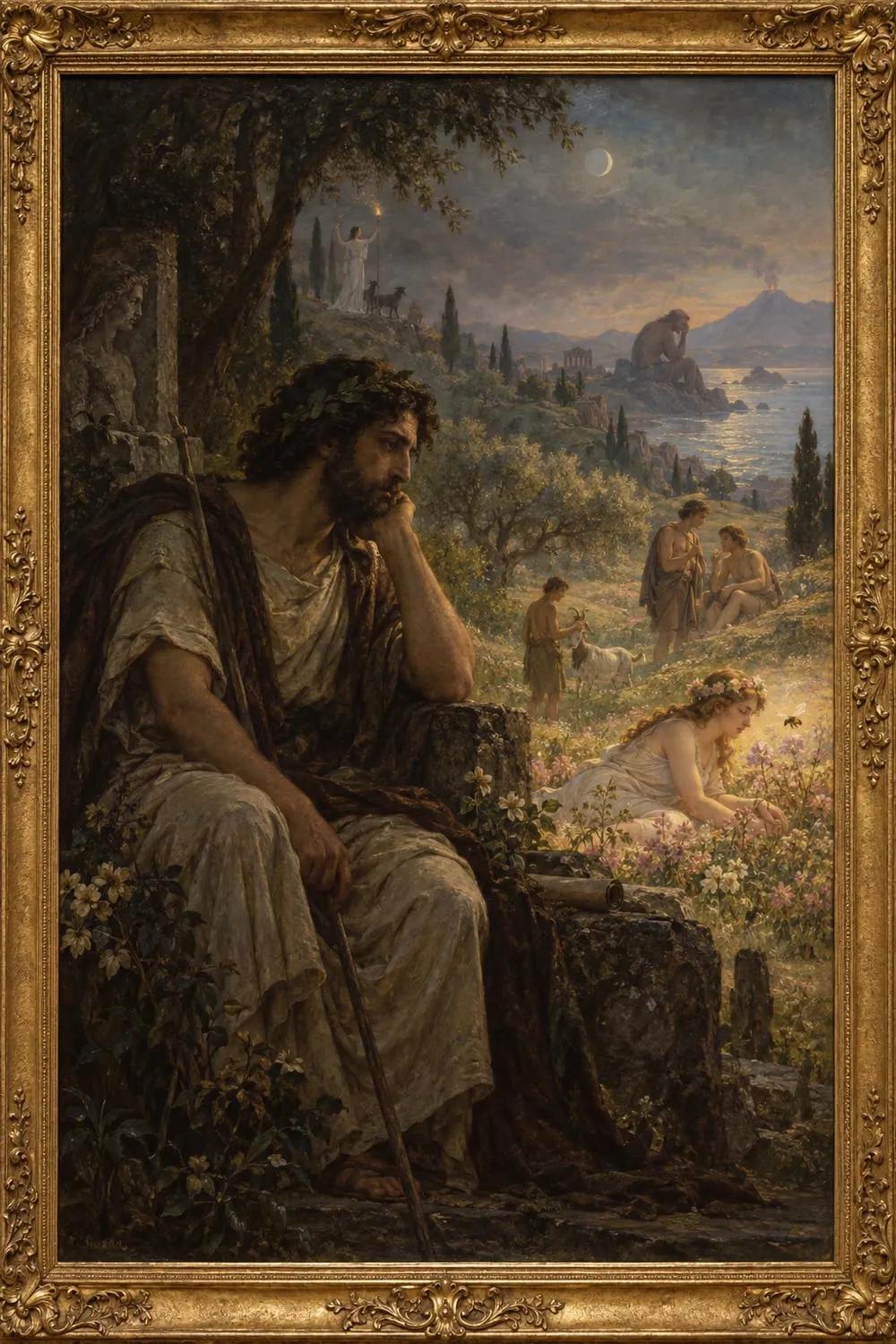
The last six lines list what remains of those 'despoilèd treasures', the spoils brought back from the voyage. There is 'Sordello's passion', 'the honeyed line / Of young Endymion', 'lordly Tamburlaine / Driving his pampered jades', and, greater still, 'The seven-fold vision of the Florentine' and 'grave-browed Milton's solemn harmonies'. The sonnet ends on Milton, the weightiest name in the list.
Characters
The speaker
A voyager among books
The 'we' of the poem, a reader who speaks for himself and his companions. He describes their travels through poetry as walks in the Muses' valleys and voyages on their sea, and lists the poems he values most as treasure brought home.
Themes
Reading as voyage
The poem turns reading into adventure. Walking the 'vales of Castaly' and sailing the Muses' sea become images of years spent among books, and the readers 'ploughed free furrows through the wave and foam' like bold sailors. The books they love are 'despoilèd treasures', a cargo brought home in an 'argosy', so the pleasure of literature is pictured as discovery and plunder.
A private love of poetry
The title, Latin for 'intellectual love', names a love of the mind rather than the body. The music the readers hear is blown from 'antique reeds to common folk unknown', which sets the speaker and his companions apart as initiates. The list that ends the poem, from Sordello and Endymion to Dante and Milton, reads like a personal canon, the works that have fed that love.
Context
'Amor Intellectualis' appears in the 'Flowers of Gold' section of Wilde's collected poems. It is a sonnet, with an eight-line octave describing the voyage and a six-line sestet listing its treasures. The works it names are Robert Browning's Sordello, John Keats's Endymion, Christopher Marlowe's Tamburlaine, Dante's Divine Comedy (the vision of 'the Florentine') and the poetry of John Milton. The Latin title means 'intellectual love'.
About this edition
- Text: the complete work from Standard Ebooks, released into the public domain (CC0 1.0). We change only the layout.
- Download the EPUB of the whole book it comes from, free, for any e-reader.
- Every quotation and glossary word in these notes is checked against the text.