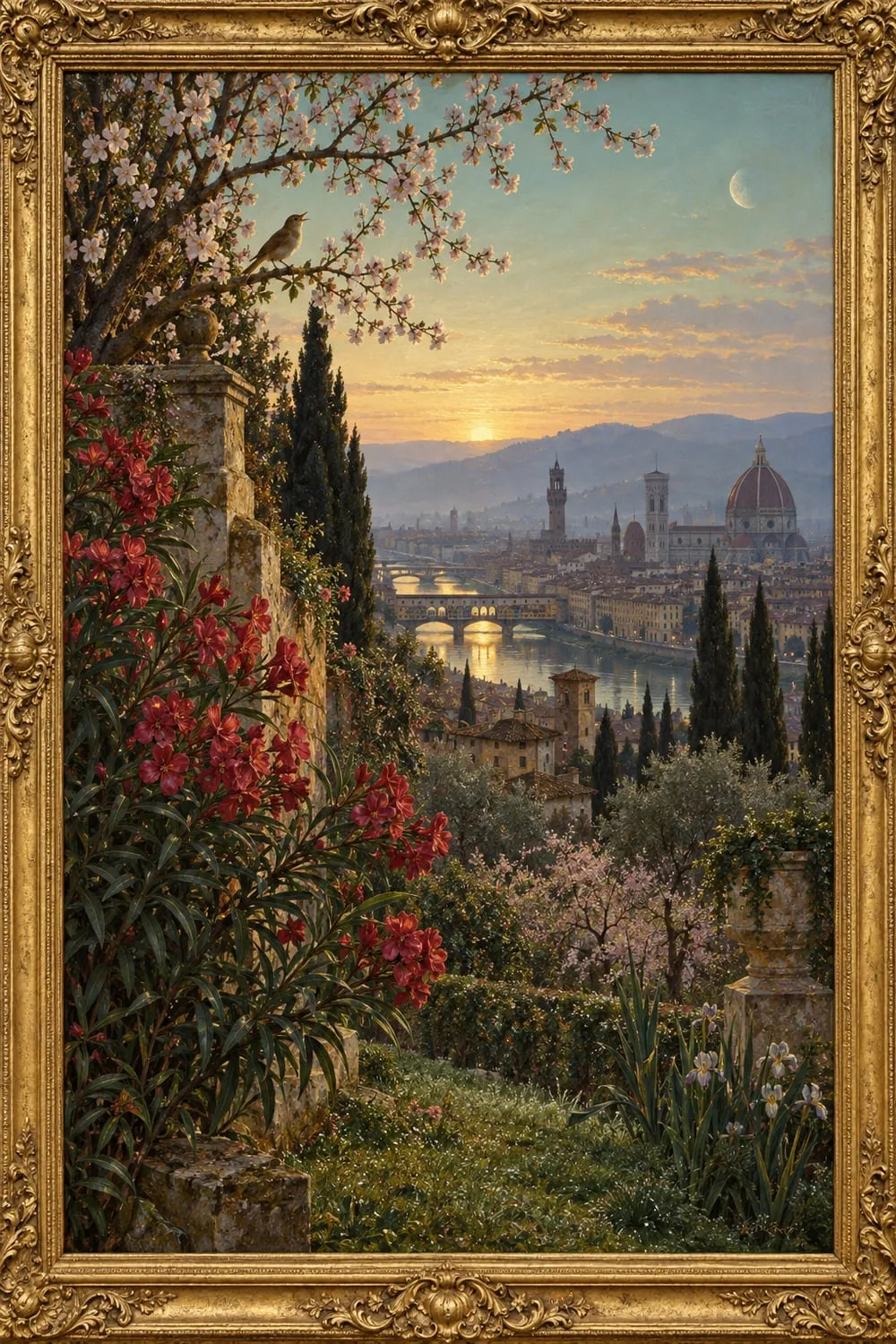
A nightingale before the Florentine dawn
By the Arno
"Splinter the arrows of the moon."
Poem
The oleander on the wallGrows crimson in the dawning light,Though the grey shadows of the nightLie yet on Florence like a pall.
The dew is bright upon the hill,And bright the blossoms overhead,But ah! the grasshoppers have fled,The little Attic song is still.
Only the leaves are gently stirredBy the soft breathing of the gale,And in the almond-scented valeThe lonely nightingale is heard.
The day will make thee silent soon,O nightingale sing on for love!While yet upon the shadowy groveSplinter the arrows of the moon.
Before across the silent lawnIn sea-green vest the morning steals,And to love’s frightened eyes revealsThe long white fingers of the dawn
Fast climbing up the eastern skyTo grasp and slay the shuddering night,All careless of my heart’s delight,Or if the nightingale should die.
In brief
SummaryA lyric set in Florence in the last hour before sunrise. The oleander reddens in the first light while night still lies over the city; the grasshoppers are silent and only a lonely nightingale sings in the almond-scented valley. The speaker begs the bird to keep singing for love while the moonlight lasts, before morning steals across the lawn and shows 'love's frightened eyes' the long white fingers of dawn. The dawn climbs to kill the night, careless of the speaker's happiness or of whether the nightingale dies.
Key themes
"O nightingale sing on for love!"
Summary
The first three stanzas set the scene. The oleander on the wall 'Grows crimson in the dawning light', though 'the grey shadows of the night / Lie yet on Florence like a pall'. Dew shines on the hill and blossoms overhead, but the grasshoppers have gone and 'The little Attic song is still'. Only the leaves stir in the breeze, and in 'the almond-scented vale / The lonely nightingale is heard'.
In the last three stanzas the speaker turns to the bird. 'The day will make thee silent soon, / O nightingale sing on for love!', he urges, while the arrows of the moon still splinter on the grove, and before morning, 'In sea-green vest', steals across the lawn to reveal to 'love's frightened eyes' the 'long white fingers of the dawn'. Those fingers climb the eastern sky 'To grasp and slay the shuddering night', careless of 'my heart's delight' or whether the nightingale should die.
Characters
The speaker
The lover awake at dawn
A watcher in Florence in the hour before sunrise, who notices the reddening oleander and the silent grasshoppers and begs the nightingale to keep singing. His 'heart's delight' is tied to the night, and he sees the dawn as a cold intruder that will end it.
The nightingale
The last singer of night
The 'lonely nightingale' heard in the almond-scented valley after the grasshoppers have fallen silent. The speaker addresses it directly, urging it to 'sing on for love!' before the day silences it, and the last line imagines it may die with the night.
Themes
Dawn as the enemy of love
Like a lovers' parting song, the poem dreads the morning. The dawn is not welcomed but feared: it will reveal itself to 'love's frightened eyes', its 'long white fingers' climb the sky 'To grasp and slay the shuddering night', and it is 'All careless of my heart's delight'. Night is the time of love and song; daylight ends both.
Greece in Florence
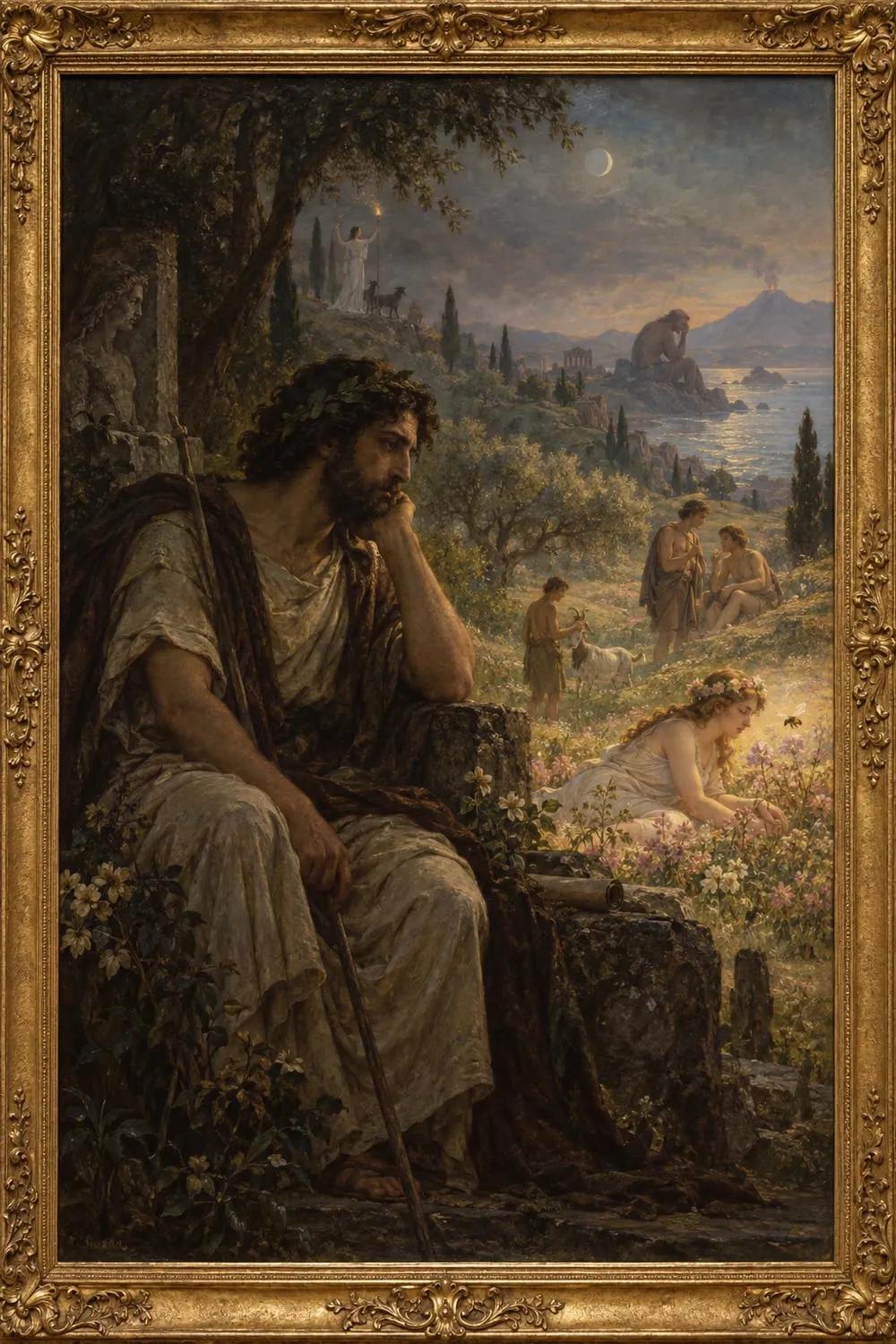
The Florentine scene is seen through a Greek lens. When the grasshoppers leave, it is 'The little Attic song' that falls still, recalling the singing insects of ancient Athens, and the nightingale has long been the bird of Greek poetry. The speaker's hope that the bird will 'sing on for love!' against the coming day gives an old classical image a place by the Arno.
Context
'By the Arno' appears in the 'Flowers of Gold' section of Wilde's collected poems. The Arno is the river that runs through Florence, and the poem names the city in its first stanza. It is written in six four-line stanzas rhymed abba, with short, even lines that move from description of the scene to a direct appeal to the nightingale.
About this edition
- Text: the complete work from Standard Ebooks, released into the public domain (CC0 1.0). We change only the layout.
- Download the EPUB of the whole book it comes from, free, for any e-reader.
- Every quotation and glossary word in these notes is checked against the text.