Summary
Wilde declines to define beauty, since artists want to create it, and declines to give a history of English art, since 'English art' means no more than 'English mathematics': there are only artists. Histories and dates are useless; all good work looks modern; archaeology is 'merely the science of making excuses for bad art', and popularity is the laurel the world gives to bad art. His real subjects are what makes an artist, his relation to his surroundings, his education, and the quality of a good work.
The artist should understand his age in order to abstract himself from it, becoming 'the master of eternity' rather than the mouthpiece of a century. There has never been an artistic age or people. The Athenians, Wilde claims, imprisoned Phidias, who introduced the living model, for carving the face of Pericles on a shield, and he died in gaol; he asks the students how they would feel if the bishops carted Sir Frederick Leighton off to Newgate. The cry of immorality was raised against Aeschylus, Euripides and Socrates too.
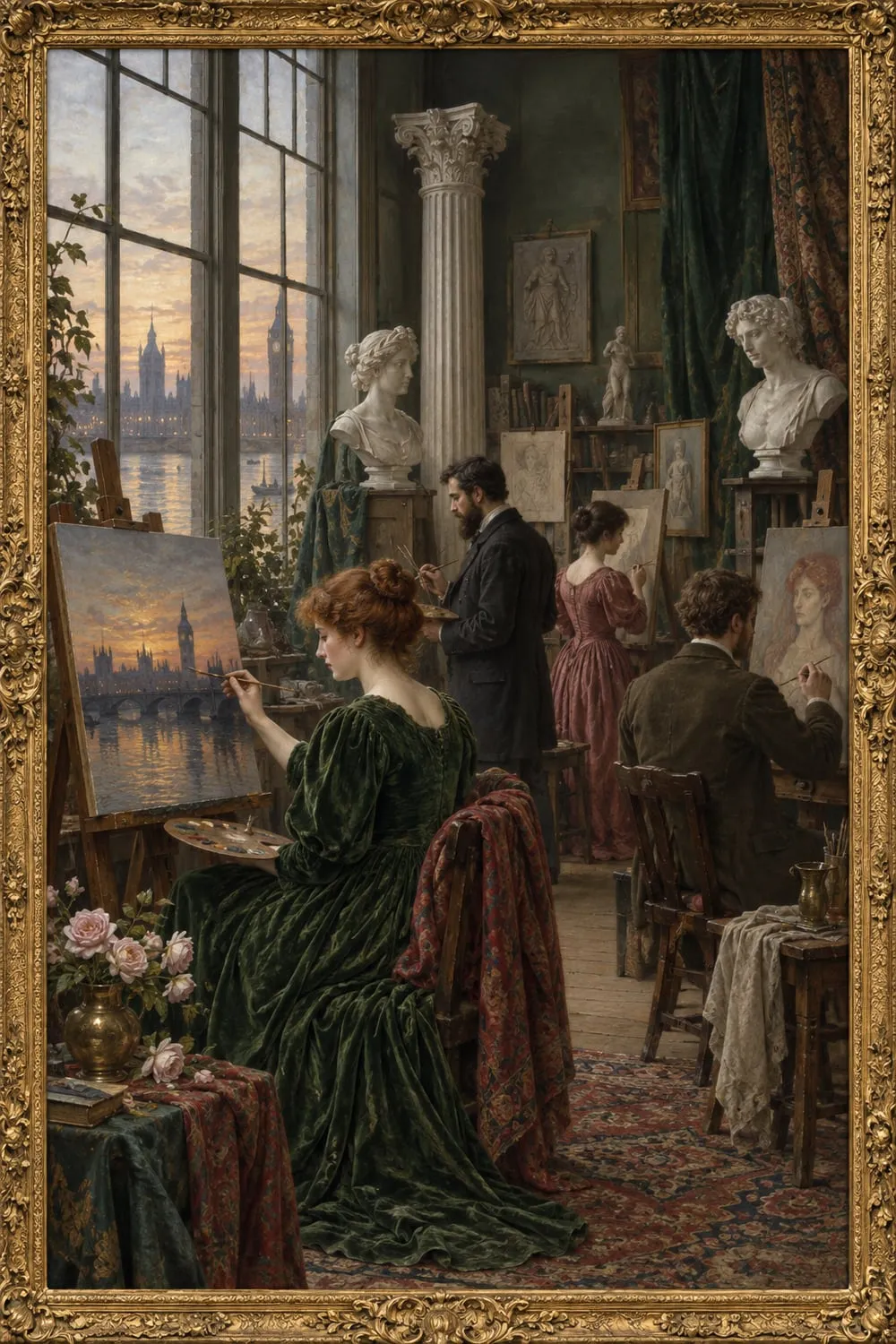
London is ugly, with its grimy houses, chimney-pot hats, sandwich-board men and emerald-green omnibuses, and Ruskin blames the decline of art on the loss of beautiful surroundings, painting the scene around a Gothic designer at Pisa. Wilde answers that the most inartistic thing of the age is the artist's indifference to what is called ugly. Appearance is a matter of light, shade and position, so the painter's task is to paint 'things as they seem to be', to wait and watch for beauty instead of copying ready-made beauty, and to see life under pictorial conditions. A city of changeable weather serves better than a lovely one.
The living artist who unites all these qualities, Wilde says, is Whistler. Ugly modern dress is no excuse: a painter who cannot paint black cloth could not have painted a silk doublet. A picture is a beautifully coloured surface, and any picture that makes one say 'How curious!' or 'How sad!' rather than 'How beautiful!' is bad. The artist is no specialist, technique must disappear from the finished work, and decorative art shows its material where a picture annihilates its canvas.