Themes
Against theory and history
Wilde opens by refusing everything a lecture on art is expected to contain. 'We want to create it, not to define it', he says of beauty, and ideal beauty only leads young painters into 'weak prettiness or lifeless abstraction'. Histories of art are useful only to someone seeking 'the ostentatious oblivion of an art professorship', and archaeology is an abyss from which the artist returns, if at all, disguised as a professor. All that matters is knowing a good picture from a bad one.
The artist as exception
Wilde insists that 'there never has been an artistic age, or an artistic people'. The artist 'has always been, and will always be, an exquisite exception.' His test case is Athens at its height, which he says imprisoned Phidias for putting the likeness of Pericles on a sacred shield, and which raised the cry of immorality against Aeschylus, Euripides and Socrates. He brings the point home with an imagined arrest of the President of the Royal Academy for using a living model.
Seeing rather than subject
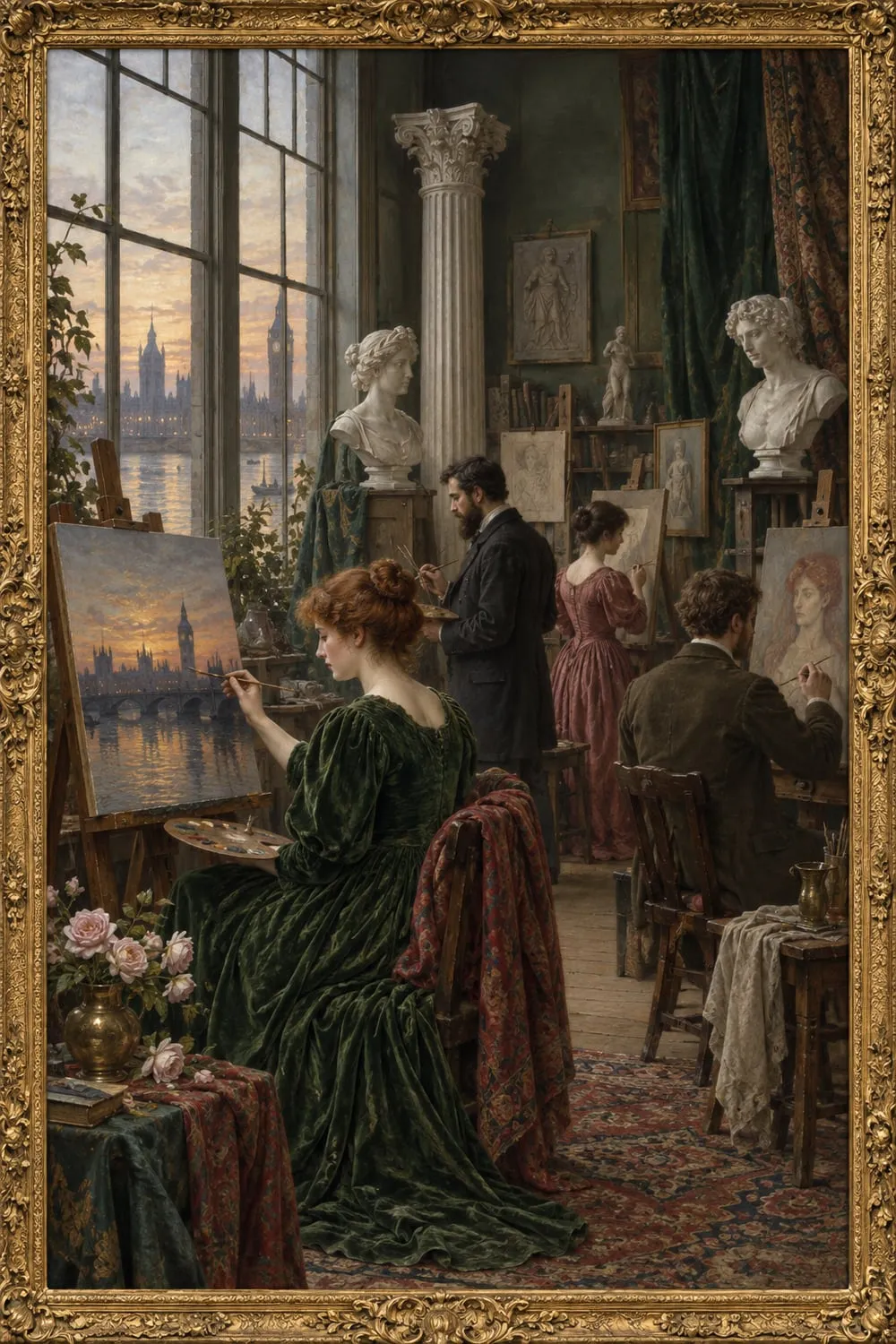
The heart of the lecture is Wilde's reply to Ruskin's lovely description of Pisa. Beautiful surroundings are not necessary, he argues, because 'to the real artist, nothing is beautiful or ugly in itself at all.' Painters paint 'not things as they are but things as they seem to be', and the task is to wait for the right conditions of light. Hence his examples of a letter-box in Gower Street at night and policemen on the Thames Embankment, and his rule that 'to see what is worth painting is better.'
The picture as decoration
Wilde ends with a definition: 'a picture is a beautifully coloured surface, merely', no more meaningful than Venetian glass or a tile from Damascus. From this follow his rules. Pictures that prompt 'How curious!' or 'How sad!' are bad; technique must vanish, so that a picture seems 'not painted'; and imaginative art 'annihilates' its material where decorative art displays it. The final line joins the two ideas: a picture has 'no meaning but its beauty, no message but its joy.'