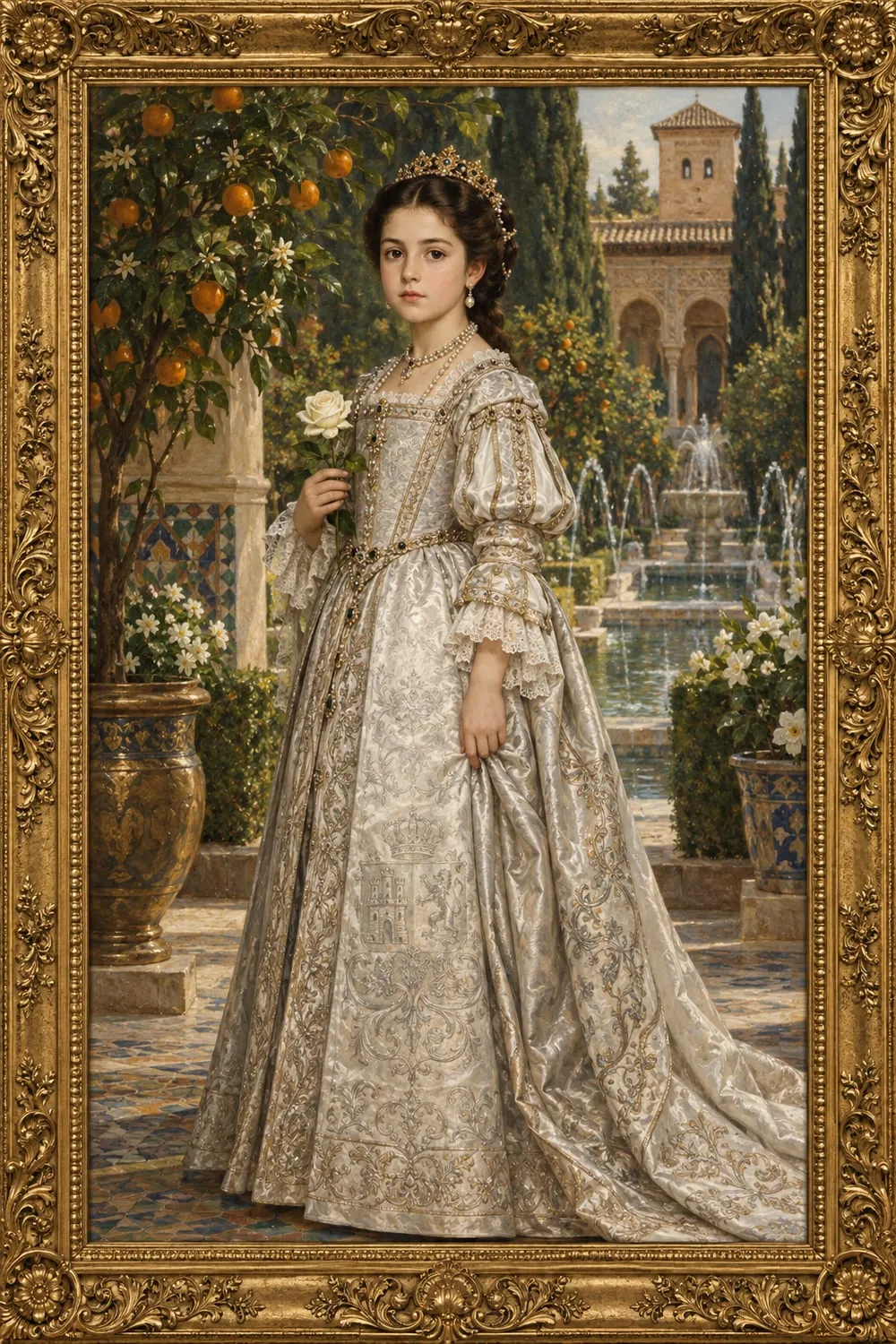
Characters
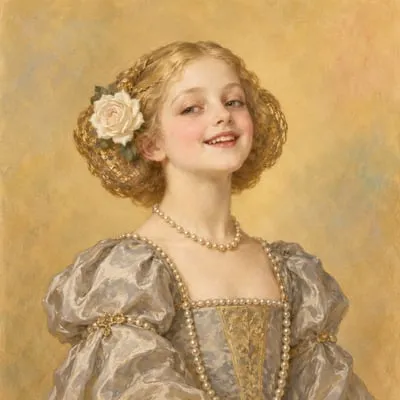
The Infanta
Beauty without pity
The twelve-year-old daughter of the King of Spain, graceful in grey satin and pearls, with a white rose in her stiff hair of faded gold. She has her dead mother's petulant charm and a child's delight in spectacle. She laughs at the Dwarf's dancing, tosses him her rose as a joke, and applauds his dying agony as a performance. Told that his heart is broken, she demands playmates without hearts.
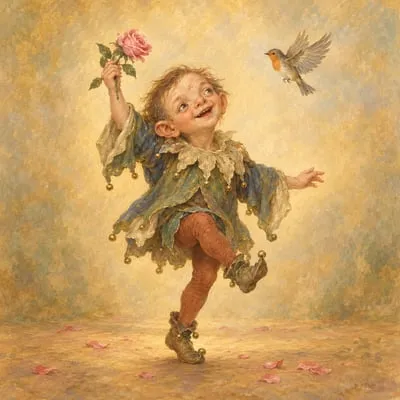
The little Dwarf
Joy without self-knowledge
A misshapen child found running wild in the cork forest and brought to court as a birthday surprise, his father glad to be rid of him. He dances with no idea of his looks and believes the Infanta loves him when she throws him her rose. He knows the ways of birds and beasts and fed the birds through a bitter winter. Seeing himself in a mirror, he dies of a broken heart.
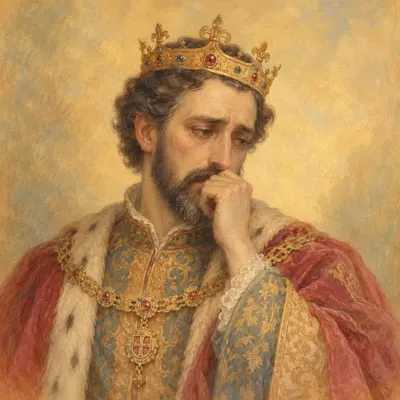
The King of Spain
Wedded to Sorrow
The Infanta's melancholy father, still consumed by grief for his young Queen, whose embalmed body he visits every month. His love for her was thought by many to have ruined his country, and he refused a new marriage, saying he was wedded to Sorrow. He would have abdicated had he not feared leaving the Infanta at the mercy of his brother. Watching her play, he is overcome by memory and withdraws.
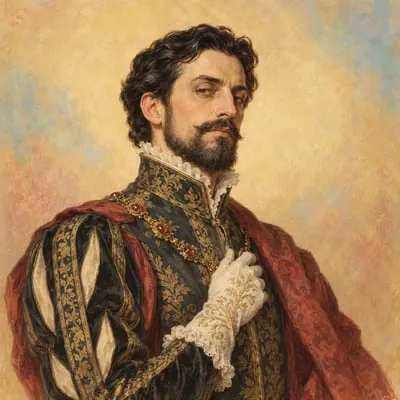
Don Pedro of Aragon
The cruel uncle
The King's brother, whom the King hates, and whose cruelty is notorious even in Spain. Many suspect him of poisoning the Queen with a pair of gloves, and the gipsies scowl at him because he has had two of their tribe hanged for sorcery. He pays the Infanta nice compliments on her birthday. Told the Dwarf is sulking, he slaps him with an embroidered glove and calls for a whipping master.
The Grand Inquisitor
Pity for puppets
The Grand Inquisitor of Granada, the King's confessor, who sits beside him at the window and then joins Don Pedro on the terrace. At the puppet play he is so moved that he tells Don Pedro it seems intolerable that things made of wood and coloured wax should meet with such terrible misfortunes. The irony is sharp, since the tale also recalls an auto-da-fé at which nearly three hundred heretics were burned.
The Duchess of Albuquerque
Guardian of etiquette
The Camerera-Mayor, a thin, hard-featured woman with a yellow ruff, who always attends the Infanta. She reminds her charge that there is no precedent for a princess making merry before those who are her inferiors in birth, and ends the entertainments on the plea that the sun is too hot. Even she manages something like a chill smile at the bullfight.
The Count of Tierra-Nueva
The boy toreador
A wonderfully handsome lad of about fourteen who leads the Infanta to her little gilt and ivory chair at the sham bullfight. With her permission he gives the final stroke, plunging his wooden sword into the wickerwork bull so hard that its head comes off, revealing the laughing face of little Monsieur de Lorraine, the son of the French Ambassador.
The Chamberlain
Bearer of the verdict
A court official walking on the terrace with Don Pedro, reading despatches from Mexico, when the Infanta calls them in. Unlike Don Pedro he looks grave, kneels by the Dwarf and puts his hand upon his heart. He tells the Infanta that her funny little dwarf will never dance again because his heart is broken, adding only that it is a pity, since he might have made the King smile.
The dead Queen
The lost mother
The Infanta's mother, who came from France and was betrothed to the King at Fontainebleau when he was fifteen and she younger still. She withered away in the sombre Spanish court and died six months after her daughter's birth. Embalmed by a Moorish physician, she lies on her bier in the black marble chapel, where the King kneels and calls to her. The Infanta has her smile.
The Flowers
Snobbery in the garden
The garden's Tulips, Lilies, Cactus, White Rose-Tree and Geraniums, who are outraged that the Dwarf should caper through their home; even the meek Violets find his ugliness almost ostentatious. They call him too ugly to be allowed there, accuse him of stealing the Infanta's rose, and agree that being incurable is his chief defect. With the Sundial and the Peacock, they voice the snobbery of the court.
The Birds and the Lizards
The Dwarf's friends
The only creatures in the garden who are kind to the Dwarf. The Birds knew him in the forest, where he shared his black bread with them through a bitter winter, and they do not mind his being ugly. The philosophical Lizards romp all over him and decide that he is not so ugly after all, provided one shuts one's eyes.