Themes
Beauty without heart
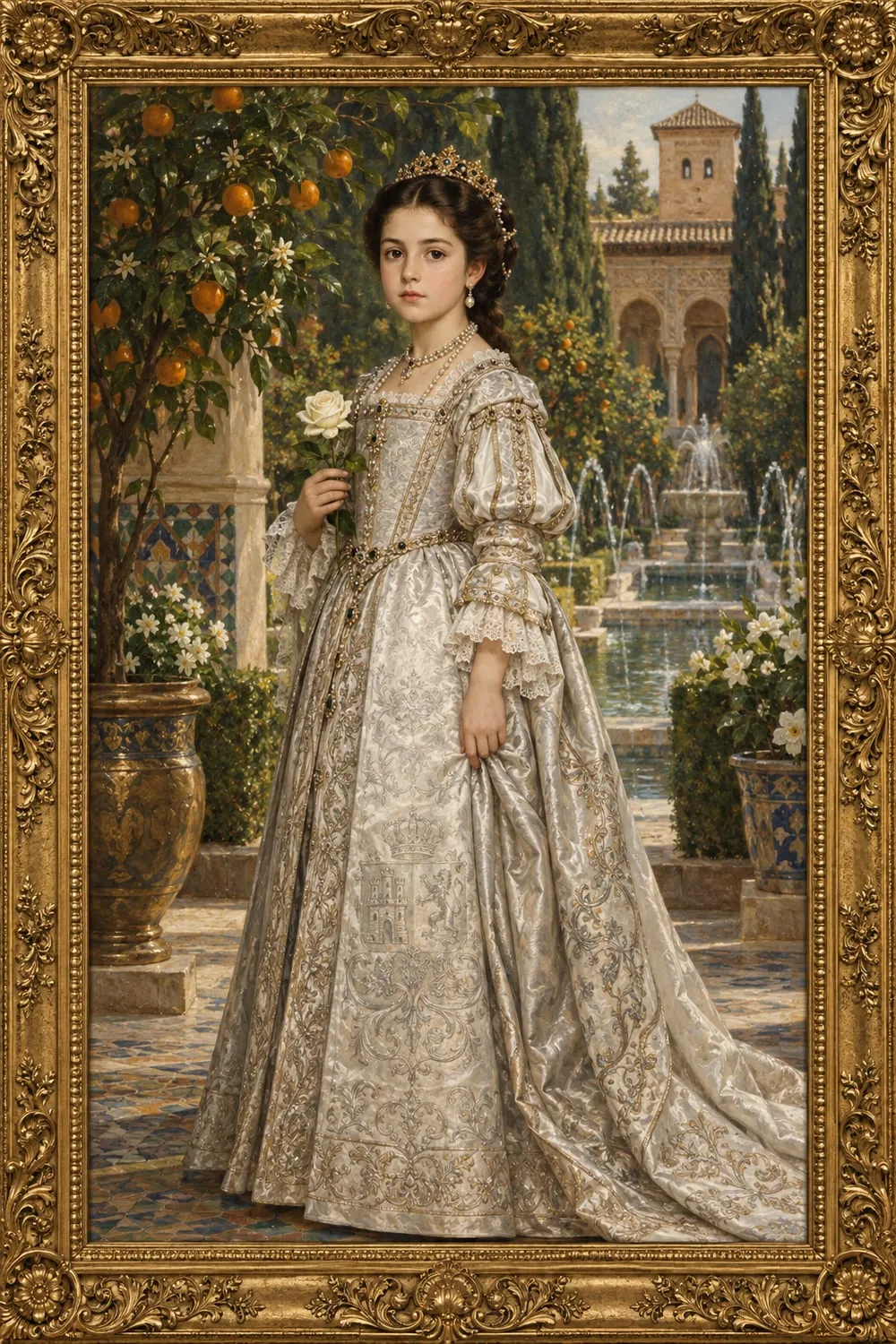
The Infanta is the most graceful child at court, with her grey satin, her pearls and her 'dainty rose-leaf lips', but her beauty hides a complete lack of pity. She throws the rose 'partly for a jest and partly to tease the Camerera', applauds the Dwarf's collapse as acting, and meets the news that his heart is broken with 'pretty disdain'. Her final order, that her playmates should have no hearts, is the cruellest line in the tale because she says it without any sense of cruelty.
Ugliness and self-knowledge
The Dwarf is happy only because he does not know how he looks. The narrator calls his 'complete unconsciousness of his own grotesque appearance' the most amusing thing about him. In the forest he lived among birds and beasts who judged him by his kindness. The mirror in the palace destroys him in minutes. His despairing question, why they had not left him in the forest, 'where there was no mirror to tell him how loathsome he was', makes self-knowledge fatal.
Performance and real feeling
The court weeps at the wrong things. Wooden puppets in a tragedy bring tears to the Infanta's eyes, and the Grand Inquisitor finds it intolerable that things made of wood and coloured wax should be so unhappy. Yet when the Dwarf lies sobbing in real agony, the Infanta applauds, saying he is 'almost as good as the puppets, only of course not quite so natural'. The court can feel for the imitation of suffering but not for suffering itself, even when it lies at their feet.
Rank and cruelty
Everything at this court is ordered by birth. The children process with 'those who had the longest names going first', and the Camerera warns that a princess may weep before her equals but must not laugh before her inferiors. In the garden the Sundial declares that 'the children of charcoal-burners were charcoal-burners', and the snobbish Flowers condemn the Dwarf for being incurable. Don Pedro, who has lately had two gipsies hanged for sorcery, answers the dying Dwarf with a slap and a call for the whipping master.
Grief behind the celebration
Behind the birthday lies a court of mourning and fear. The King watches his daughter while thinking of her mother's embalmed body, which he visits in the black marble chapel crying 'Mi reina!'. He has told the Emperor's ambassadors that he is 'already wedded to Sorrow', and the tale is thick with the Holy Office, an auto-da-fé and poisoned gloves. The children's bright day is set against this darkness, and the Dwarf's death, which the Chamberlain regrets only because he 'might have made the King smile', belongs to it.