Seven sins, red roses and a river
The Dole of the King's Daughter
"One grave will do for four."
Poem
(Breton)
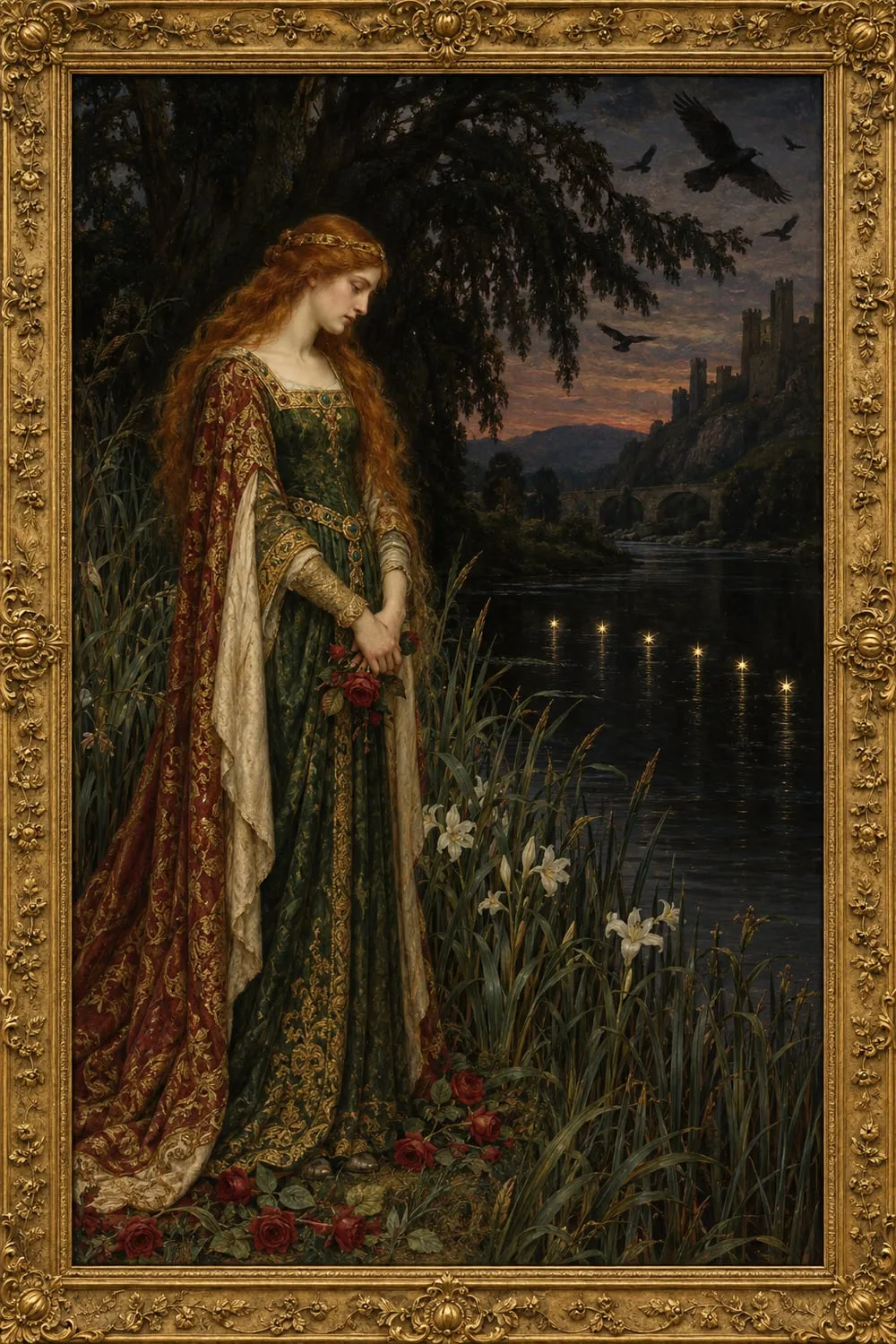
Seven stars in the still water,And seven in the sky;Seven sins on the King’s daughter,Deep in her soul to lie.
Red roses are at her feet,(Roses are red in her red-gold hair)And O where her bosom and girdle meetRed roses are hidden there.
Fair is the knight who lieth slainAmid the rush and reed,See the lean fishes that are fainUpon dead men to feed.
Sweet is the page that lieth there,(Cloth of gold is goodly prey,)See the black ravens in the air,Black, O black as the night are they.
What do they there so stark and dead?(There is blood upon her hand)Why are the lilies flecked with red?(There is blood on the river sand.)
There are two that ride from the south and east,And two from the north and west,For the black raven a goodly feast,For the King’s daughter rest.
There is one man who loves her true,(Red, O red, is the stain of gore!)He hath duggen a grave by the darksome yew,(One grave will do for four.)
No moon in the still heaven,In the black water none,The sins on her soul are seven,The sin upon his is one.
In brief
SummaryA dark ballad of a king's daughter who carries seven sins on her soul. Red roses lie at her feet and hide in her dress, while a slain knight and a page lie among the reeds, with fish and ravens gathering to feed on them. Short bracketed asides let slip what the main lines only hint: there is blood on her hand and on the river sand. Four riders come from the four quarters, and the one man who truly loves her digs a grave that 'will do for four'. The poem closes in total darkness, weighing her seven sins against his one.
Key themes
"Seven sins on the King's daughter,"

Summary
The poem opens with seven stars reflected in still water and seven in the sky, matched by 'Seven sins on the King's daughter, / Deep in her soul to lie'. Red roses are at her feet, in her 'red-gold hair', and hidden where her bosom meets her girdle. Beside the river lie two dead: a fair knight 'Amid the rush and reed', with lean fishes eager to feed on him, and a sweet page in cloth of gold, with black ravens circling above.
The speaker asks what the dead are doing there and why the lilies are 'flecked with red', and the bracketed answers come: 'There is blood upon her hand', 'There is blood on the river sand'. Two riders come from the south and east and two from the north and west, a coming feast for the raven and 'For the King's daughter rest'.
There is one man who loves her truly, and he has dug a grave by 'the darksome yew'; the aside adds that 'One grave will do for four'. The final stanza reverses the first: now there is no moon in the sky and none in the black water. 'The sins on her soul are seven, / The sin upon his is one.' The poem never says outright who killed whom, or what his one sin is.
Characters
The King's daughter
Beauty with seven sins
A princess with 'red-gold hair' and roses at her feet, whose soul carries seven sins. The bracketed asides place 'blood upon her hand', and the dead men by the river seem to be her victims or her suitors, though the poem never says exactly how they died.
The man who loves her true
The faithful gravedigger
The 'one man who loves her true', who has dug a grave by 'the darksome yew'. The last line gives him a single sin against her seven. The poem leaves open whether that sin is the digging of the grave, a killing, or simply his love for her.
The slain knight and page
The dead by the river
A 'fair' knight lying slain among the rushes, where lean fishes wait to feed, and a 'sweet' page in cloth of gold beneath circling ravens. They are the poem's first victims, found beside the river where the lilies are 'flecked with red'.
Themes
Beauty stained with blood
Red runs through the poem as both beauty and guilt. The King's daughter has red roses at her feet, in her 'red-gold hair' and at her girdle, but the same colour turns to the lilies 'flecked with red', to 'blood upon her hand', and to the aside 'Red, O red, is the stain of gore!' Her loveliness and the dead men beside the river are never separated.
The voice in brackets
The bracketed lines work like a second voice that says what the main lines avoid. The main voice admires the slain knight and page; the brackets note that 'Cloth of gold is goodly prey'. When the main voice asks 'Why are the lilies flecked with red?', the brackets reply 'There is blood on the river sand'. The grim joke 'One grave will do for four' also comes in brackets.
Numbers and fate
The poem is held together by counting. Seven stars in water and seven in the sky mirror 'Seven sins' on her soul. Riders come in pairs from the four quarters, 'One grave will do for four', and the last line sets her seven sins against his single one. The pattern makes the killings feel ritual and fated, and the closing darkness, 'No moon in the still heaven', undoes the starlight of the opening.
Context
'The Dole of the King's Daughter' appears in the 'Flowers of Gold' section of Wilde's collected poems. Its subtitle, '(Breton)', places it in the manner of a Breton ballad, just as the neighbouring 'Ballade de Marguerite' is marked '(Normande)'. 'Dole' is an old word that can mean grief, or a portion handed out. The poem uses short ballad stanzas with bracketed refrains, and tells its story through images rather than plain statement.
About this edition
- Text: the complete work from Standard Ebooks, released into the public domain (CC0 1.0). We change only the layout.
- Download the EPUB of the whole book it comes from, free, for any e-reader.
- Every quotation and glossary word in these notes is checked against the text.