Themes
Selfishness and its winter
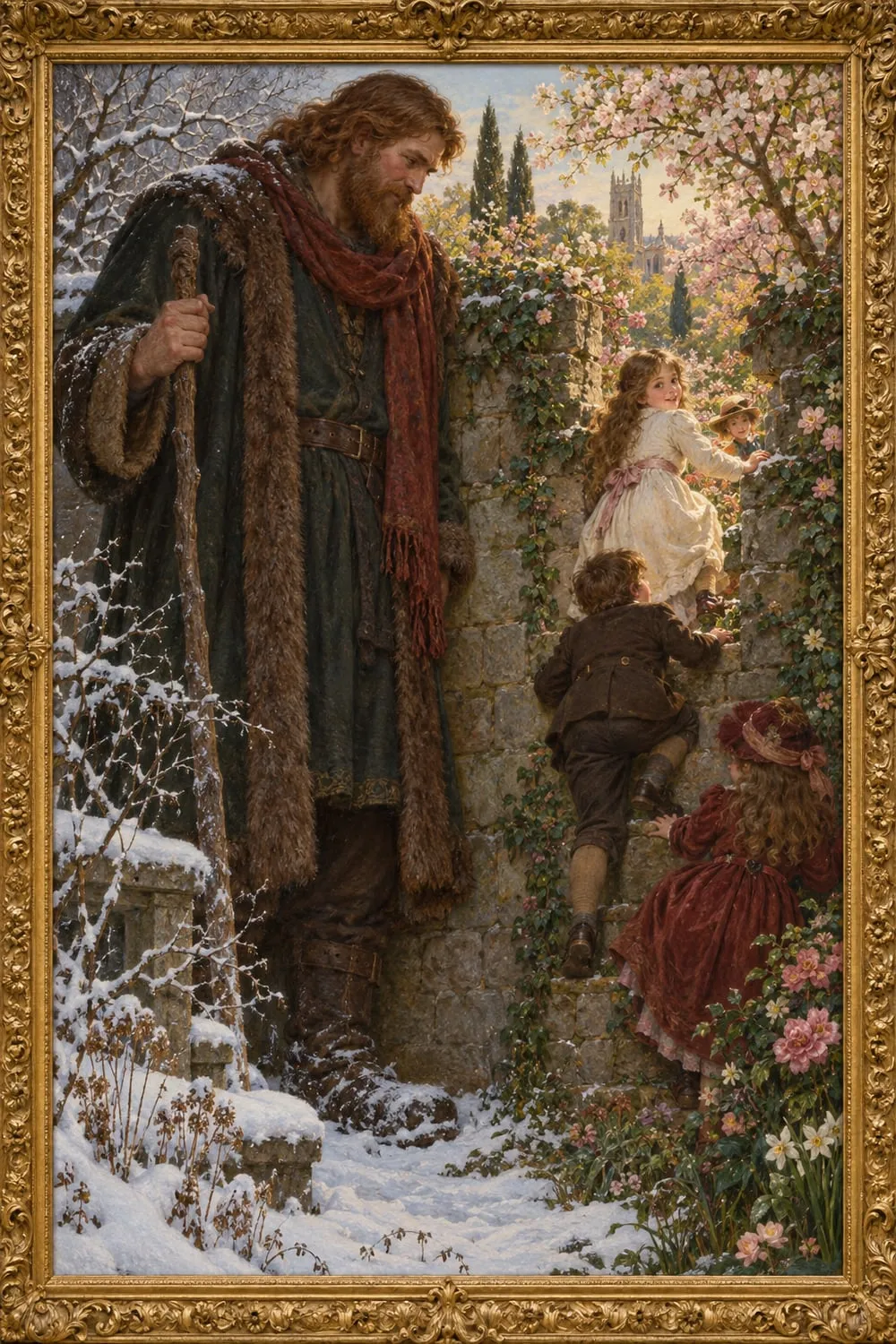
The Giant's selfishness is written into the weather. As soon as he builds his wall and puts up his noticeboard, Spring forgets the garden, the trees refuse to blossom, and a flower that sees the notice slips back into the ground out of sorrow for the children. Snow, Frost, the North Wind and the Hail move in like house guests, and Autumn withholds her fruit because 'He is too selfish'. The tale makes the moral visible: a closed heart produces a garden where it is always winter.
A change of heart
The Giant's conversion comes in a single moment of pity. Seeing the smallest boy crying beneath the one frozen tree, 'the Giant's heart melted', a phrase that matches the thaw outside. He says, 'How selfish I have been!', lifts the child into the branches and takes an axe to the wall. The man who drove the children away with a gruff voice ends the day playing with them, and in old age he no longer hates the Winter, knowing that it is 'merely the Spring asleep'.
Children and innocence
The children bring life wherever they go. The birds sing only where they play, and when they creep back through the wall the trees are so glad to have them that they burst into blossom. The smallest child is the one who changes the Giant, by kissing him when all the others have run away. The old Giant's saying that 'the children are the most beautiful flowers of all' sums up the tale's view that a garden is only beautiful when it is shared.
Christian redemption
The ending turns the fairy tale into a parable. The little boy returns under a tree of white blossom with golden branches and silver fruit, bearing 'the prints of two nails' in his hands and feet. When the Giant offers to take his big sword and slay whoever wounded him, the child answers that 'these are the wounds of Love', and the Giant kneels in awe. His one act of kindness, letting a child play in his garden, is repaid with a place in Paradise, and his death beneath the blossoms reads as a reward rather than a loss.