Summary
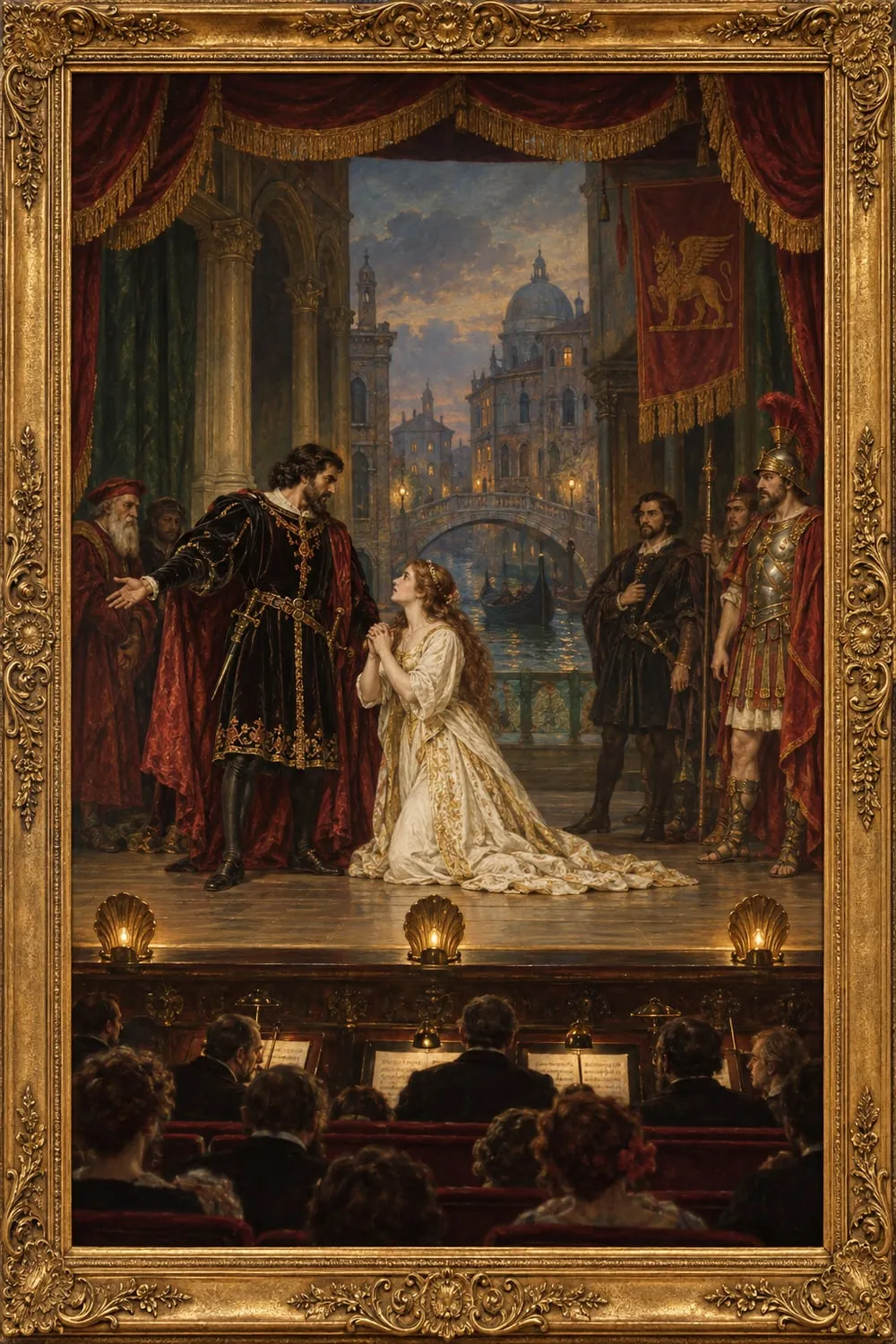
Critics of the splendid Shakespeare revivals of the day assume that Shakespeare was indifferent to costume, and Lord Lytton, writing in The Nineteenth Century, has called archaeology in Shakespearian production 'one of the stupidest pedantries of an age of prigs'. Wilde replies that no dramatist of the French, English or Athenian stage relies so much on dress for his effects. Shakespeare fills his plays with masques and dances, and his stage directions for the processions in Henry the Eighth are so exact that a courtier of the time complained of their realism.
Costume in Shakespeare is a means of drama, not decoration. Whole plays depend on disguise: Rosalind dressed 'in all points as a man', Portia as a lawyer, Imogen turned into the youth Fidele, Edgar in an idiot's rags, and Falstaff as a highwayman, an old woman, Herne the Hunter and the clothes going to the laundry. Dress intensifies situation: Macbeth enters in his night-gown after the murder, Timon ends in rags, and Prospero throws off his robes to reveal the Duke. Small objects carry great weight: Arthur's handkerchief, Imogen's bracelet, Portia's ring and Caesar's torn cloak in Antony's speech. Wilde recalls Salvini's Lear holding a feather from Kent's cap to Cordelia's lips.
Shakespeare, Wilde goes on, wrote as a dramatist with a rich wardrobe at his command. He tells us that Rosalind is tall and carries a spear, that Lysander wears Athenian dress, that Launce has holes in his boots, and he is 'quite elaborate' on the subject of stage beards. A surviving inventory of a London theatre of the time lists costumes for cardinals, kings and fools, gowns of cloth of gold, and 'a robe for to goo invisibell'. The age itself was archaeological: Wilde retells the legend of the body of 'Julia, daughter of Claudius', found in 1485 and worshipped until the Pope had it secretly buried, as an example of how the Renaissance used the antique world to create a new art.
Archaeology on the stage is 'legitimate and beautiful', because the stage 'is not merely the meeting-place of all the arts, but is also the return of art to life'. E. W. Godwin's first act of Claudian showed Byzantium in the fourth century without a lecture or a glossary. Keats's use of Lemprière's dictionary matters more than any scholar's theory, since 'Art, and art only, can make archæology beautiful'. Wilde contrasts a Cambridge Richard the Third acted in real period dresses from the Tower with Garrick's version, in which Richmond wore the uniform of a young guardsman. 'We look to the archæologist for the materials, to the artist for the method.'
The designer must first fix the right date for the play, judged by its spirit: Hamlet is 'a scholar of the Revival of Learning'. Shakespeare's anachronisms are few, while his fidelity to history is remarkable. He follows Holinshed closely, gives each age its social atmosphere, and is so exact about titles that the aristocracy might read him 'as a sort of early Peerage'. London's churches and the Tower showed him the armour and robes of the past, and Wilde argues that he studied Richard the Second's tomb and took Coriolanus's 'woolvish gown' straight from Plutarch.
Even if Shakespeare had not wished for accuracy, the modern stage requires it, provided detail stays subordinate to the play, as Hugo insists. Lord Lytton's proposal that dresses should be beautiful rather than accurate misunderstands costume, whose value is both pictorial and dramatic. Mixing periods turns the stage into a Fancy Dress Ball, and the dramatist aims at the characteristic, not the beautiful: one cannot dress a play by Sheridan like a play by Sophocles. Dress must also suit the actor and the action. In Mr. Hare's As You Like It the exiled Duke's court was too gorgeous for outlaws in a forest, while Godwin's production in Coombe Wood, in serge tunics and leather jerkins, looked perfectly natural.
The whole stage picture needs a single colour-scheme, free of hot reds, new-looking fabrics and poor blues, with black valued as a neutral, and this requires 'one single mind directing the whole production'; a theatre 'should be in the power of a cultured despot'. Actors need more dress rehearsals, because gesture depends on dress, and 'until an actor is at home in his dress, he is not at home in his part'. Wilde concludes that archaeology is a method of artistic illusion, and asks critics to cultivate a sense of beauty. Then he adds that he does not agree with everything he has said: the essay represents 'an artistic standpoint', and in art 'a Truth' is 'that whose contradictory is also true'.