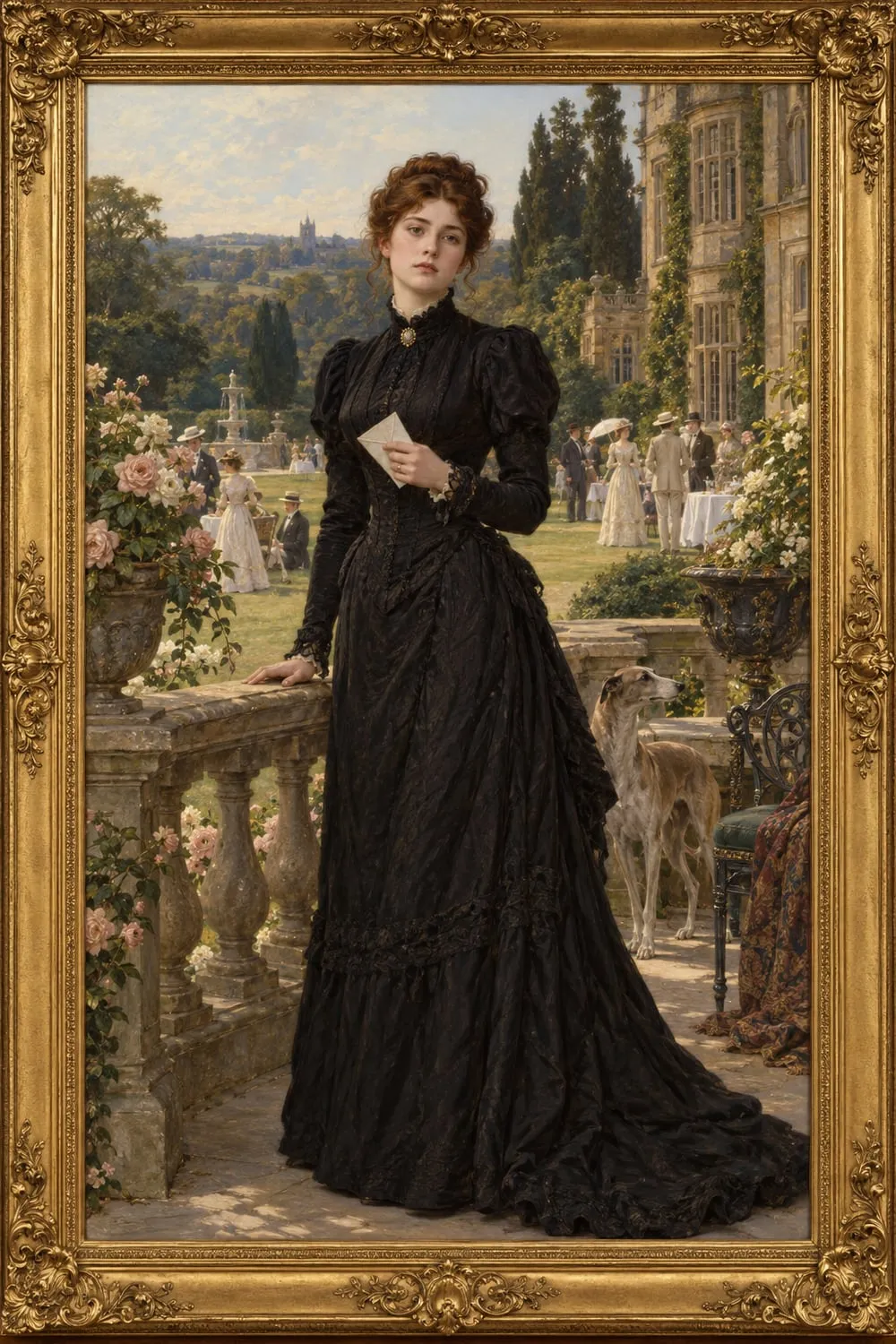
Painting for A Woman of No Importance

Society wit and a mother's buried secret

A Woman of No Importance

Play·1893·4 acts·about 1 h 30 min

"Oh! no one. No one in particular. A woman of no importance."
Lord Illingworth

The story in brief

Summary

Lord Illingworth, the wittiest guest at Lady Hunstanton's country house, has offered to make Gerald Arbuthnot, a young bank clerk, his private secretary. Gerald is delighted: the post could let him ask Hester Worsley, a rich and outspoken young American, to marry him. Mrs Allonby teases Lord Illingworth that the Puritan Hester would never let him kiss her, and he takes it as a challenge.

When Gerald's mother arrives after dinner, Lord Illingworth recognises her. Twenty years ago, as George Harford, he refused to marry her when she was carrying his child, and Gerald is their son. Mrs Arbuthnot dare not tell Gerald the truth, and cannot stop him going. She tells him the story as if it were another girl's, and he blames the girl. Then Hester runs in, insulted by Lord Illingworth's attempt to kiss her. When Gerald swears to kill him, his mother cries out that he is Gerald's father.

Next morning Gerald demands that Lord Illingworth marry his mother. She refuses to swear love to a man she loathes, and Hester, giving up her belief that the sins of the parents should fall on the children, takes her side and offers Gerald her love. Lord Illingworth comes with offers of money and then of marriage, and is refused. When he starts to call Rachel his mistress, she strikes him with his glove. Asked later who called, she says: a man of no importance.

Key themes

"the unspeakable in full pursuit of the uneatable."
Lord Illingworth

Summary

On the lawn at Hunstanton Chase, Lady Caroline Pontefract cross-examines Hester Worsley, a young American on her first visit to an English country house, and fusses over her husband, Sir John, sending him off for his overshoes. Gerald Arbuthnot, a young bank clerk, brings news that Lord Illingworth has offered to make him his secretary, and Lady Hunstanton, the hostess, writes at once to ask his mother to come up that evening. The rest of the party gathers: the daring Mrs Allonby, the gushing Lady Stutfield and Mr Kelvil, an MP who has spent the morning writing on Purity.

Lord Illingworth arrives and turns every subject into a paradox: America, votes for the uneducated, sympathy with the poor, the fox-hunting country gentleman. He strolls off with Mrs Allonby to see an orchid, and a note comes from Mrs Arbuthnot: she will come in the evening. Returning, Lord Illingworth and Mrs Allonby spar about men and women. She tells him that Hester, a Puritan, would never let him kiss her, and he takes it as a challenge. As they leave the lawn he picks up Mrs Arbuthnot's letter, remarks that the handwriting reminds him of a woman he used to know, and dismisses her as 'a woman of no importance'.

After dinner the ladies talk in the drawing-room. Mrs Allonby complains that her husband Ernest is uninteresting because he really had never loved anyone before her, and describes the Ideal Man at length. Hester, who has been listening quietly, condemns English society as shallow and selfish. She names Lord Henry Weston, who turns out to be Lady Caroline's brother, as a man with a hideous past who is asked everywhere, and demands that men and women who sin be punished alike. Mrs Arbuthnot comes in from the terrace just as Hester says, 'Let all women who have sinned be punished.' Lady Hunstanton, chattering about Lord Illingworth's family, lets slip that he was once plain George Harford, and Mrs Arbuthnot at once asks to see her son.

The men come in. Gerald brings Lord Illingworth to meet his mother; he starts at the sight of her and slowly turns his eyes to Gerald. Mrs Arbuthnot is cold and tries to discourage the appointment. When the others go to hear Hester play, the two are left alone and the truth comes out: she is Rachel, and Gerald is the son she bore after George Harford, then twenty-two, refused to marry her. He wants the boy now. She pleads with him to leave her the one thing she loves, but he points out that she dare not tell Gerald why he should refuse. When Gerald returns and asks for her reason, she says she has none, and Lord Illingworth leads him out to smoke on the terrace.

In the picture gallery Lord Illingworth tutors Gerald: youth is the Lord of Life, a well-tied tie is the first serious step in life, and the future belongs to the dandy. The guests gather and trade maxims on the secret of life; Mrs Arbuthnot says there are things women should never forgive, 'the ruin of another woman's life'. Gerald tells her they leave for India at the end of the month. Hester asks for her friendship, and the two agree that a woman who has sinned should be punished; when Mrs Arbuthnot adds the children, Hester calls it God's law.

Alone with his mother, Gerald says he loves Hester and needs the post so that he can ask her to be his wife. Mrs Arbuthnot tells him of a girl of little over eighteen whom George Harford persuaded to leave her father's house on a promise of marriage that he never kept, but she does not say the girl was herself. Gerald replies that no nice girl would have gone away with a man she was not married to, and she withdraws all her objections. At that moment Hester rushes in crying that Lord Illingworth has insulted her. Gerald swears to kill him, and his mother stops him with the words, 'He is your own father!' She sinks to the ground in shame, and Gerald raises her and leads her away.

Next morning at Wrockley, Lady Hunstanton and Mrs Allonby call and learn that Gerald has given up the post. When they go, Gerald tells his mother he has written to Lord Illingworth to say that he must marry her. She refuses. She will not stand before God's altar and swear to love and obey the man she loathes, and in a long speech she tells Gerald how she has lived for him, unable to repent a sin that gave her her son. Gerald still calls the marriage her duty, until Hester, who has come in unseen, embraces Mrs Arbuthnot and says such a marriage would be her first real dishonour. Hester declares that she has always loved Gerald, offers to share her wealth, and admits that she was wrong: 'God's law is only Love.' Mrs Arbuthnot leads her to Gerald, saying she cannot give him a father but has brought him a wife.

While the young people are in the garden, Lord Illingworth calls. He offers to leave Gerald Ashby, Harborough and his house in St James Square, and to have him for six months of every year. Finding Gerald's letter, he offers to marry Rachel to win back his son. She refuses because she hates him, tells him Gerald merely despises him, and says it was the Puritan who made Gerald see the truth. Taking his leave, Lord Illingworth recalls how she once gave herself to him and begins to call her his mistress. She strikes him across the face with his glove, and he goes. When Gerald finds the glove and asks who has called, his mother answers, 'Oh! no one. No one in particular. A man of no importance.'

Act by act

Summary
  1. Wilde dedicates the play to Gladys, Countess de Grey, and lists fifteen persons, from Lord Illingworth and the guests at Hunstanton Chase to the butler Farquhar, the footman Francis and the maid Alice. The first three acts take place at Hunstanton Chase, on the terrace, in the drawing-room and in the hall. The fourth is set in Mrs Arbuthnot's sitting-room at Wrockley. The time is the present, the place the Shires, and the action lasts less than twenty-four hours.

    Lord Illingworth, Mrs Arbuthnot, Gerald Arbuthnot, Hester Worsley, Lady Hunstanton, Mrs Allonby, Lady Caroline Pontefract, Sir John Pontefract, Archdeacon Daubeny, Lord Alfred Rufford, Mr Kelvil, Lady Stutfield

  2. Lady Hunstanton's guests gossip on the lawn at Hunstanton Chase, and Gerald Arbuthnot announces that Lord Illingworth has offered to make him his secretary. Lord Illingworth scatters paradoxes about America, politics and the fox-hunting country gentleman. Alone with him, Mrs Allonby says the Puritan Hester would never let him kiss her, and he takes it as a challenge. Picking up Mrs Arbuthnot's letter, he says the handwriting reminds him of a woman he once knew, a woman of no importance.

    Lord Illingworth, Mrs Arbuthnot, Gerald Arbuthnot, Hester Worsley, Lady Hunstanton, Mrs Allonby, Lady Caroline Pontefract, Sir John Pontefract, Lord Alfred Rufford, Mr Kelvil, Lady Stutfield

  3. After dinner the ladies discuss husbands, and Mrs Allonby describes the Ideal Man. Hester denounces English society and its one law for men and another for women, just as Mrs Arbuthnot arrives. Lady Hunstanton's gossip reveals that Lord Illingworth is George Harford, the father of Mrs Arbuthnot's son. Left alone with her, he claims Gerald, and because she dare not tell the boy the truth, she has to let him go.

    Lord Illingworth, Mrs Arbuthnot, Gerald Arbuthnot, Hester Worsley, Lady Hunstanton, Mrs Allonby, Lady Caroline Pontefract, Sir John Pontefract, Archdeacon Daubeny, Lord Alfred Rufford, Lady Stutfield

  4. Lord Illingworth teaches Gerald how to live: dress well, charm women and dominate the dinner-table. Mrs Arbuthnot and Hester agree that sinners, and even their children, should be punished. Gerald, set on going to India and on marrying Hester, dismisses the story his mother tells of a ruined girl. Then Hester runs in, insulted by Lord Illingworth, and when Gerald threatens to kill him, his mother cries out that he is Gerald's own father.

    Lord Illingworth, Mrs Arbuthnot, Gerald Arbuthnot, Hester Worsley, Lady Hunstanton, Mrs Allonby, Lady Caroline Pontefract, Sir John Pontefract, Archdeacon Daubeny, Lord Alfred Rufford, Mr Kelvil, Lady Stutfield

  5. At Wrockley next morning, Gerald has written to tell Lord Illingworth that he must marry his mother. Mrs Arbuthnot refuses to lie to God at the altar and pours out her love for the child of her shame. Hester takes her side, renounces her harsh creed and offers herself to Gerald. Lord Illingworth offers money and then marriage, is refused, and is struck across the face with his own glove.

    Lord Illingworth, Mrs Arbuthnot, Gerald Arbuthnot, Hester Worsley, Lady Hunstanton, Mrs Allonby

Characters

  • Painted portrait of Lord Illingworth

    Lord Illingworth

    Charm without conscience

    Born George Harford, a younger son who came into the title about four years before the play begins, he is the most brilliant talker at Hunstanton and turns every subject into a paradox. Twenty years ago he refused to marry Rachel Arbuthnot when she was carrying his child. Meeting Gerald by chance, he takes to him and offers him a post; on learning the truth, he wants his son. He loses him through his own attempt to kiss Hester.

  • Painted portrait of Mrs Arbuthnot

    Mrs Arbuthnot

    The mother with a past

    Rachel, who left her father's house at little over eighteen with George Harford on his promise of marriage. She left him after their son was born and has lived for twenty years at Wrockley under a name she has no right to, working among the poor and going to church. She loves Gerald with a fierceness bound up with her shame, refuses to marry his father even when he offers, and in the last scene strikes him with his own glove.

  • Painted portrait of Gerald Arbuthnot

    Gerald Arbuthnot

    The ambitious son

    A clerk in a small provincial bank on a hundred a year, he has not been to Eton or Oxford like other young men and is dazzled by Lord Illingworth's offer and his talk. He loves Hester. Told his mother's story as if it were a stranger's, he blames the girl. Once he knows the truth, he demands that his father marry her, until his mother and Hester show him why that would be wrong.

  • Painted portrait of Hester Worsley

    Hester Worsley

    The American Puritan

    An American orphan of eighteen, rich from her father's fortune and staying at Hunstanton, who says exactly what she thinks. In the drawing-room she condemns English society and demands that men and women who sin be punished alike. Lord Illingworth's attempt to kiss her brings the truth about Gerald's birth into the open. In the last act she takes Mrs Arbuthnot's side, gives up her harsh creed, and offers Gerald her love and her fortune.

  • Painted portrait of Lady Hunstanton

    Lady Hunstanton

    The forgetful hostess

    Jane, the kind and muddled mistress of Hunstanton Chase, is forever half-remembering old scandals and forgetting whether a man died of joy or gout. She believes good of everyone, enjoys Lord Illingworth's talk without understanding a word of it, and thinks of Mrs Arbuthnot as a sweet saint. Her gossip about the Harford family is what tells Mrs Arbuthnot that Lord Illingworth is George Harford.

  • Painted portrait of Mrs Allonby

    Mrs Allonby

    The clever flirt

    A married woman with a quick, daring tongue who, as Lady Hunstanton tells her, never means a single word she says. She finds her husband Ernest tedious, describes the Ideal Man in a dazzling speech, and spars with Lord Illingworth as his equal. Her remark that the Puritan would never let him kiss her sets off the crisis of the third act.

  • Painted portrait of Lady Caroline Pontefract

    Lady Caroline Pontefract

    Propriety in command

    Sir John's wife and a stickler for what is done, she disapproves of Mrs Allonby, American girls and people who work for their living, and keeps her husband in mufflers and overshoes. She never gets Mr Kelvil's name right. She calls her brother, Lord Henry Weston, infamous but forgives him for his cook, and in the third act hunts the house for Sir John.

  • Painted portrait of Sir John Pontefract

    Sir John Pontefract

    The managed husband

    Lady Caroline's husband, fussed over and ordered about whenever she can see him. His one steady task is correcting her about Mr Kelvil's name. Mrs Allonby says he is Lady Caroline's fourth husband. Out of her sight in the evening he is reported with Lady Stutfield and turns up with Mrs Allonby, who says he talked to her about Patagonia.

  • Painted portrait of Archdeacon Daubeny

    Archdeacon Daubeny

    The cheerful clergyman

    The rector at Hunstanton, who regards Mrs Arbuthnot as his right hand in the parish. He talks happily of his invalid wife, who is deaf, losing her sight, crippled by gout, living on jellies and remembering only her childhood, and insists each time that she is never morbid and has nothing to complain of. He leaves early because Tuesday is one of her bad nights.

  • Painted portrait of Lord Alfred Rufford

    Lord Alfred Rufford

    The idle young man

    A young man about town who smokes gold-tipped cigarettes he can only afford when he is in debt. Debt, he explains to Lady Stutfield, gives him something to think about, and it is no trouble, since his creditors write and he does not. He attaches himself to Lady Stutfield and has little else to do in the play.

  • Painted portrait of Mr Kelvil

    Mr Kelvil

    The moralising politician

    A Member of Parliament who spends his mornings writing on Purity and believes women are always on the side of morality. He praises the beauty of English home life while his wife and eight children stay at the seaside without him. Lady Caroline keeps calling him Mr Kettle. His secret of life is to resist temptation, and Lady Stutfield recalls him talking to her about Bimetallism.

  • Painted portrait of Lady Stutfield

    Lady Stutfield

    The eager echo

    A soft, admiring guest who echoes whoever is speaking, doubles her words ('very, very', 'quite, quite') and finds every remark helpful. She admires men with square chins and believes the secret of life is to appreciate the pleasure of being terribly, terribly deceived. Lady Hunstanton calls her very sympathetic: just as sympathetic about one thing as about another.

Themes

One law for men, another for women

Hester's outburst in the drawing-room names the play's central injustice: 'Don't have one law for men and another for women.' The play then proves her point. George Harford, who refused to marry the girl he seduced, has become Lord Illingworth, a man Lady Caroline calls 'of high distinction', talked of for an embassy. Rachel has spent twenty years under a name she has no right to, working among the poor and keeping away from society. In the last act she sums it up without self-pity: 'I am disgraced: he is not.' The woman suffers and the man goes free, and only Hester's change of heart suggests that the rule can be broken.

Mothers and sons

The play turns on a struggle for Gerald between the mother who raised him and the father who has just found him. Lord Illingworth warns Rachel that children 'begin by loving their parents. After a time they judge them.' Gerald proves him half right when he blames the ruined girl in his mother's story. Mrs Arbuthnot's great speech in the last act answers with a love that is fierce and physical: she fought death to keep a sickly baby alive, and she cannot repent a sin whose fruit is her son. It ends with her plea: 'Child of my shame, be still the child of my shame!'

Wit without a heart

Lord Illingworth talks in paradoxes about everything: America, politics, health, women, marriage and sin. Lady Hunstanton finds it all 'excessively immoral' and 'most interesting', and the party treats him as the best company in the house. The play lets his talk run freely, then tests it. His lesson to Gerald in the picture gallery, that 'the future belongs to the dandy', is followed later that evening by the attempted kiss that exposes him. In the last scene his wit fails him: reaching for one more light phrase about 'one's mistress', he is struck with his own glove and leaves without a word.

Puritanism and forgiveness

Hester arrives as a stern Puritan. She tells the drawing-room 'Let all women who have sinned be punished,' and in the third act agrees with Mrs Arbuthnot that the sins of the parents should be visited on the children: 'It is God's law.' She does not know she is condemning the woman beside her and the man she loves. Once the truth is out she changes. She takes Mrs Arbuthnot's part against Gerald, offers to share her fortune, and reverses her creed in a single line: 'God's law is only Love.' The play ends with a family made by forgiveness rather than by law.

English society on trial

Hunstanton Chase is full of people who preach one thing and live another. Mr Kelvil writes on Purity and the beauty of English home life while his wife and eight children stay at the seaside without him. Lady Caroline calls her brother 'infamous, absolutely infamous' but forgives him because he keeps one of the best cooks in London. Hester, the outsider, tells them their society 'lies like a leper in purple', shutting out the gentle and the good. Lady Hunstanton welcomes Mrs Arbuthnot as a sweet saint, and never learns that she is exactly the kind of woman her guests would shun.

Context

A Woman of No Importance was Wilde's second play of modern society, after Lady Windermere's Fan. It was first performed at the Haymarket Theatre, London, on 19 April 1893, in a production by Herbert Beerbohm Tree, who played Lord Illingworth himself, the part that carries most of the play's epigrams.

John Lane published the play in 1894, with a dedication to Gladys, Countess de Grey. The printed text sets the action in the present day, in the Shires, and keeps it within twenty-four hours: three acts at Hunstanton Chase, a great country house, and the last in Mrs Arbuthnot's modest sitting-room at Wrockley.

The play sets the witty talk of a society comedy beside the serious story of a woman with a past. For most of the first act almost nothing happens except conversation, and the plot about Rachel Arbuthnot, George Harford and their son surfaces only in the act's last line, when Lord Illingworth tosses aside a letter in a handwriting he half remembers. From the second act on, that story takes over. The title turns on that line, and Mrs Arbuthnot answers it in the play's last words.

First performed at the Haymarket Theatre, London, on 19 April 1893; published 1894.

About this edition

  • Text: the complete work from Standard Ebooks, released into the public domain (CC0 1.0). We change only the layout.
  • Download the EPUB, free, for any e-reader.
  • Audiobook: a full-cast reading by volunteers for LibriVox, in the public domain.
  • Every quotation and glossary word in these notes is checked against the text.