Themes
The past that returns
Nothing in the play stays buried. Robert's letter to Baron Arnheim, written eighteen years earlier, comes back from Vienna in Mrs Cheveley's hands, and she tells him "Even you are not rich enough, Sir Robert, to buy back your past." Lady Chiltern holds that "One's past is what one is," while Robert pleads that no one "should be entirely judged by their past." Mrs Cheveley's own past catches her too: the brooch she stole from Lady Berkshire ten years before becomes the trap that frees Robert. When Goring burns the letter, Robert wishes he had seen "that one sin of my youth burning to ashes."
Ideals and forgiveness
Lady Chiltern loves her husband as an ideal: "We women worship when we love; and when we lose our worship, we lose everything." When she learns the truth, Robert turns the charge back on her, arguing that women make "false idols" of men and that "It is not the perfect, but the imperfect, who have need of love." The last act tests whether an ideal can give way to forgiveness. Gertrude first wants Robert to give up public life as a penance, then tears up his letter to the Prime Minister: "You can forget. Men easily forget. And I forgive." Mabel has the final word on perfection, finding an ideal husband "like something in the next world."
Wealth, power and ambition
Robert's crime began with an argument. Baron Arnheim preached "the gospel of gold", teaching that power over other men was "the one thing worth having" and that only the rich possessed it. Robert still half believes him: "The God of this century is wealth," he tells Goring, insisting that he "bought success at a great price" and that yielding to such a temptation takes "strength and courage". Goring calls it "A thoroughly shallow creed." Mrs Cheveley, heir to most of the Baron's fortune, treats blackmail as "a commercial transaction". When she refuses Robert's money, Goring observes that "The rich can't do everything, after all."
Public virtue, private secrets
Robert tells his wife that "public and private life are different things", and Gertrude answers that they "should both represent man at his highest." Mrs Cheveley mocks England's "modern mania for morality", under which a scandal no longer adds interest to a man but crushes him. Goring explains why confession is impossible: a politician must be able to "talk morality twice a week to a large, popular, immoral audience". The irony peaks in the last act, when The Times praises Robert's "Unblemished career" as a "Noble contrast to the lax morality so common among foreign politicians", and he is offered a Cabinet seat for his "high moral tone".
The dandy as moralist
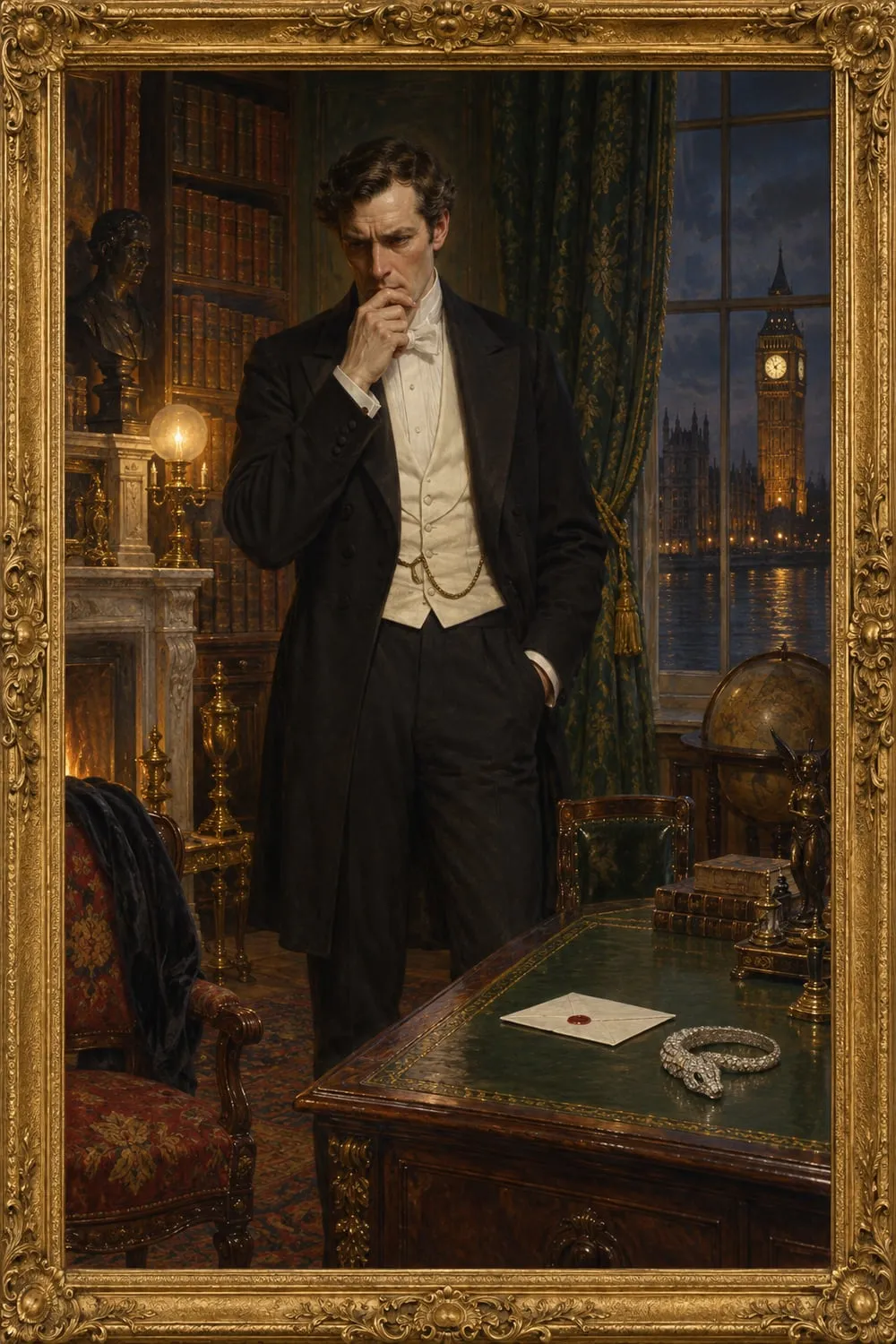
Lord Goring passes for the idlest man in London, and his father calls him "heartless" again and again. The stage directions see further, calling him "the first well-dressed philosopher in the history of thought." His paradoxes to Phipps about buttonholes, and about self-love as "a lifelong romance", are a pose. Beneath it he gives the play's most humane advice, telling Gertrude that "life cannot be understood without much charity". He alone solves the plot, recognising the stolen brooch and turning it into a bracelet Mrs Cheveley cannot remove. Even his proposal to Mabel he calls "a flash of genius", his first and, he promises, his last.
Men, women and marriage
The play is full of marriages under strain, from Lady Markby's complaints about Sir John's speeches to Mrs Marchmont's boredom with a husband "quite hopelessly faultless". Lady Chiltern is a political woman in her own right, working on "Factory Acts, Female Inspectors" and the franchise with the Woman's Liberal Association. Yet the ending turns on Goring's lecture that "A man's life is of more value than a woman's", which Gertrude repeats almost word for word as she tears up Robert's letter. Mabel is the counterweight: she refuses to marry "a man with a future before him", laughs at the idea of an ideal husband, and wants only to be "a real wife".