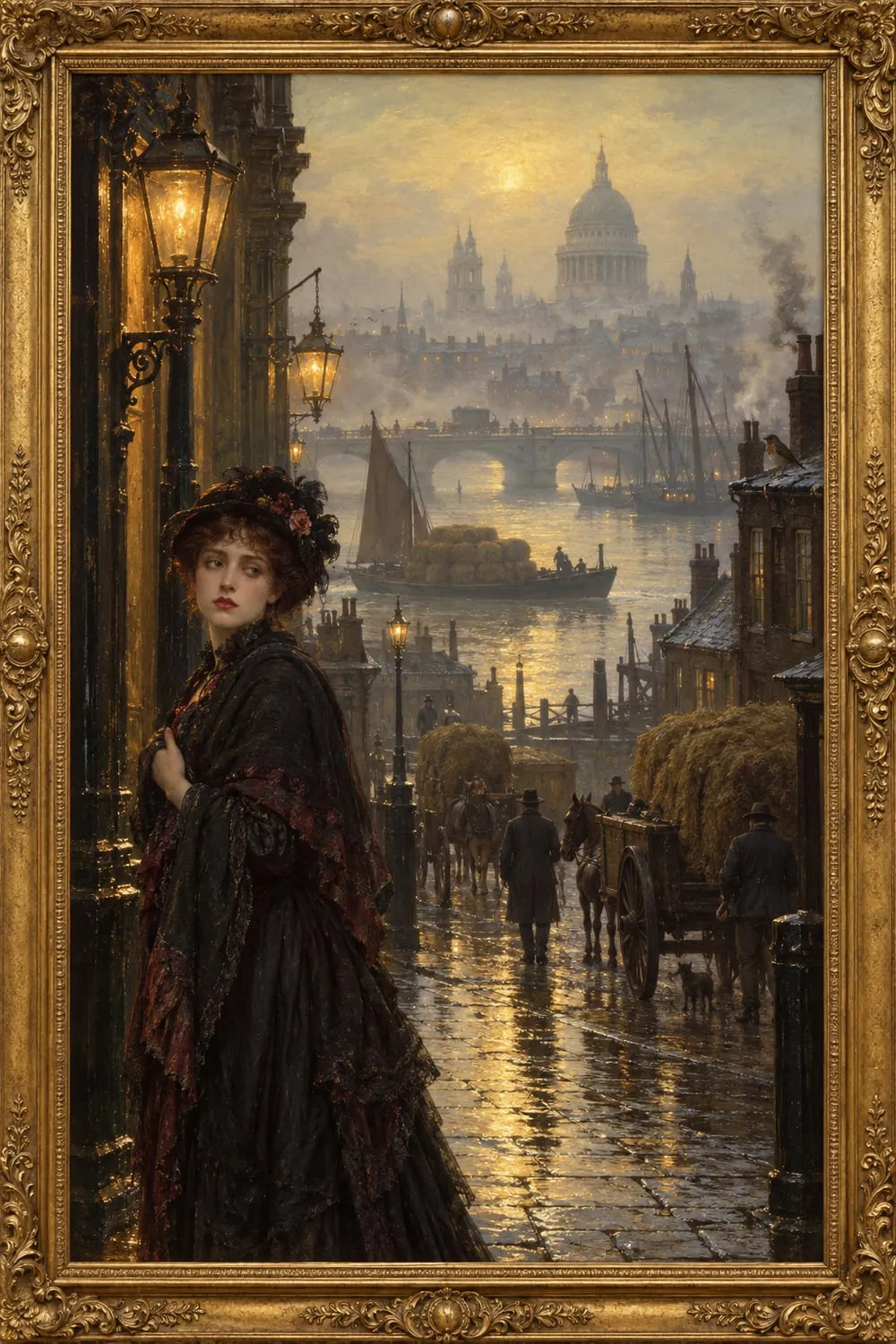
London wakes in a yellow fog
Impression du Matin
"With lips of flame and heart of stone."
Poem
The Thames nocturne of blue and goldChanged to a Harmony in grey:A barge with ochre-coloured hayDropt from the wharf: and chill and cold
The yellow fog came creeping downThe bridges, till the houses’ wallsSeemed changed to shadows and St. Paul’sLoomed like a bubble o’er the town.
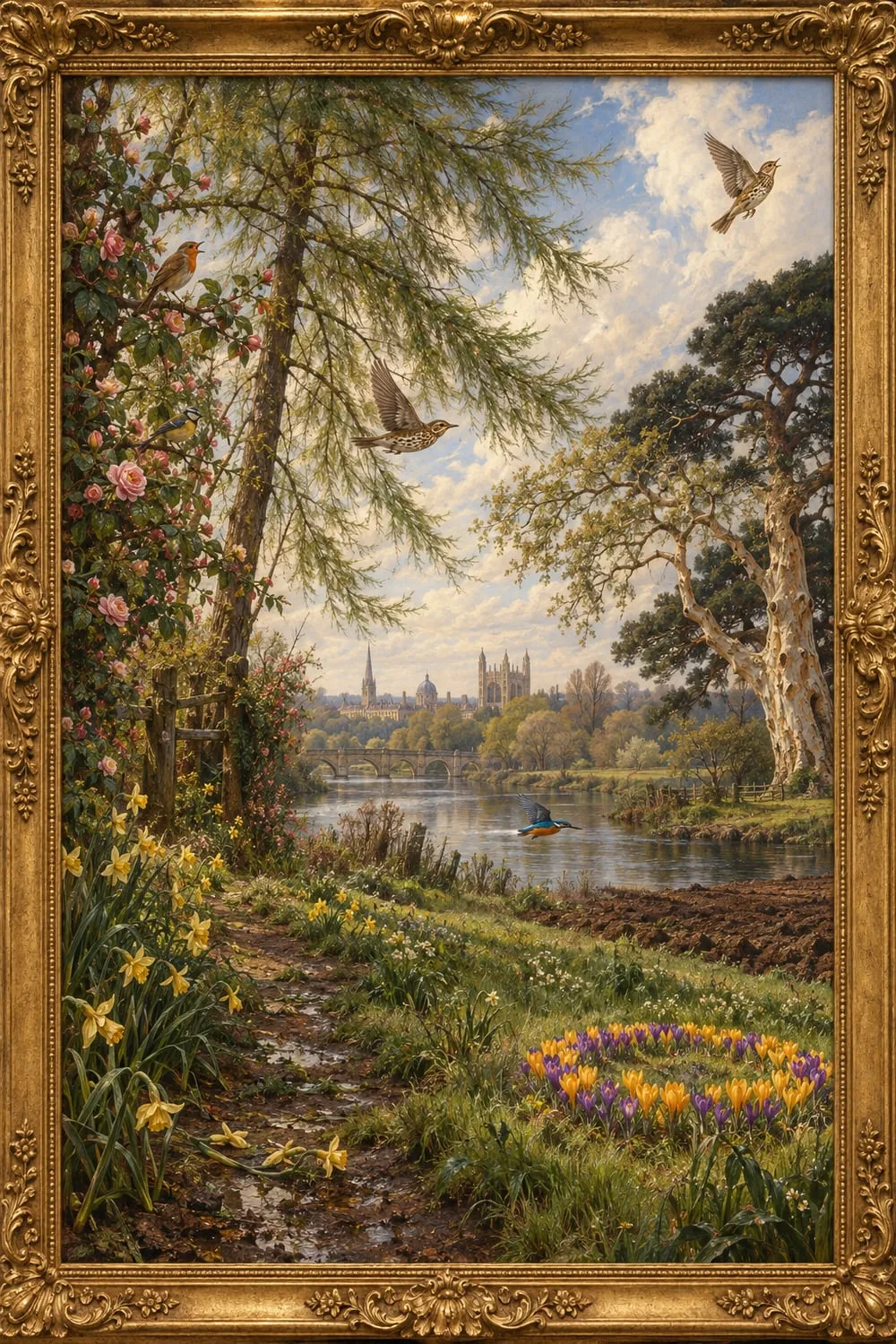
Then suddenly arose the clangOf waking life; the streets were stirredWith country wagons: and a birdFlew to the glistening roofs and sang.
But one pale woman all alone,The daylight kissing her wan hair,Loitered beneath the gas lamps’ flare,With lips of flame and heart of stone.
In brief
SummaryAt dawn on the Thames the night's blue and gold give way to grey. A hay barge drifts from a wharf, and a cold yellow fog creeps down over the bridges until the houses seem shadows and St Paul's looms 'like a bubble o'er the town'. Suddenly the city wakes: country wagons fill the streets and a bird sings on the glistening roofs. The last stanza sets one figure apart, a pale woman loitering alone beneath the gas lamps 'With lips of flame and heart of stone', left over from the night as the day begins.
Key themes
"The Thames nocturne of blue and gold"
Summary
The French title means 'Impression of Morning'. The first two stanzas paint the river as the light changes. 'The Thames nocturne of blue and gold' becomes 'a Harmony in grey', words borrowed from the titles painters gave their pictures. A barge loaded with 'ochre-coloured hay' drops from the wharf, and a 'chill and cold' yellow fog creeps down the bridges until the walls of the houses seem 'changed to shadows' and St Paul's 'Loomed like a bubble o'er the town'.
In the third stanza the scene fills with sound: 'the clang Of waking life', streets 'stirred With country wagons', and a bird that flies 'to the glistening roofs and sang'.
The last stanza turns on 'But'. One pale woman stands 'all alone', the daylight 'kissing her wan hair', and loiters 'beneath the gas lamps' flare' that still burn from the night. She has 'lips of flame and heart of stone', and the waking city passes her by.
Characters
The pale woman
Alone beneath the gas lamps
The only person the poem singles out: a woman with wan hair who loiters alone under the gas lamps as the day begins, 'With lips of flame and heart of stone'. She seems to belong to the night streets, and the waking city takes no notice of her.
Themes
Painting in words
The poem borrows the vocabulary of painting: 'nocturne', 'Harmony in grey', 'ochre-coloured', 'blue and gold'. It records how things look rather than what they mean. Fog turns walls into 'shadows', and the great dome of St Paul's becomes 'a bubble'. The title's 'Impression' promises a quick, exact record of light and colour at one moment of the day.
The city's outcast
Three stanzas describe a whole city waking into life. The fourth isolates 'one pale woman all alone' who 'Loitered beneath the gas lamps' flare' after the night. Her 'lips of flame' suggest passion or paint, her 'heart of stone' a hardness learned from her life. The poem gives her no story, only her place at the edge of the busy morning, and the contrast carries its sadness.
Night into day
The poem moves from a 'nocturne' to daylight in sixteen lines. First the colours drain to grey, then fog blurs every shape, then 'suddenly' sound and life return. The woman belongs to the night that has ended: the gas lamps are still flaring though 'The daylight' is 'kissing her wan hair'. Morning brings renewal to the city but not to her.
Context
Impression du Matin appears in the Wind Flowers group of Wilde's Poems (1881). It is set on the Thames in London, with St Paul's in view, and is written in four stanzas of four lines. Its opening words, 'nocturne' and 'Harmony in grey', echo the musical titles that the painter James McNeill Whistler gave to his pictures of the Thames.
About this edition
- Text: the complete work from Standard Ebooks, released into the public domain (CC0 1.0). We change only the layout.
- Download the EPUB of the whole book it comes from, free, for any e-reader.
- Every quotation and glossary word in these notes is checked against the text.