Themes
Good and bad women
Lady Windermere begins the play certain that women who have committed 'what the world calls a fault' should never be forgiven, and that life would be simpler with 'hard and fast rules'. The subtitle, A Play About a Good Woman, leaves open which woman is meant. By the last act the Puritan has nearly ruined herself, and the woman she called vile has saved her. She tells her husband that people cannot be divided 'into the good and the bad as though they were two separate races or creations', and the final line gives Mrs Erlynne the title of a very good woman.
A mother's sacrifice
Mrs Erlynne abandoned her child and has lived for twenty years without her. Reading her daughter's farewell letter, she recognises 'the same words' she once wrote to her own husband, and for the first time feels what she later calls a mother's feelings: 'They were terrible'. In Lord Darlington's rooms her plea rests on the child waiting at home, and she gives up her own name to protect her daughter. Yet she refuses a sentimental ending. She will not weep on her daughter's neck or retire to a convent, and she leaves to marry Lord Augustus.
Secrets and silence
Every main character ends the play keeping something back. Lord Windermere hides Mrs Erlynne's identity to spare his wife, and pays for it with the first quarrel of their marriage. Mrs Erlynne forbids him to reveal it and chooses not to tell Lady Windermere herself. Lady Windermere, in turn, promises never to tell her husband that she went to Lord Darlington's rooms. 'Then pay your debt by silence,' Mrs Erlynne tells her. The marriage survives because each partner is protected by a truth the other does not know.
Scandal and society
London society in the play lives on talk. The Duchess of Berwick passes on the gossip of her nieces, the Saville girls, then reverses her opinion of Mrs Erlynne after one conversation at the ball. Lady Jedburgh invites her to lunch, and Lady Plymdale wants her as a distraction for her own husband, since such women 'form the basis of other people's marriages'. Cecil Graham calls scandal 'gossip made tedious by morality'. A reputation, the play suggests, depends less on what a woman has done than on which houses are seen to receive her.
The fan
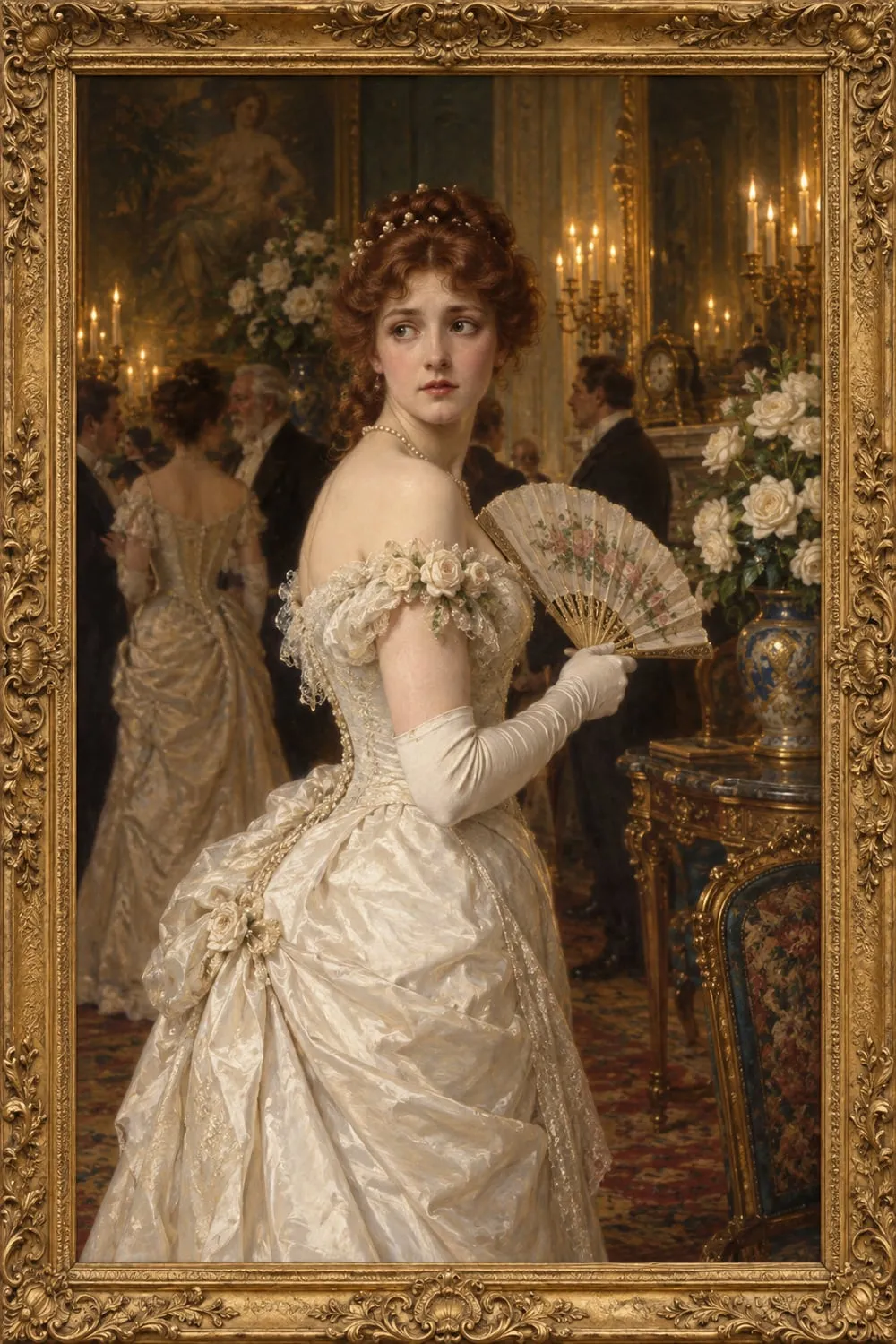
The fan carries the plot. It is Lord Windermere's birthday present to his wife, and it has her name, Margaret, on it. She threatens to strike Mrs Erlynne across the face with it, but lets it drop when her rival enters, and Lord Darlington hands it back to her. Left on his sofa, it is the evidence that nearly exposes her, and Mrs Erlynne's false claim to it saves her. In Act IV Mrs Erlynne asks for the fan and carries it away, since the name on it is hers too.
Marriage and money
The society of the play treats marriage as a market. The Duchess of Berwick says she accepted her husband only because of his threats of suicide, and calls Agatha's engagement 'love at the end of the season'. Mrs Erlynne, about to accept Lord Augustus, asks Lord Windermere for £2,000, then £2,500 a year, because 'In modern life margin is everything'. Dumby complains that women nowadays are 'awfully commercial'. Against this, Lady Windermere calls life 'a sacrament' whose purification is sacrifice, and it is Mrs Erlynne's unpaid sacrifice that settles the play.