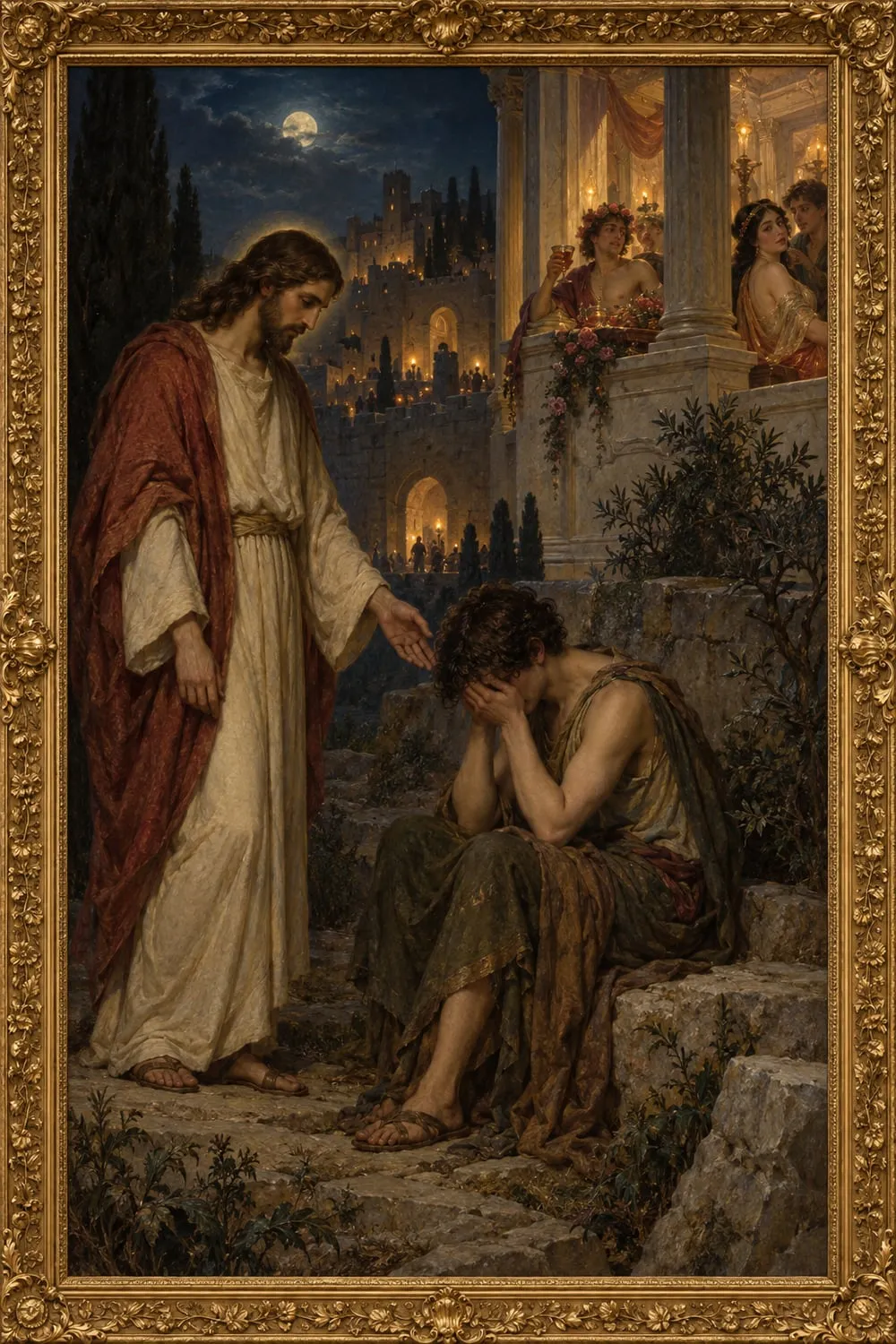
Christ meets those He has saved
The Doer of Good
"What else should I do but weep?"
Poem in prose
It was night-time and He was alone.
And He saw afar-off the walls of a round city and went towards the city.
And when He came near He heard within the city the tread of the feet of joy, and the laughter of the mouth of gladness and the loud noise of many lutes. And He knocked at the gate and certain of the gate-keepers opened to Him.
And He beheld a house that was of marble and had fair pillars of marble before it. The pillars were hung with garlands, and within and without there were torches of cedar. And He entered the house.
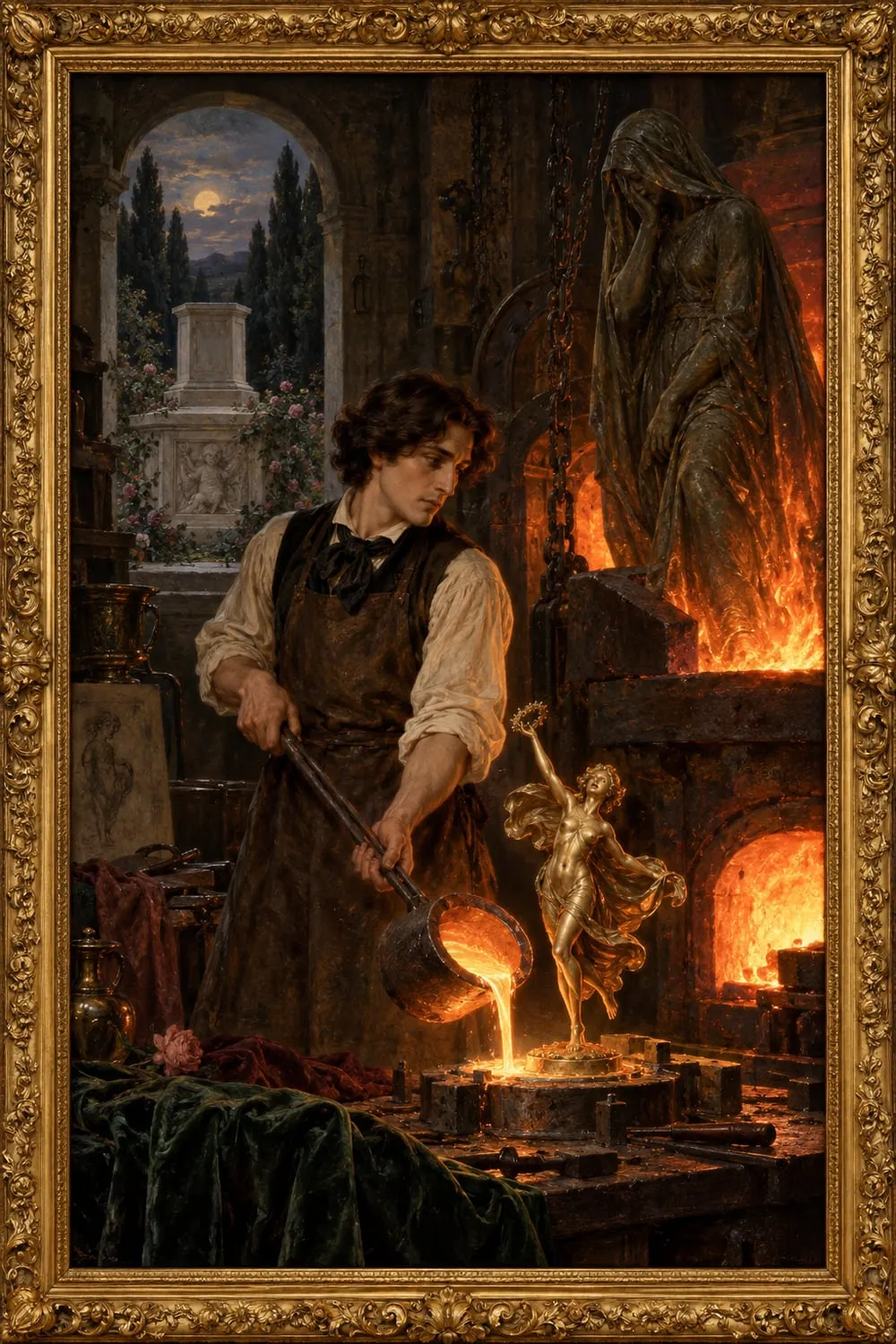
And when He had passed through the hall of chalcedony and the hall of jasper, and reached the long hall of feasting, He saw lying on a couch of sea-purple one whose hair was crowned with red roses and whose lips were red with wine.
And He went behind him and touched him on the shoulder and said to him, “Why do you live like this?”
And the young man turned round and recognised Him, and made answer and said, “But I was a leper once, and you healed me. How else should I live?”
And He passed out of the house and went again into the street.
And after a little while He saw one whose face and raiment were painted and whose feet were shod with pearls. And behind her came, slowly as a hunter, a young man who wore a cloak of two colours. Now the face of the woman was as the fair face of an idol, and the eyes of the young man were bright with lust.
And He followed swiftly and touched the hand of the young man and said to him, “Why do you look at this woman and in such wise?”
And the young man turned round and recognised Him and said, “But I was blind once, and you gave me sight. At what else should I look?”
And He ran forward and touched the painted raiment of the woman and said to her, “Is there no other way in which to walk save the way of sin?”
And the woman turned round and recognised Him, and laughed and said, “But you forgave me my sins, and the way is a pleasant way.”
And He passed out of the city.
And when He had passed out of the city He saw seated by the roadside a young man who was weeping.
And He went towards him and touched the long locks of his hair and said to him, “Why are you weeping?”
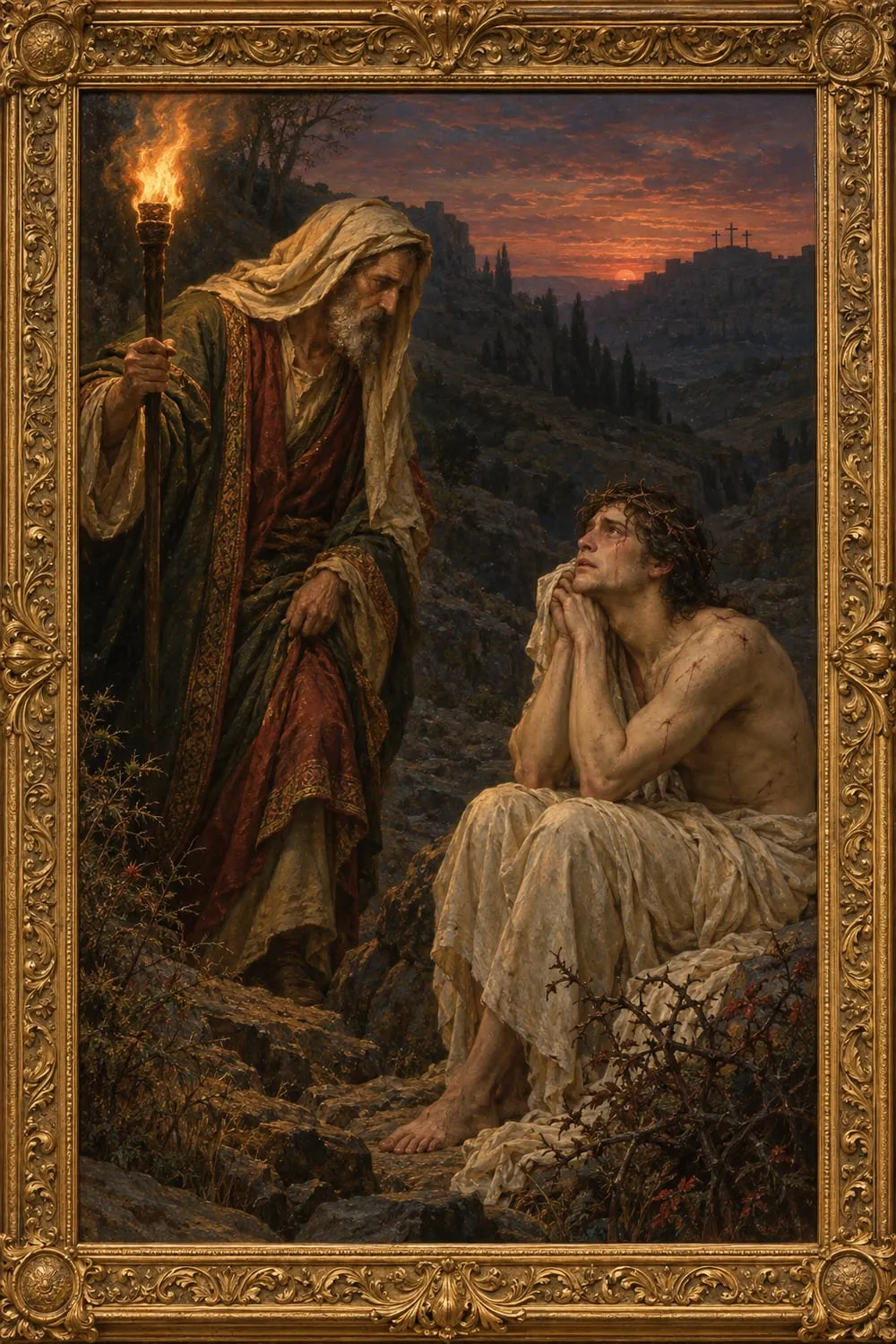
And the young man looked up and recognised Him and made answer, “But I was dead once, and you raised me from the dead. What else should I do but weep?”
In brief
SummaryAt night a figure called only 'He', marked as Christ by His past miracles, comes to a city full of revelry. In a marble house He finds a young man crowned with roses and flushed with wine, and asks why he lives like this; the man answers that he was a leper once and was healed. In the street a young man follows a painted woman with lustful eyes: he was blind, and was given sight. The woman laughs that she was forgiven, 'and the way is a pleasant way.' Outside the city a young man weeps, for he was dead once and was raised.
Key themes
"But I was a leper once, and you healed me. How else should I live?"
Summary
It is night, and He is alone. He sees a round city, hears within it 'the tread of the feet of joy' and the noise of many lutes, and the gate-keepers let Him in. He enters a marble house hung with garlands and lit by cedar torches, passes through halls of chalcedony and jasper, and in the hall of feasting sees a young man on a couch of sea-purple, his hair crowned with red roses and his lips red with wine. He touches his shoulder and asks, 'Why do you live like this?' The young man recognises Him: 'But I was a leper once, and you healed me. How else should I live?'
In the street He sees a woman with painted face and raiment and feet shod with pearls, followed 'slowly as a hunter' by a young man whose eyes are bright with lust. Asked why he looks at the woman so, the young man says, 'But I was blind once, and you gave me sight. At what else should I look?' He asks the woman whether there is no way to walk 'save the way of sin'. She laughs: 'But you forgave me my sins, and the way is a pleasant way.'
He leaves the city and finds a young man weeping by the roadside. Touching his long hair, He asks why he weeps. The young man looks up, recognises Him, and answers, 'But I was dead once, and you raised me from the dead. What else should I do but weep?' The story ends on that question.
Characters
He
The doer of good
The figure the story calls only 'He', marked as Christ by the capital letter and by His past miracles. At night He walks through a city of pleasure and meets people He has healed, restored or forgiven. He asks each a question, hears what they have made of His mercy, and passes on without a word.
The young man at the feast
The healed leper
A young man lying on a couch of sea-purple in a marble house, his hair crowned with red roses and his lips red with wine. Asked why he lives like this, he answers that he was a leper and was healed: 'How else should I live?'
The young man in the street
The man given sight
A young man in a cloak of two colours who follows a painted woman 'slowly as a hunter', his eyes bright with lust. He was once blind, and says he can think of nothing else to look at now that he can see.
The painted woman
The forgiven sinner
A woman whose face and raiment are painted and whose feet are shod with pearls, her face 'as the fair face of an idol'. Asked whether there is no other way than sin, she laughs that she was forgiven her sins, 'and the way is a pleasant way'.
The weeping young man
Raised from the dead
A young man sitting by the roadside outside the city, weeping. He was dead once and was raised, and can think of nothing else to do but weep. His question closes the story.
Themes
Gifts misused
Each person Christ meets has turned His mercy into licence. The healed leper spends his body on feasting, the man given sight uses it for lust, and the forgiven woman returns to sin because 'the way is a pleasant way'. Their answers all begin with 'But', as if the gift itself explained what they did with it: 'How else should I live?'
The sorrow of resurrection
The last encounter reverses the others. The man raised from the dead does not feast or chase pleasure; he weeps. 'What else should I do but weep?' he asks. The story ends on this question, suggesting that to be called back to life may be a grief and not a blessing, and that the greatest miracle brings the deepest sorrow.
Christ without judgement
He never condemns. He touches each person gently, on the shoulder, the hand, the painted raiment, the long locks of hair, and asks a question. Each one recognises Him. He gives no reply to their answers and simply passes on, so the parable leaves the reader, not the story, to weigh what they have said.
Quotes
"But I was a leper once, and you healed me. How else should I live?"
The young man at the feast · Read in context
"But you forgave me my sins, and the way is a pleasant way."
The painted woman · Read in context
"But I was dead once, and you raised me from the dead. What else should I do but weep?"
The weeping young man · Read in context
Context
The Doer of Good is one of the six Poems in Prose first published together in the Fortnightly Review in July 1894. It is told in the manner of the Gospels, in short sentences most of which begin with 'And', and its encounters recall miracles recorded there: a leper healed, a blind man given sight, a sinner forgiven and a dead man raised. Christ is never named; the capital 'He' is enough.
About this edition
- Text: the complete work from Standard Ebooks, released into the public domain (CC0 1.0). We change only the layout.
- Download the EPUB of the whole book it comes from, free, for any e-reader.
- Every quotation and glossary word in these notes is checked against the text.