Themes
Looking and being looked at
Almost every character looks at someone who does not look back. The Page warns the young Syrian not to look at Salomé; Herodias tells Herod the same thing all evening; Jokanaan refuses to look at Salomé at all and goes back into the cistern rather than meet her eyes. Looking in this play leads to death. Herod finally decides that 'Only in mirrors should one look, for mirrors do but show us masks', and has the torches put out. Salomé's last complaint to the severed head is that he never saw her: 'If thou hadst looked at me thou hadst loved me.'
The moon
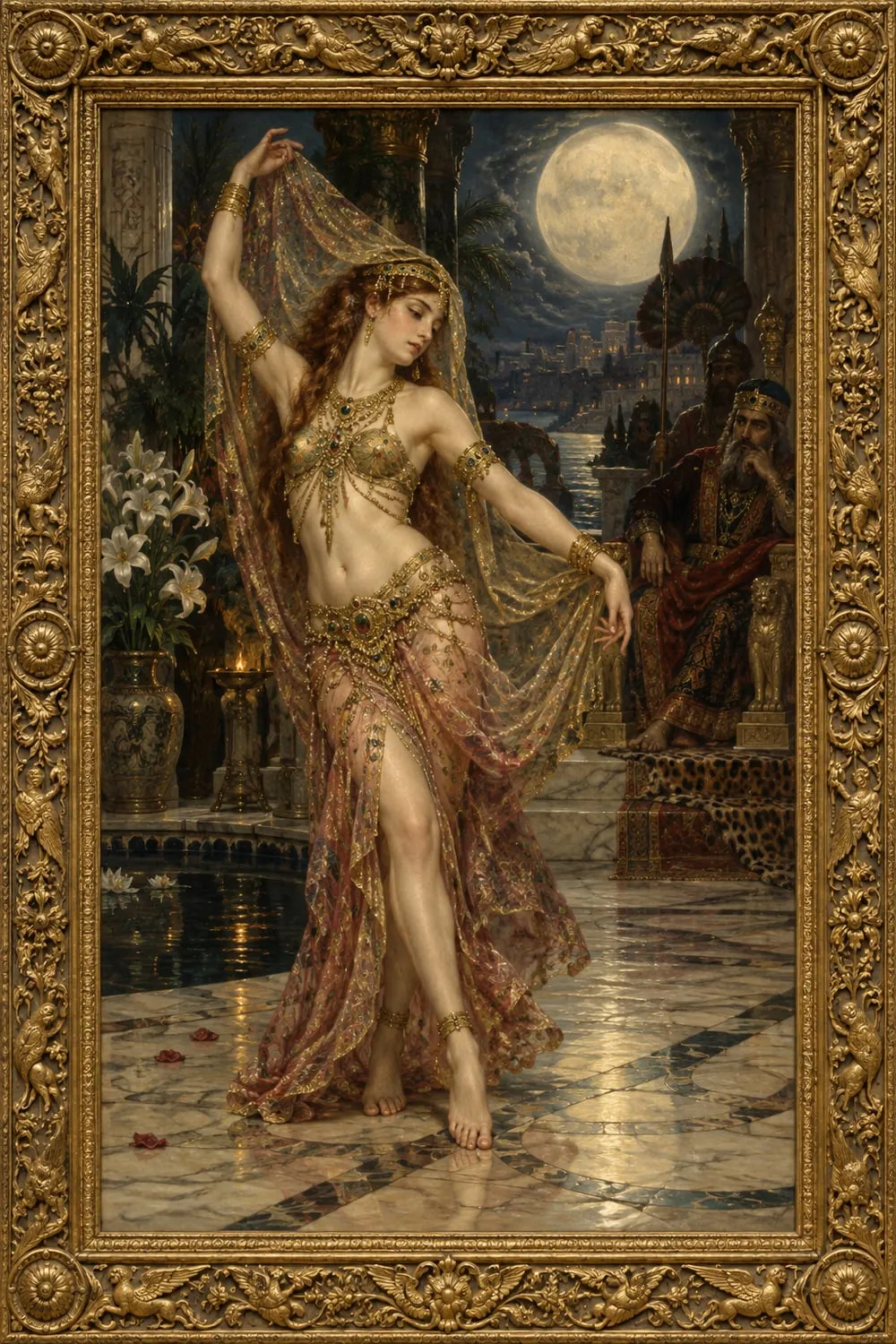
Each character sees the moon as a picture of themselves or their fears. To the Page she is a dead woman seeking dead things; to the young Syrian a little princess with silver feet; to Salomé a cold, chaste virgin; to Herod a naked mad woman looking for lovers. Herodias alone insists that 'the moon is like the moon, that is all.' The moon turns red as blood, as Jokanaan prophesied, before Salomé dances, and a black cloud covers it when Herod orders the lights out. The last moonbeam falls on Salomé and marks her for death.
Desire as possession
Salomé's love is a demand to have. She praises Jokanaan's body, hair and mouth as a list of precious things, whiter than snow, blacker than night, redder than coral, and turns on each when he refuses it. When she gets the head she says 'thy head belongs to me. I can do with it what I will.' Herod's desire works the same way from the other side: he offers emeralds, peacocks and jewels to buy back his oath. Neither can have what they want, and both destroy it.
Omens and fear
Herod is a ruler frightened of signs. He slips in the captain's blood and calls it an evil omen, hears wings that no one else hears, and feels his garland of roses burn his forehead. He tries to reason himself out of it: 'You must not find symbols in everything you see. It makes life impossible.' The Page and the young Syrian both foretell misfortune in the first moments, and it comes. Herodias mocks every omen, but Herod's fear of Jokanaan is justified, and he ends the play hiding from the moon and stars.
Old gods and a new faith
The play is set at the moment one religion is giving way to another. The Cappadocian searched the mountains for his country's gods and thinks they are dead; the Jews argue over whether anyone has seen God since Elias; the Nazarenes report the miracles of a Messiah in Galilee, and Herod forbids him to raise the dead. Jokanaan speaks throughout as the voice preparing that new faith. Herod, who cannot understand him, still senses its power, and calls Salomé's deed 'a crime against an unknown God'.