Characters
The young King
Beauty awakened to conscience
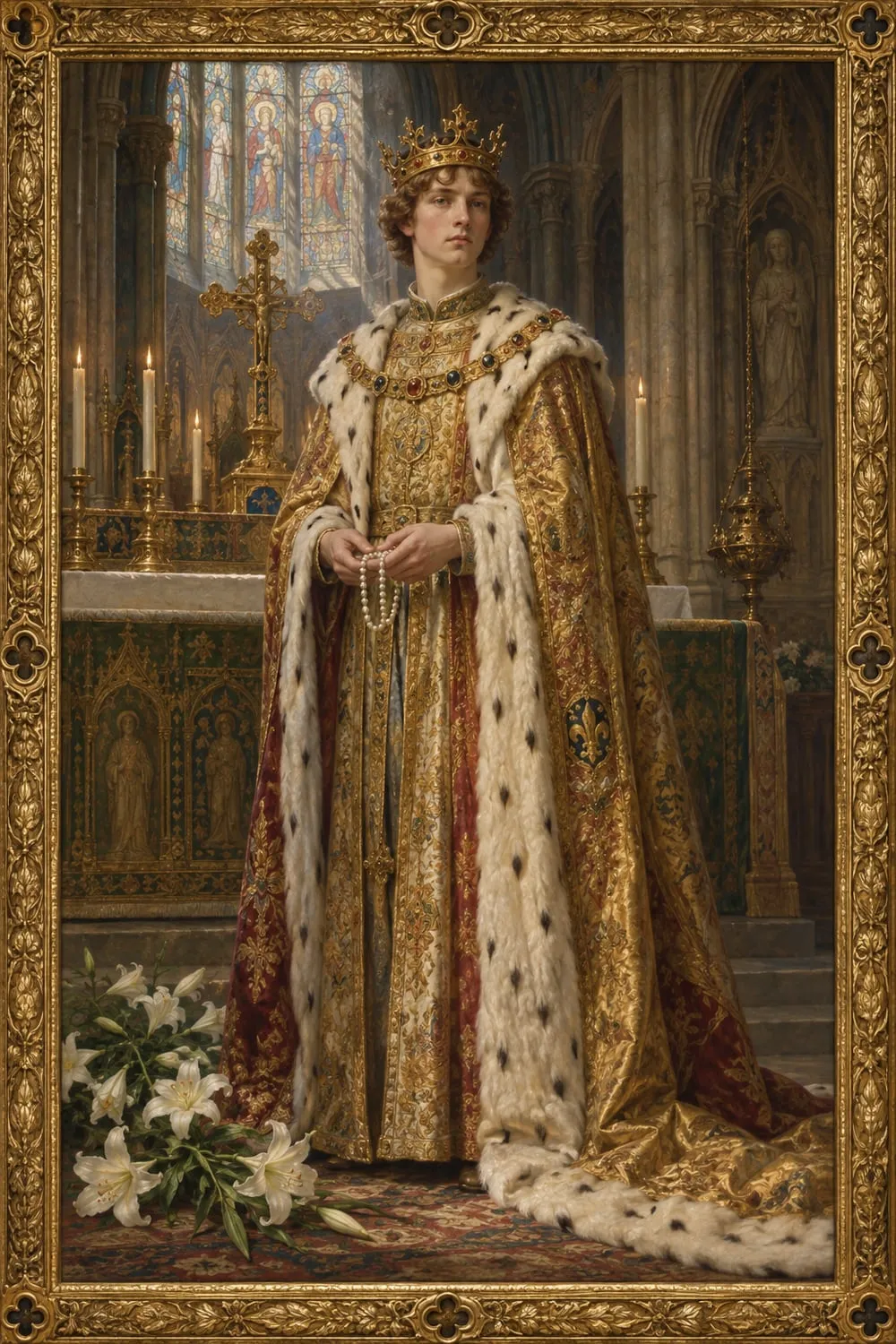
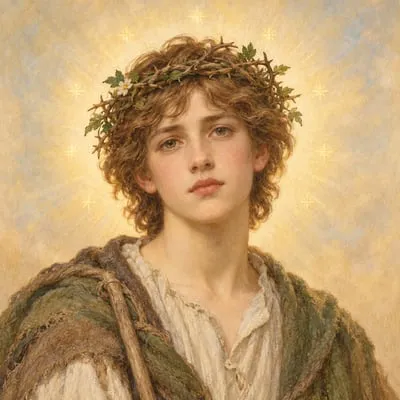
A sixteen-year-old raised as a goatherd's son in the forest, then acknowledged as heir by the dying old King. At court he gives himself up to a passion for beauty and cares most for his coronation robes, until three dreams show him the suffering behind them. He refuses the robe, crown and sceptre, goes to be crowned in a goatherd's clothes and a briar crown, and is crowned instead by a miracle.
The old King
The dying grandfather
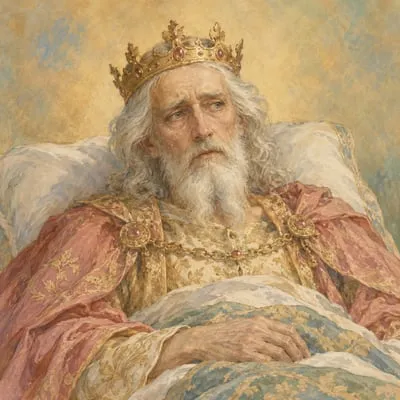
The young King's grandfather. His only daughter secretly married a man far beneath her, and her baby was stolen from her side at a week old; the tale speaks darkly of the old King's great sin. On his deathbed, whether moved by remorse or merely wishing the kingdom to stay in his line, he sends for the lad and acknowledges him before the Council as his heir.
The weaver
Voice of the poor
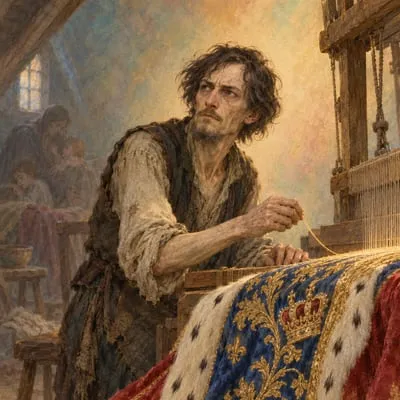
A gaunt worker in the first dream, bent over a loom in a damp, foul-smelling attic among starving women and children. Taking the young King for a spy set on them by their master, he tells him that the rich make slaves of the poor and that his people wear chains no eye can see. He is weaving, with a thread of gold, the robe for the young King's coronation.
The master of the galley
Merchant of pearls
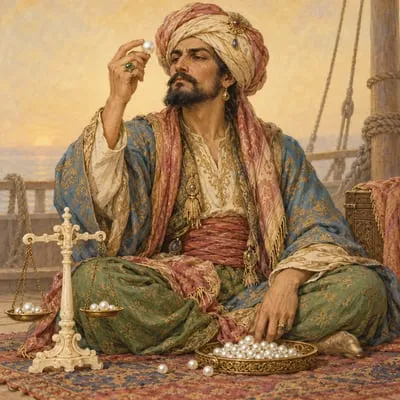
The master of the slave galley in the second dream, who sits on a carpet with a pair of ivory scales. He shoots one of the Arab riders who attack the ship, weighs each pearl the diver brings up, and has the dead diver thrown overboard. Taking the last and finest pearl, he presses it to his forehead, bows, and declares that it shall be for the sceptre of the young King.
The pearl diver
A life for a pearl
The youngest of the galley slaves, whose gyves are knocked off so that he can be weighted with a stone and sent down the rope-ladder into the sea. Again and again he comes up with a beautiful pearl. The last is fairer than all the pearls of Ormuz, shaped like the full moon, but he falls on the deck with blood gushing from his ears and nostrils, and dies.
Death and Avarice
Rivals over the living
The two figures of the third dream, who watch the toiling men from the darkness of a cavern. Death asks for a third of them, then for a single grain of corn; Avarice, hiding her hand in her robe, refuses each time. In answer Death sends Ague, then Fever in a robe of flame, then Plague, until no man in the valley is left alive and Avarice flees shrieking through the forest.
The pilgrim
Bearer of the mirror
A man dressed as a pilgrim who stands behind the young King at the end of the third dream. He explains that the men of the valley died seeking rubies for a king's crown, and when the young King, growing pale, asks for what king, he holds up a mirror of silver in which the young King sees his own face.
The Chamberlain
Keeper of appearances
The court official who comes in with the high officers of State on the morning of the coronation, while the pages bring the robe, crown and sceptre. When the young King refuses them, he begs him to set aside his black thoughts, arguing that the people will not know him for a king if he has not a king's raiment. He speaks for a court that believes kingship lies in clothes.
The little page
Companion who falters
A lad a year younger than the young King, the only attendant he keeps with him on the coronation morning. He opens his big blue eyes in wonder at the goatherd's clothes and asks where the crown is, which prompts the young King to make a crown of wild briar. He runs beside the horse towards the cathedral, but grows afraid at the murmurs of the crowd and leaves him.
The man in the crowd
The poor man's reply
A man who steps out of the jeering crowd to tell the young King that his gesture helps no one. The poor, he says, are nurtured by the pomp and the vices of the rich, and having no master to toil for is more bitter than serving a hard one. He tells the King to go back to his palace and his purple, and answers his question about brotherhood with the name of Cain.
The old Bishop
Worldly wisdom of the Church
The aged churchman waiting in the cathedral to crown the young King. Seeing him in goatherd's dress, he lists the evils of the world, from robbers and pirates to lepers and beggars, and asks whether one man can make them cease. He refuses to praise the young King's act and urges him to dress as a king. After the miracle his face grows pale and he kneels, saying that a greater than he has crowned the King.
The nobles
Pride of rank
The lords of the court, who laugh at the young King's refusal of his robes, cry that he shows the people a beggar, and say he brings shame upon their state. At the cathedral they burst in with drawn swords and nodding plumes, calling him a dreamer of dreams who is unworthy to rule and must be slain. When the sunlight crowns him, they sheathe their swords and do homage.