Themes
Beauty and its hidden cost
The young King loves beauty almost as a religion, 'kneeling in real adoration' before a picture from Venice and finding the palace 'a new world fresh-fashioned for his delight'. The tale does not condemn that love, but his three dreams show what lies behind the robe, the pearl and the rubies: famine at the loom, a diver bleeding on the deck, a valley of the dead. His verdict, 'There is Blood in the heart of the ruby, and Death in the heart of the pearl', turns the objects he adored into evidence.
Rich and poor
The weaver states the tale's argument plainly: 'in peace the rich make slaves of the poor', and his people 'have chains, though no eye beholds them'. Yet the tale lets the other side speak too. A man in the crowd tells the young King that the poor are nurtured by the pomp of the rich and that 'to have no master to toil for is more bitter still'. When the King asks whether rich and poor are not brothers, the man answers that 'the name of the rich brother is Cain'. The problem is left unsolved.
What makes a king
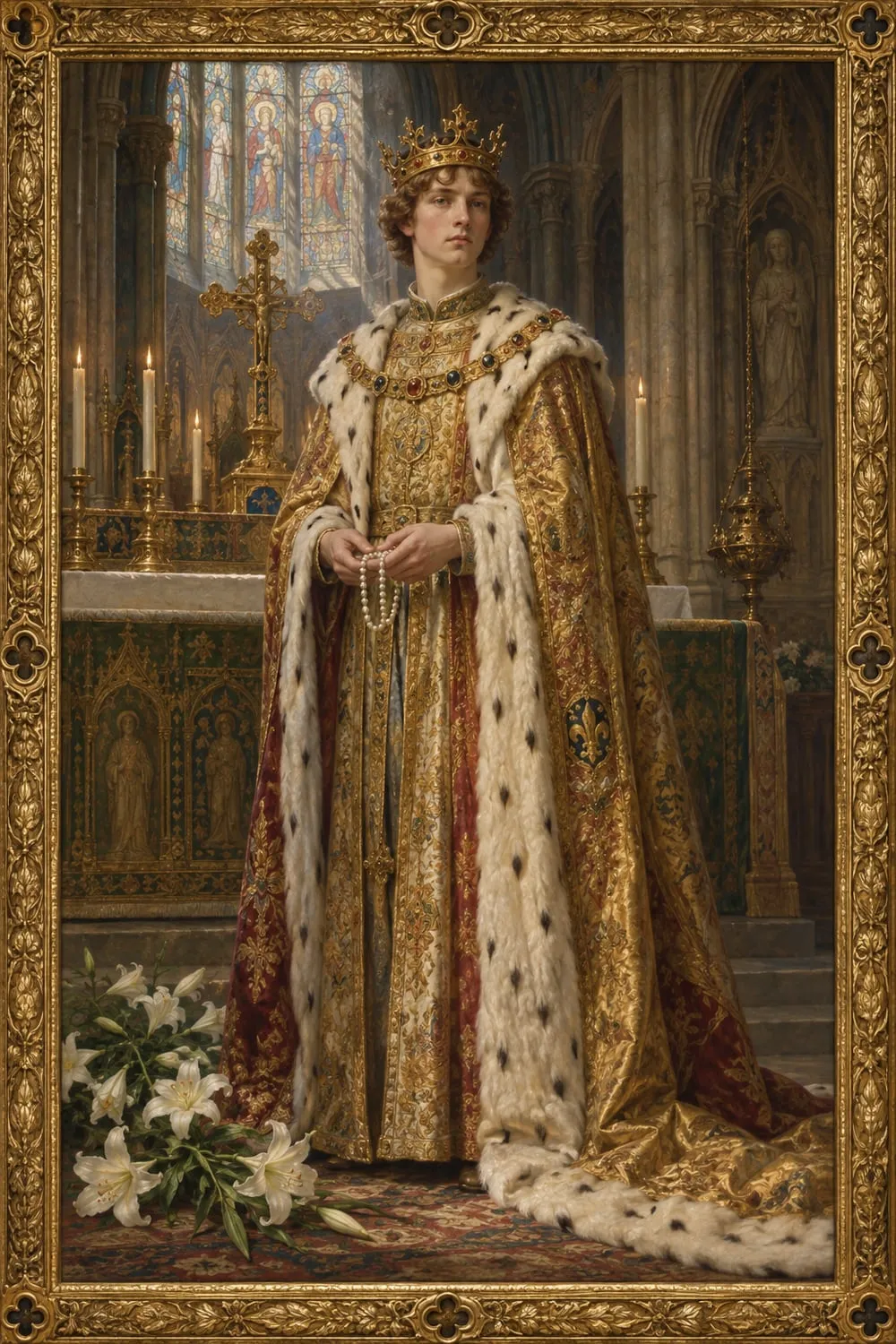
The Chamberlain insists that without a king's raiment the people will not know him for a king, and the young King answers, 'I had thought that there had been men who were kinglike'. In his goatherd's clothes he is mocked as the King's fool and a beggar, and the soldiers at the cathedral door try to bar his way. The ending settles the question: sunlight weaves him a robe that no artificer made, and the Bishop admits, 'A greater than I hath crowned thee'.
Worldly religion and true faith
The old Bishop is kindly but worldly. He lists the evils of the world, robbers and pirates, lepers and beggars, and asks, 'Canst thou make these things not to be?' His advice is to put on the robe and forget the dreams, since 'The burden of this world is too great for one man to bear'. The young King's reply, 'Sayest thou that in this house?', sends him past the Bishop to the image of Christ, and the miracle that follows answers the Bishop more sharply than any argument could.
Responsibility and the mirror
The third dream ends with a pilgrim holding a mirror of silver. Asked for what king the rubies were sought, he tells the young King to look, and he sees his own face. The moment makes him answerable for the suffering behind his luxuries. His courtiers take the opposite view: 'what have we to do with the lives of those who toil for us?' The tale sides with the dreamer, while admitting, through the Bishop and the man in the crowd, that one refusal cannot cure the world.