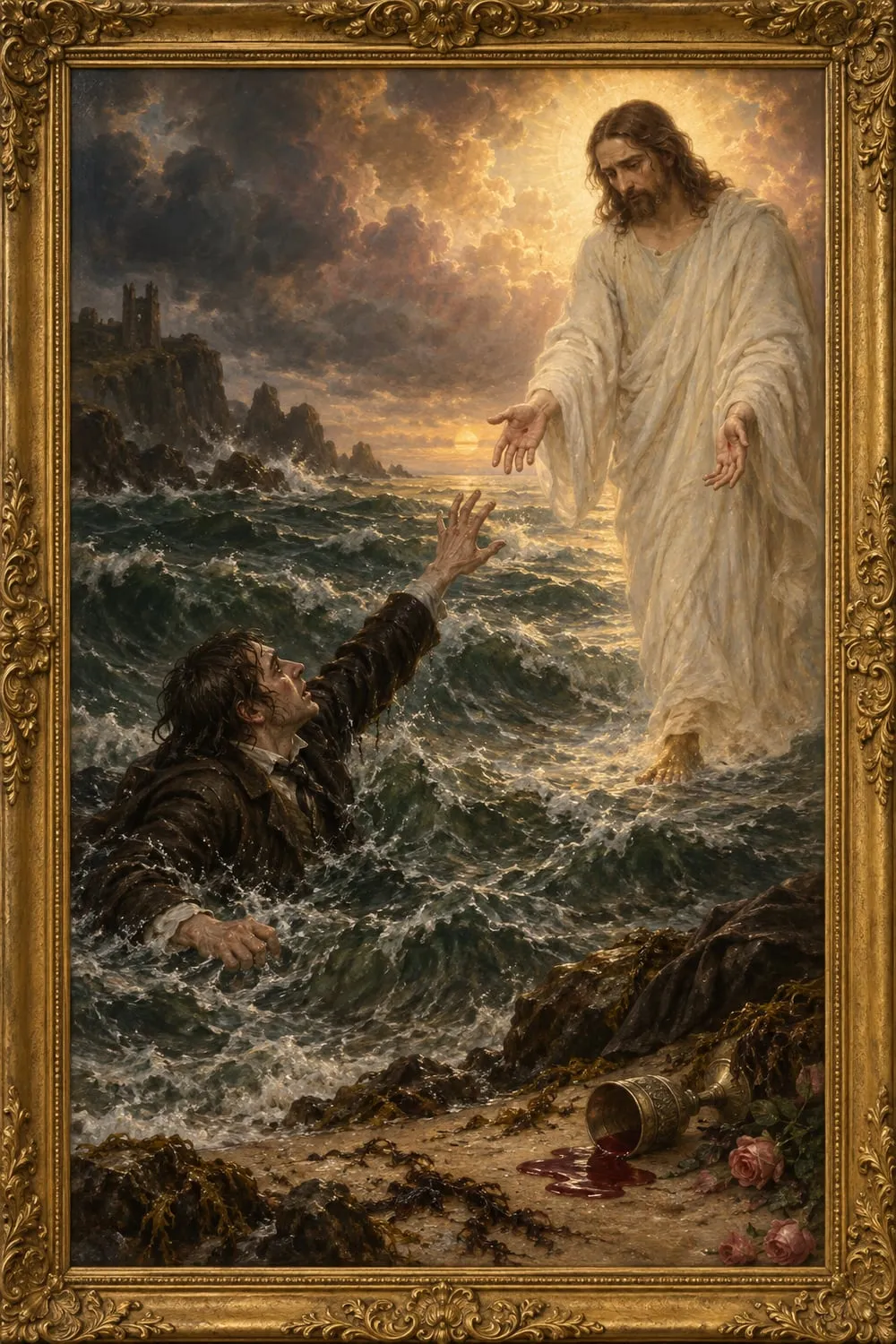
A drowning soul calls on Christ
E Tenebris
"Come down, O Christ, and help me! reach thy hand,"
Poem
Come down, O Christ, and help me! reach thy hand,For I am drowning in a stormier seaThan Simon on thy lake of Galilee:The wine of life is spilt upon the sand,My heart is as some famine-murdered landWhence all good things have perished utterly,And well I know my soul in Hell must lieIf I this night before God’s throne should stand.“He sleeps perchance, or rideth to the chase,Like Baal, when his prophets howled that nameFrom morn to noon on Carmel’s smitten height.”Nay, peace, I shall behold, before the night,The feet of brass, the robe more white than flame,The wounded hands, the weary human face.
In brief
SummaryThe speaker cries to Christ for help, like a man drowning in a sea stormier than the one where Simon Peter began to sink on the lake of Galilee. His life is spilt like wine on sand, his heart is a land ruined by famine, and he knows that if he died that night his soul would be lost. A mocking voice suggests that God is asleep or out hunting, like the god Baal whose prophets cried to him in vain. The speaker silences it, trusting that before night he will see Christ's feet of brass, white robe, wounded hands and 'weary human face'.
Key themes
"Come down, O Christ, and help me! reach thy hand,"

Summary
The title means 'Out of the darkness'. The sonnet opens with a plea: 'Come down, O Christ, and help me! reach thy hand'. The speaker is drowning 'in a stormier sea Than Simon on thy lake of Galilee', recalling the disciple who began to sink when he tried to walk to Christ on the water. 'The wine of life is spilt upon the sand', his heart is 'as some famine-murdered land' where all good things have perished, and he knows his soul 'in Hell must lie' if he stood before God's throne that night.
In the last six lines a doubting voice speaks, set off in quotation marks. God 'sleeps perchance, or rideth to the chase', like Baal, whose prophets 'howled that name From morn to noon on Carmel's smitten height' and had no answer.
The speaker silences the voice with 'Nay, peace'. Before night falls he will see Christ: 'The feet of brass, the robe more white than flame, The wounded hands, the weary human face.' The vision moves from the dazzling, glorified Christ to the suffering human one, and the poem ends on the word 'face'.
Characters
The speaker
The drowning sinner
A man in spiritual despair who feels his life wasted and his soul bound for Hell. He calls on Christ like a drowning man reaching for a hand, hears a mocking voice suggest that God is not listening, and answers it with faith that he will see Christ before night.
Christ
The saviour called upon
The one the speaker begs to 'Come down' and 'reach thy hand', as he reached for Simon Peter on the lake. He is seen at the end in a double vision, with feet of brass and a robe 'more white than flame', but also with wounded hands and a 'weary human face'.
Themes
Despair and hope
The first eight lines pile up images of ruin: drowning, spilt wine, a 'famine-murdered land', and the certainty that 'my soul in Hell must lie'. The last lines do not deny any of this, but they end with a promise: 'I shall behold, before the night' the face of Christ. In fourteen lines the poem moves from the edge of damnation to a hope strong enough to answer doubt.
The mocking voice of doubt
The quoted lines about Baal are the most dramatic in the sonnet. They come from the story of Elijah on Mount Carmel, where the prophet mocked the priests of Baal, saying their god might be asleep or away. Here the taunt is turned against Christ: perhaps He too 'sleeps' or 'rideth to the chase'. The speaker's 'Nay, peace' refuses to let that suspicion win.
Christ glorious and human
The final vision joins two pictures of Christ. 'The feet of brass' and 'the robe more white than flame' recall the shining figure of the Book of Revelation; 'The wounded hands, the weary human face' recall the crucified man. The speaker needs both: a Christ with power to save and one who has known suffering like his own.
Context
E Tenebris is a sonnet in the Rosa Mystica group of Wilde's Poems (1881). The Latin title means 'out of the darkness'. The poem draws on two Bible stories: Peter sinking as he tried to walk to Christ across the Sea of Galilee, and Elijah mocking the prophets of Baal on Mount Carmel when their god failed to answer them.
About this edition
- Text: the complete work from Standard Ebooks, released into the public domain (CC0 1.0). We change only the layout.
- Download the EPUB of the whole book it comes from, free, for any e-reader.
- Every quotation and glossary word in these notes is checked against the text.