Joy at Italy, grief for Rome
Sonnet on Approaching Italy
"I wept to see the land so very fair."
Poem
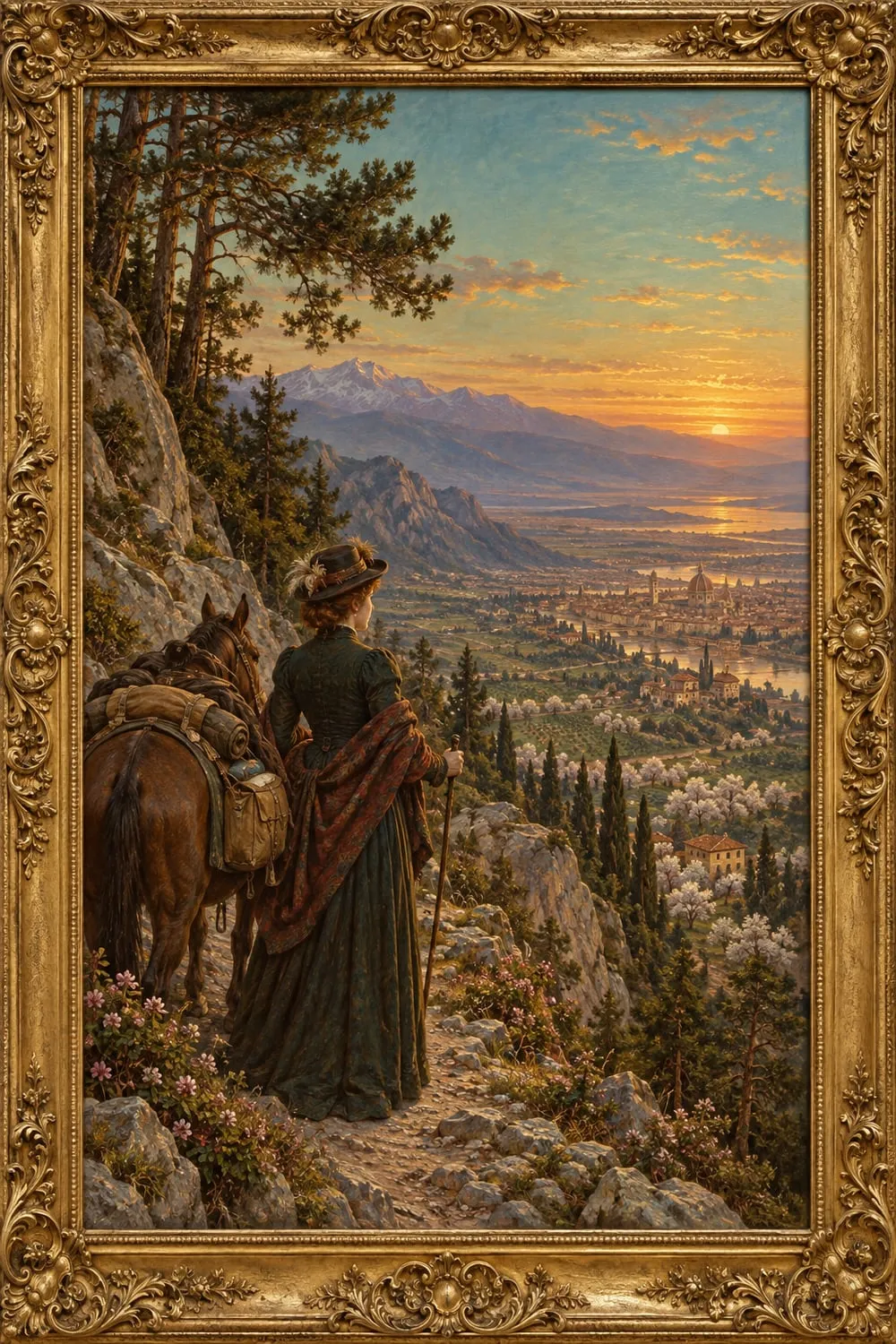
I reached the Alps: the soul within me burned,Italia, my Italia, at thy name:And when from out the mountain’s heart I cameAnd saw the land for which my life had yearned,I laughed as one who some great prize had earned:And musing on the marvel of thy fameI watched the day, till marked with wounds of flameThe turquoise sky to burnished gold was turned.The pine-trees waved as waves a woman’s hair,And in the orchards every twining sprayWas breaking into flakes of blossoming foam:But when I knew that far away at RomeIn evil bonds a second Peter lay,I wept to see the land so very fair.
Turin.
In brief
SummaryA sonnet about the moment of arriving in Italy. The speaker reaches the Alps with the soul burning at the name of 'Italia', emerges 'from out the mountain's heart' to see the longed-for land, and laughs like one who has won a great prize. Watching the sunset turn the sky to gold, with pines waving and orchards breaking into blossom, the speaker is filled with joy. The sestet turns: knowing that 'far away at Rome / In evil bonds a second Peter lay', the speaker weeps 'to see the land so very fair'.
Key themes
"I reached the Alps: the soul within me burned,"
Summary
The octave describes the arrival: 'I reached the Alps: the soul within me burned, / Italia, my Italia, at thy name'. Coming 'from out the mountain's heart', the speaker sees 'the land for which my life had yearned' and laughs 'as one who some great prize had earned'. Musing on 'the marvel of thy fame', the speaker watches the day end, 'till marked with wounds of flame / The turquoise sky to burnished gold was turned.'
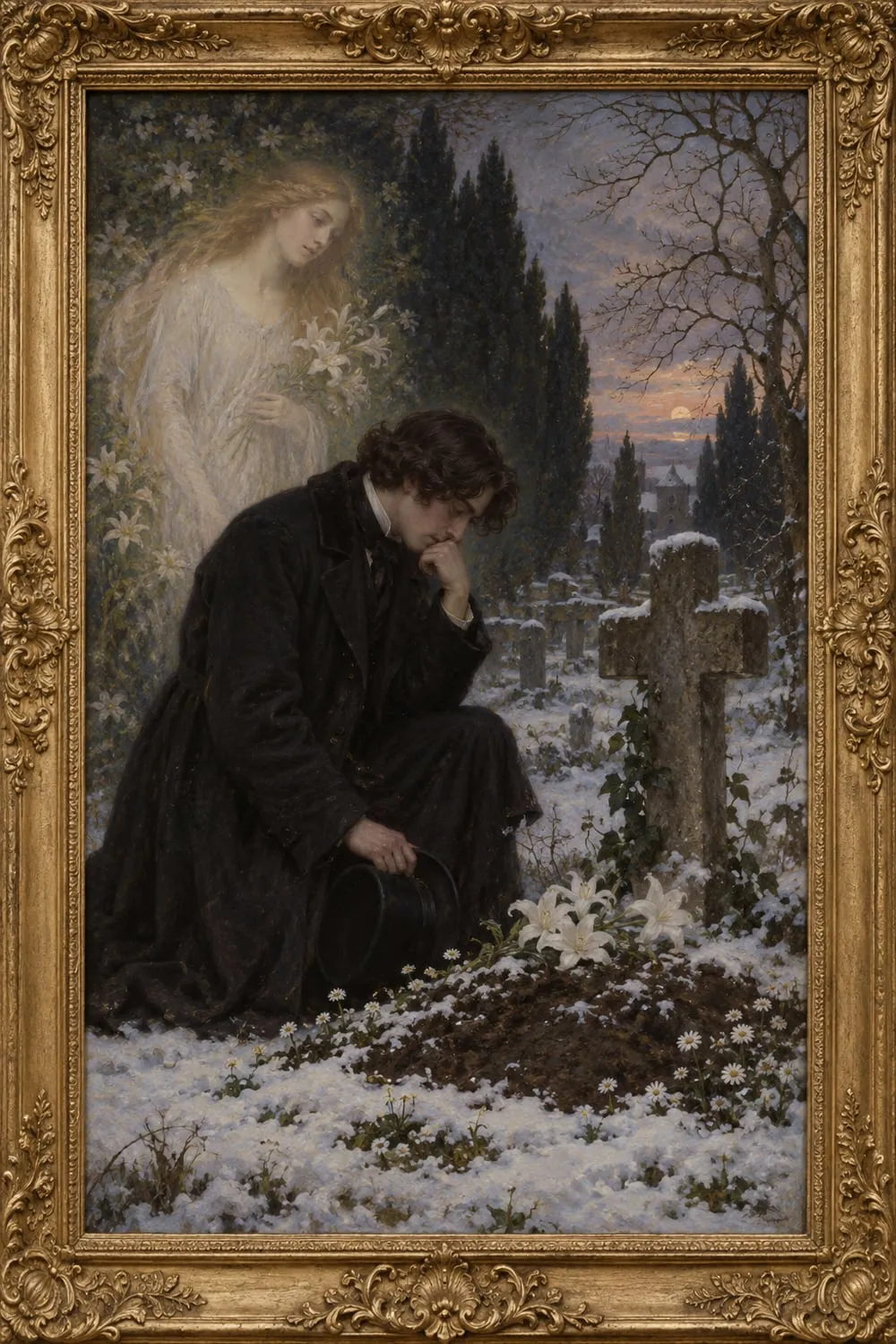
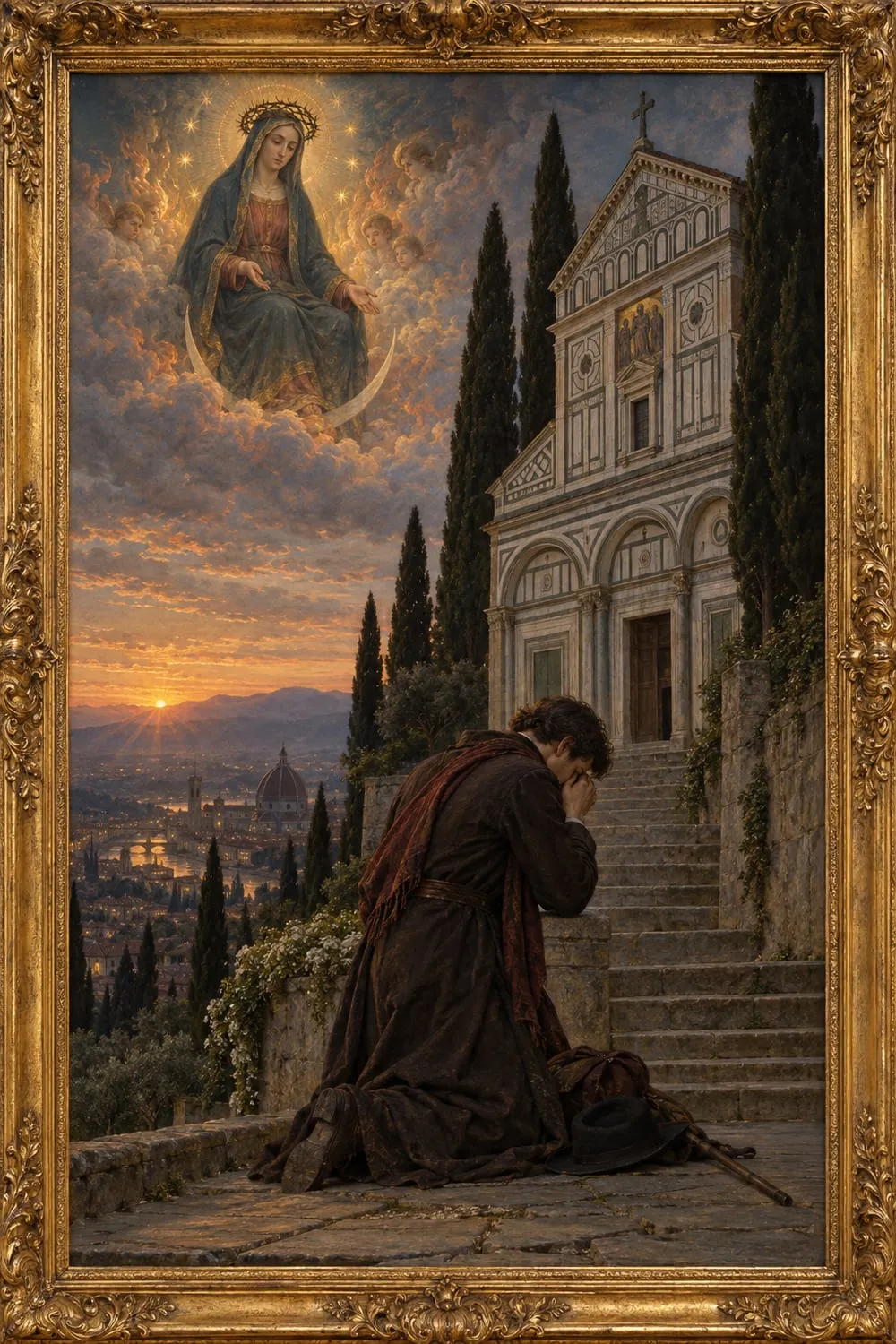
The sestet begins with more beauty: the pine-trees wave 'as waves a woman's hair', and in the orchards every spray is 'breaking into flakes of blossoming foam'. Then comes the turn. The speaker knows that 'far away at Rome / In evil bonds a second Peter lay', Peter's successor held captive, and the joy becomes grief: 'I wept to see the land so very fair.' The loveliness of the country only sharpens the sorrow.
Characters
The speaker
The traveller arriving
A traveller who crosses the Alps and comes out of the mountains into Italy with a burning soul, laughing at the sight of a long-desired land. The speaker's joy turns to tears at the thought of the captive 'second Peter' far away in Rome.
The 'second Peter'
The captive Pope
The Pope, successor to Saint Peter, whom the speaker knows to be lying 'In evil bonds' far away at Rome. The thought of his captivity turns the speaker's delight in Italy's beauty into weeping.
Themes
Arrival and longing
The octave captures the rush of reaching a longed-for place. The speaker's soul 'burned' at the very name of Italy, the country is 'the land for which my life had yearned', and arrival brings laughter 'as one who some great prize had earned'. The sunset, with the sky turned 'to burnished gold', crowns the moment.
Beauty shadowed by faith
The sestet sets the loveliness of Italy against the plight of the Church. The pines and blossoming orchards are fully enjoyed, but the thought of 'a second Peter' lying 'In evil bonds' at Rome changes everything. The last line joins beauty and sorrow: the speaker weeps precisely because the land is 'so very fair'.
Context
The sonnet belongs to 'Rosa Mystica', a group within Wilde's collected poems, and ends with the place name 'Turin'. Two of its lines, on the sky 'marked with wounds of flame' turning 'to burnished gold', appear almost word for word in 'Ravenna', where they describe the speaker's ride towards that city.
About this edition
- Text: the complete work from Standard Ebooks, released into the public domain (CC0 1.0). We change only the layout.
- Download the EPUB of the whole book it comes from, free, for any e-reader.
- Every quotation and glossary word in these notes is checked against the text.