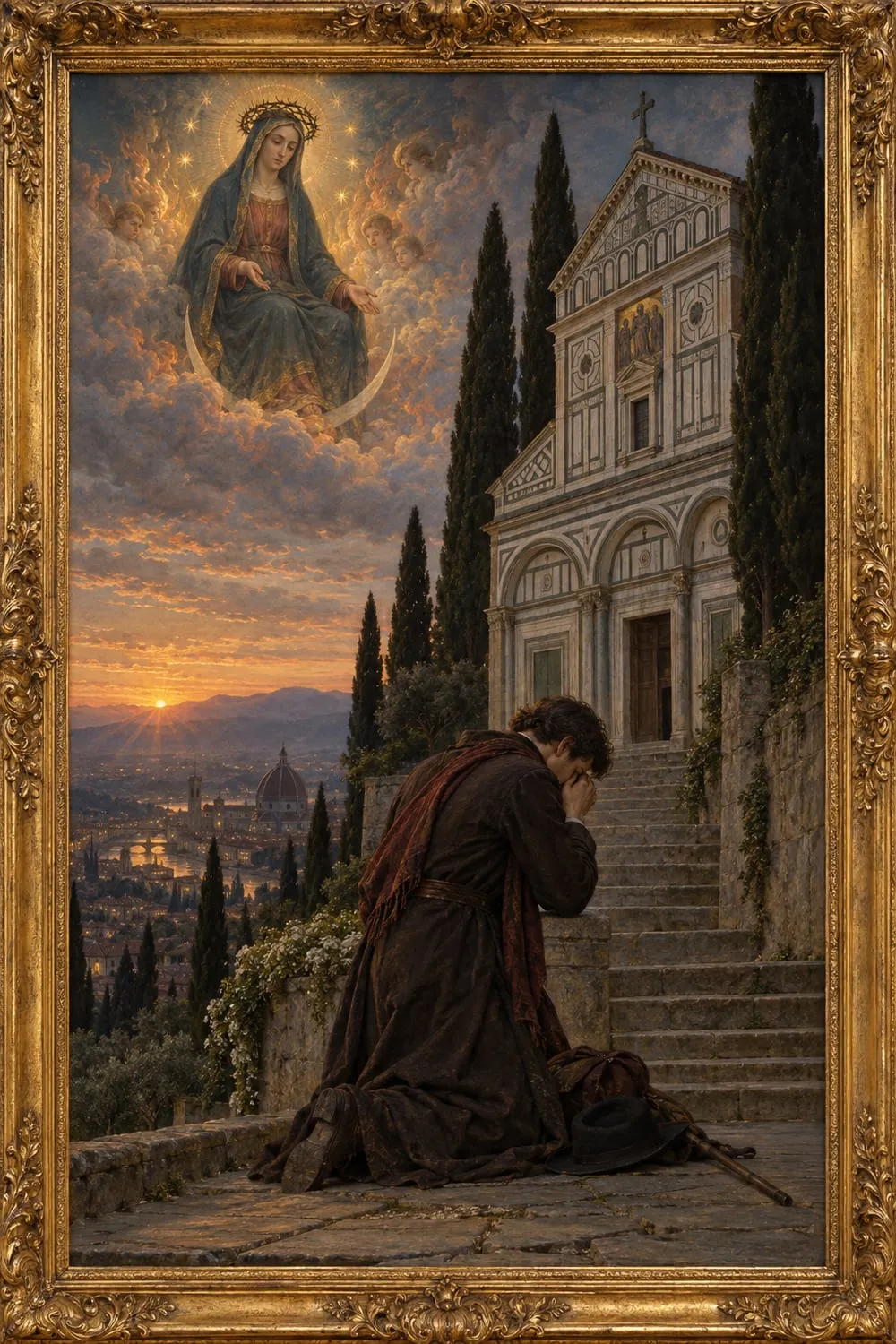
A prayer to Mary on the hill
San Miniato
"Mary! could I but see thy face"
Poem
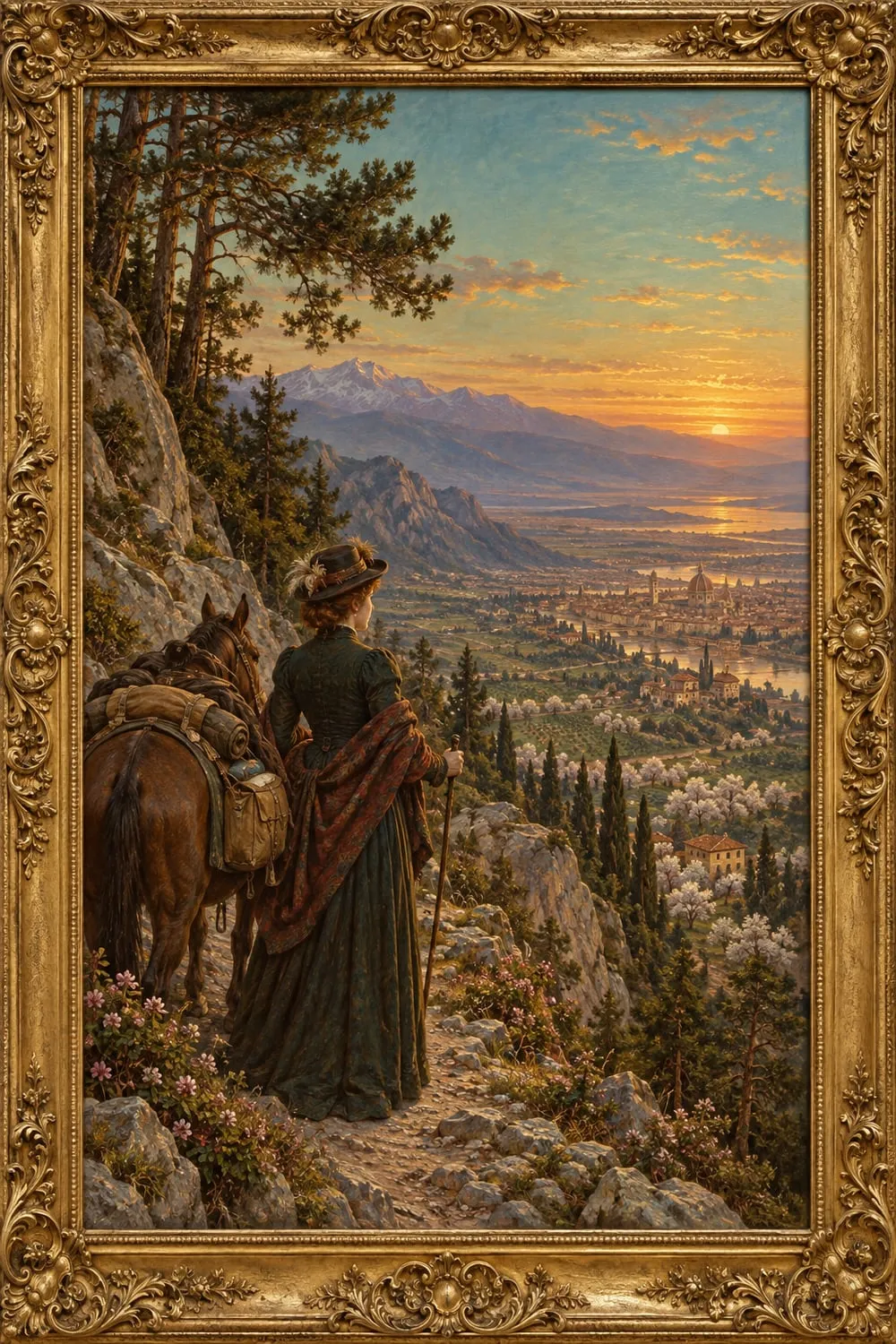
See, I have climbed the mountain sideUp to this holy house of God,Where once that Angel-Painter trodWho saw the heavens opened wide,
And throned upon the crescent moonThe Virginal white Queen of Grace—Mary! could I but see thy faceDeath could not come at all too soon.
O crowned by God with thorns and pain!Mother of Christ! O mystic wife!My heart is weary of this lifeAnd over-sad to sing again.
O crowned by God with love and flame!O crowned by Christ the Holy One!O listen ere the searching sunShow to the world my sin and shame.
In brief
SummaryA short prayer in four quatrains. The speaker has climbed the mountainside to 'this holy house of God', the San Miniato of the title, once trodden by an 'Angel-Painter' who saw heaven open and Mary 'throned upon the crescent moon'. Longing to see her face, the speaker would welcome death. The last two stanzas call on Mary, crowned by God 'with thorns and pain' and 'with love and flame', confess a heart 'weary of this life', and beg her to listen before 'the searching sun' shows the world the speaker's 'sin and shame'.
Key themes
"Death could not come at all too soon."
Summary
The speaker announces the climb: 'See, I have climbed the mountain side / Up to this holy house of God', a place where 'that Angel-Painter trod / Who saw the heavens opened wide', and saw Mary, 'The Virginal white Queen of Grace', enthroned on the crescent moon. The thought of that vision stirs a longing so strong that death seems welcome: 'Mary! could I but see thy face / Death could not come at all too soon.'
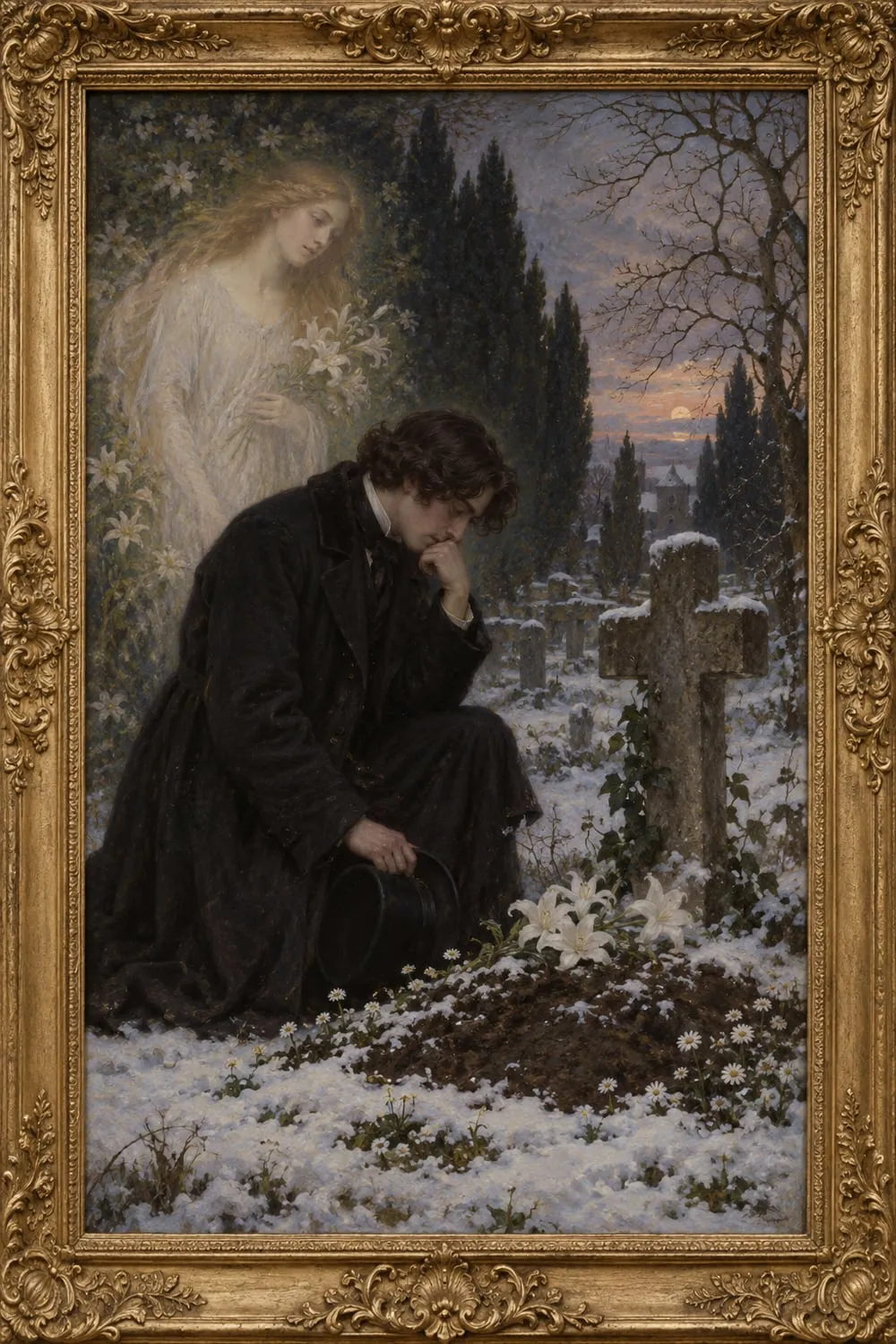
The third stanza addresses her as 'crowned by God with thorns and pain', 'Mother of Christ' and 'mystic wife', and confesses that the speaker's heart is 'weary of this life / And over-sad to sing again'. The fourth repeats the pattern of crowning, 'with love and flame' and 'by Christ the Holy One', and ends in urgent prayer that she will listen 'ere the searching sun / Show to the world my sin and shame'. The poem closes on that fear of exposure, with the prayer still unanswered.
Characters
Mary
Queen of Grace
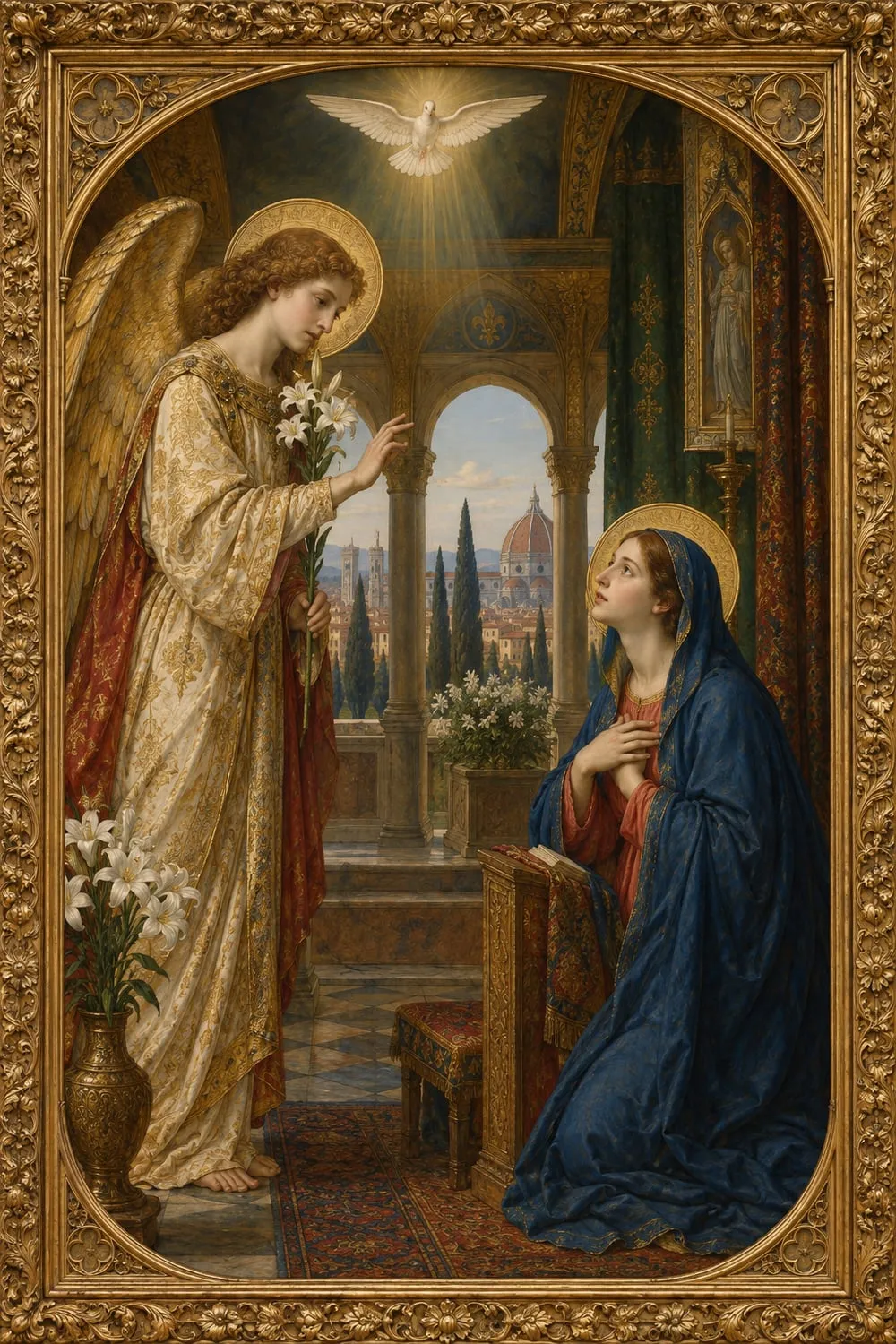
The mother of Christ, seen in the Angel-Painter's vision 'throned upon the crescent moon' as 'The Virginal white Queen of Grace'. The speaker addresses her as 'Mother of Christ' and 'mystic wife', crowned 'with thorns and pain' and 'with love and flame', and begs her to listen.
The speaker
The weary pilgrim
A climber who has reached the holy house on the mountainside and longs to see Mary's face. Weary of life and 'over-sad to sing again', the speaker prays for her to listen before the sun reveals 'my sin and shame'.
The Angel-Painter
The visionary artist
An unnamed painter who once walked in this 'holy house of God' and 'saw the heavens opened wide', with Mary enthroned on the crescent moon. His vision is what the speaker longs, and fails, to share.
Themes
Longing for vision
The poem is driven by the wish to see what the 'Angel-Painter' saw: 'the heavens opened wide' and Mary on the crescent moon. The speaker stands where the painter stood but sees nothing, and the longing is so strong that death seems welcome: 'could I but see thy face / Death could not come at all too soon.'
Weariness and confession
The last two stanzas move from vision to need. The speaker's heart is 'weary of this life / And over-sad to sing again', and the final prayer is a plea for mercy before exposure: 'O listen ere the searching sun / Show to the world my sin and shame.' Mary, 'crowned by God with thorns and pain', is asked to hear one who also suffers.
Context
The poem belongs to 'Rosa Mystica', a group within Wilde's collected poems. Its title names the holy house on the mountainside that the speaker has climbed to, and the painter who once walked there is identified only as 'that Angel-Painter'. It is written in four quatrains, the last two built on repeated calls to Mary as one crowned by God and by Christ.
About this edition
- Text: the complete work from Standard Ebooks, released into the public domain (CC0 1.0). We change only the layout.
- Download the EPUB of the whole book it comes from, free, for any e-reader.
- Every quotation and glossary word in these notes is checked against the text.