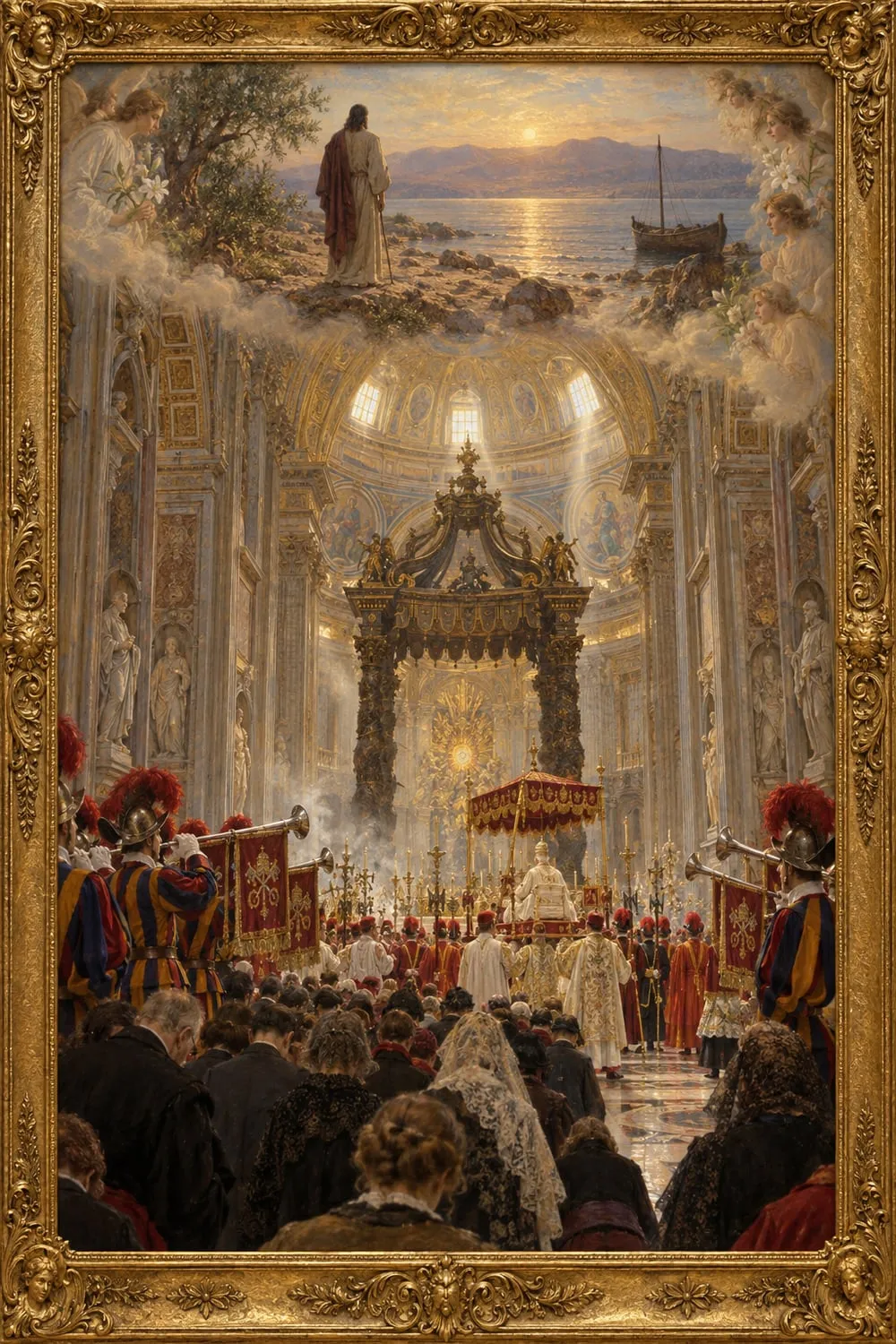
The Pope in glory, Christ in want
Easter Day
"In splendour and in light the Pope passed home."
Poem
The silver trumpets rang across the Dome:The people knelt upon the ground with awe:And borne upon the necks of men I saw,Like some great God, the Holy Lord of Rome.Priest-like, he wore a robe more white than foam,And, king-like, swathed himself in royal red,Three crowns of gold rose high upon his head:In splendour and in light the Pope passed home.My heart stole back across wide wastes of yearsTo One who wandered by a lonely sea,And sought in vain for any place of rest:“Foxes have holes, and every bird its nest.I, only I, must wander wearily,And bruise my feet, and drink wine salt with tears.”
In brief
SummaryOn Easter Day the speaker watches the Pope carried in state through a great church in Rome. Silver trumpets ring across the dome, the people kneel, and the Pope, borne on men's shoulders 'Like some great God', passes in a white robe, royal red and three crowns of gold. The last six lines turn sharply. The speaker's heart goes back across the centuries to Christ, who wandered by a lonely sea with nowhere to rest, and who speaks in the closing lines of foxes with holes and birds with nests while he alone must wander, bruise his feet and drink 'wine salt with tears'.
Key themes
"In splendour and in light the Pope passed home."
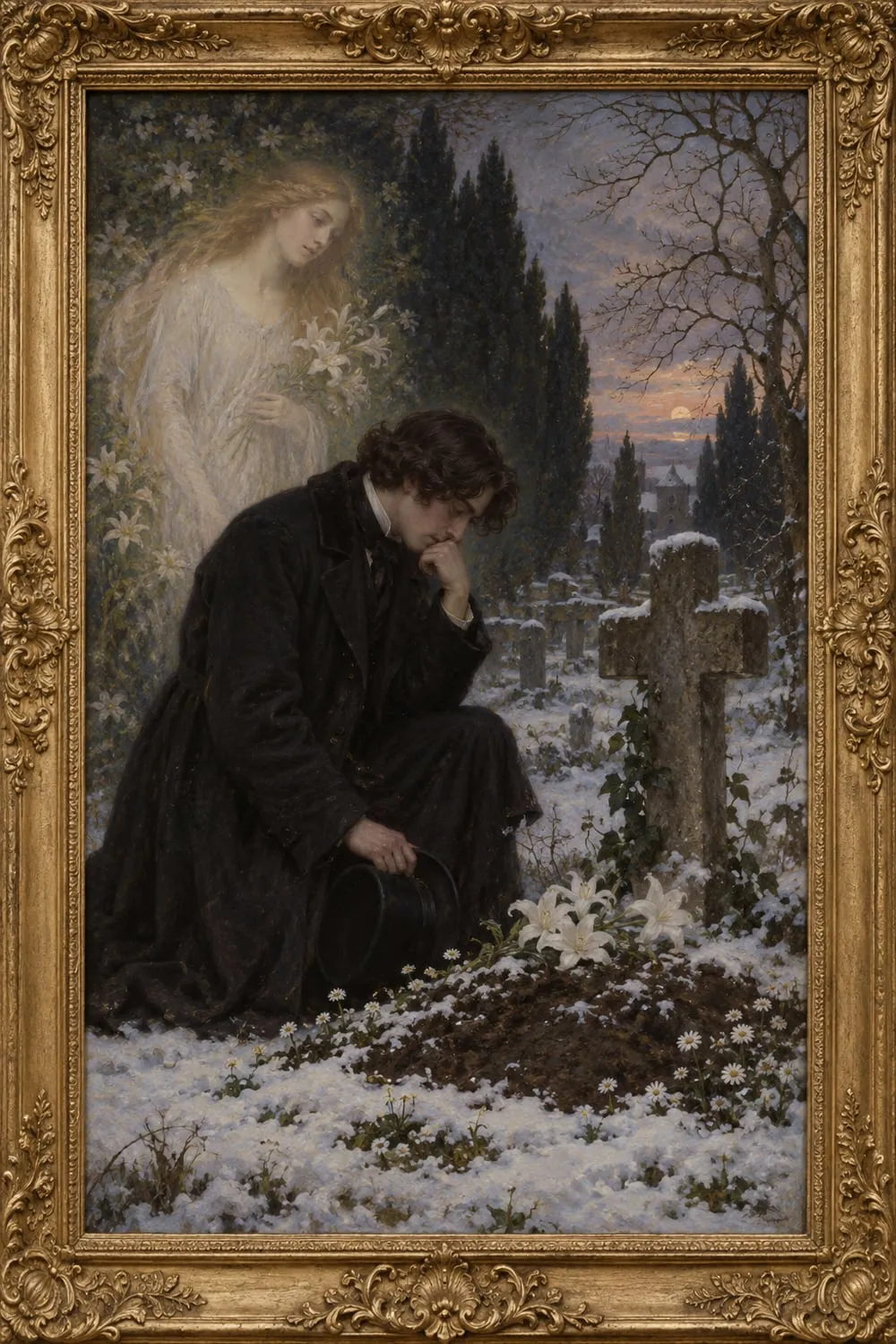
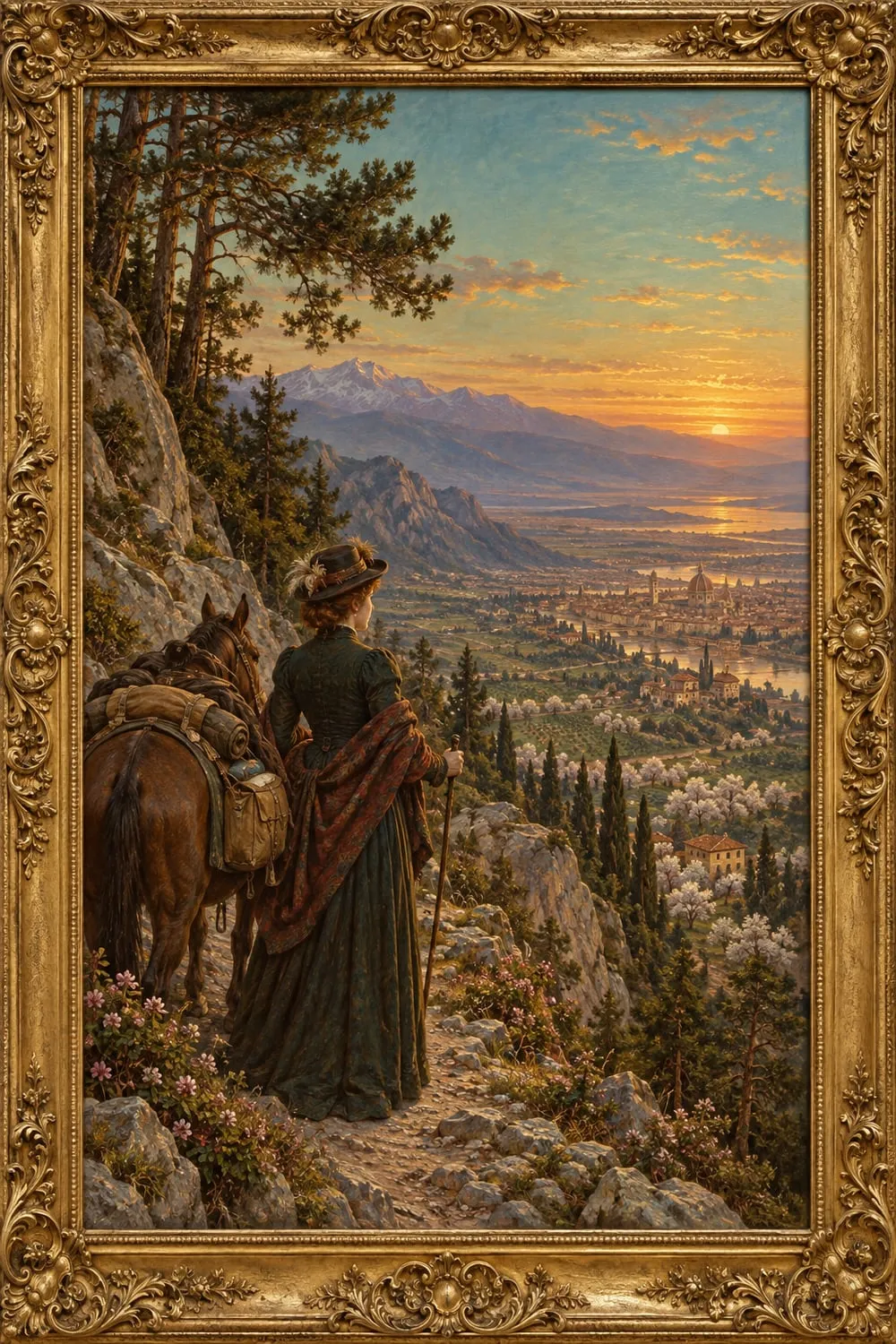
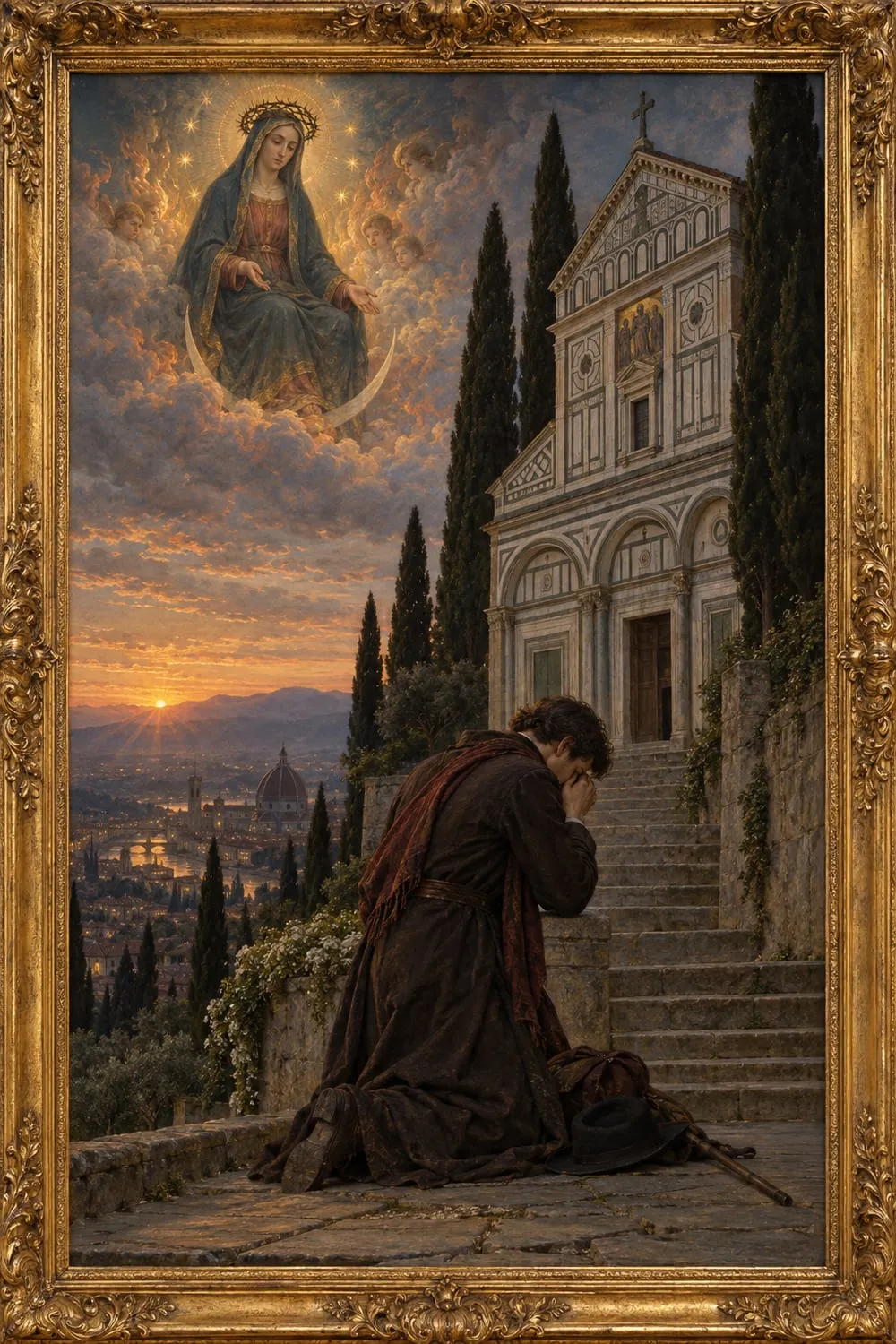
Summary
The first eight lines describe a papal procession. 'The silver trumpets rang across the Dome', the people kneel on the ground in awe, and the speaker sees the Pope 'borne upon the necks of men', 'Like some great God, the Holy Lord of Rome'. He is dressed as both priest and king: 'Priest-like' in 'a robe more white than foam', 'king-like' in 'royal red', with 'Three crowns of gold' on his head. 'In splendour and in light the Pope passed home.'
At the ninth line the speaker's heart 'stole back across wide wastes of years' to Christ, 'One who wandered by a lonely sea, And sought in vain for any place of rest'. The last three lines give Christ's own voice, built on his Gospel saying about foxes and birds: 'Foxes have holes, and every bird its nest. I, only I, must wander wearily, And bruise my feet, and drink wine salt with tears.'
The poem adds no comment of its own. It sets the enthroned Pope beside the homeless Christ and leaves the reader to weigh them.
Characters
The speaker
The watcher in the crowd
A witness to the Easter procession who describes its splendour with evident admiration. As the Pope passes, his thoughts turn back to the homeless Christ of the Gospels, and he lets Christ's own complaint close the poem without adding a word of judgement.
The Pope
Priest, king and 'great God'
Carried 'upon the necks of men' while trumpets sound and the people kneel, dressed in white like a priest and red like a king, with three crowns of gold. He passes 'In splendour and in light', 'the Holy Lord of Rome'.
Christ
The homeless wanderer
Remembered as 'One who wandered by a lonely sea' and could find no rest. In the closing lines he speaks for himself: every fox and bird has a home, but he must 'wander wearily', bruise his feet and 'drink wine salt with tears'.
Themes
Splendour and poverty
Every detail of the first half is wealth and power: trumpets, a dome, a throne carried by men, white and red robes, 'Three crowns of gold'. Every detail of the second half is want: a 'lonely sea', no 'place of rest', bruised feet and 'wine salt with tears'. By placing the two scenes side by side, the sonnet asks how the Pope's glory relates to the poverty of the man he represents.
Priest, king and god
The Pope is described three ways: 'Like some great God', 'Priest-like' in white and 'king-like' in red. The comparison to a god is striking in a Christian poem, and 'the Holy Lord of Rome' gives him a title that sounds almost divine. The Christ of the last lines has no such titles; he is simply 'One who wandered'.
Memory and the Gospel
The turn comes through memory: 'My heart stole back across wide wastes of years'. The speaker does not argue; he remembers. The quoted words adapt Christ's saying that foxes have holes and birds their nests, but he has nowhere to lay his head. The poem lets the Gospel speak against the ceremony without the speaker needing to.
Context
Easter Day is a sonnet in the Rosa Mystica group of Wilde's Poems (1881). It describes a papal procession at Easter, with the Pope carried shoulder-high beneath 'the Dome' and wearing three crowns of gold, the papal tiara. The last lines adapt Christ's words in the Gospels: 'Foxes have holes, and the birds of the air have nests; but the Son of man hath not where to lay his head.'
About this edition
- Text: the complete work from Standard Ebooks, released into the public domain (CC0 1.0). We change only the layout.
- Download the EPUB of the whole book it comes from, free, for any e-reader.
- Every quotation and glossary word in these notes is checked against the text.