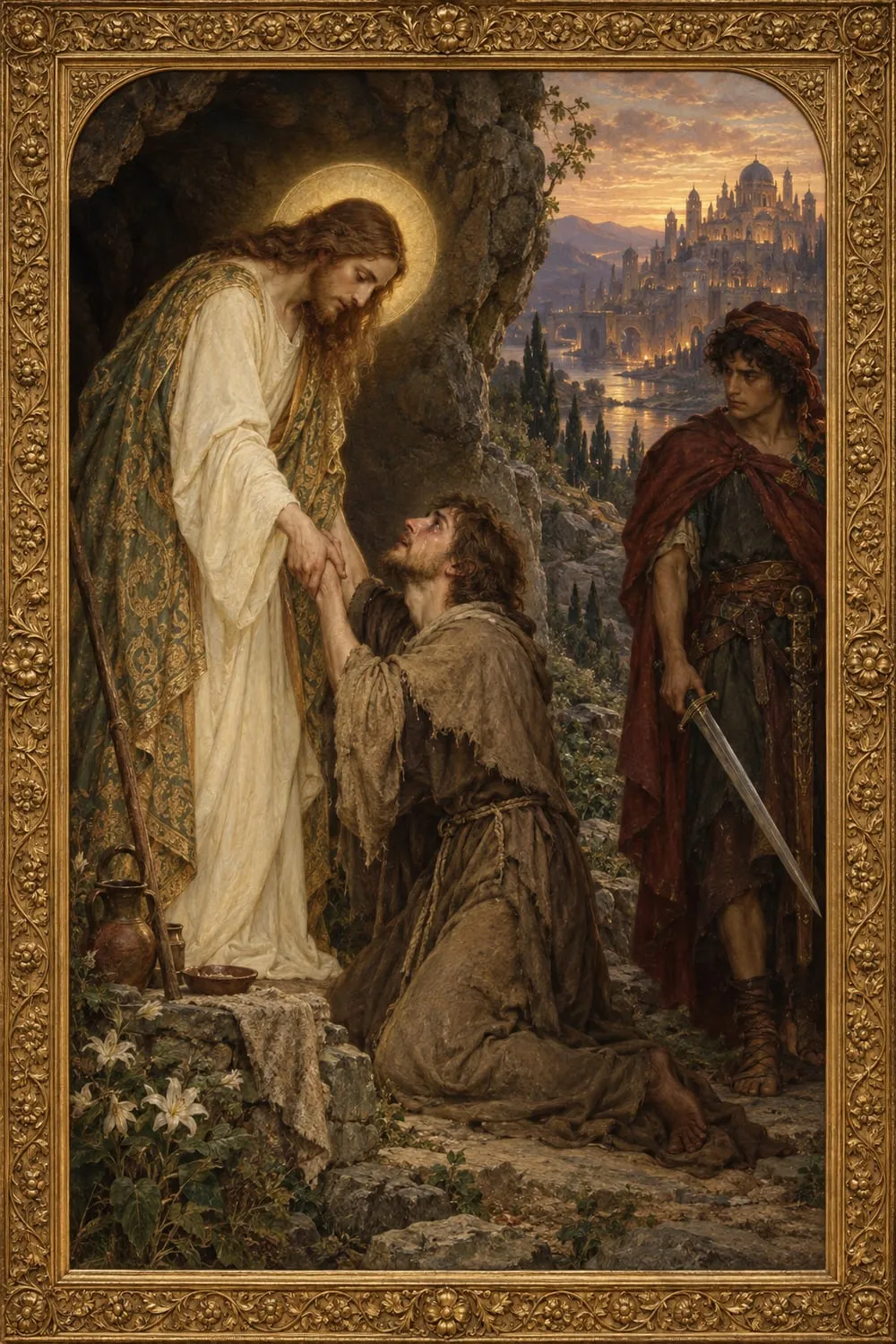
Knowledge of God given away
The Teacher of Wisdom
"He who giveth away wisdom robbeth himself."
Poem in prose
From his childhood he had been as one filled with the perfect knowledge of God, and even while he was yet but a lad many of the saints, as well as certain holy women who dwelt in the free city of his birth, had been stirred to much wonder by the grave wisdom of his answers.
And when his parents had given him the robe and the ring of manhood he kissed them, and left them and went out into the world, that he might speak to the world about God. For there were at that time many in the world who either knew not God at all, or had but an incomplete knowledge of Him, or worshipped the false gods who dwell in groves and have no care of their worshippers.
And he set his face to the sun and journeyed, walking without sandals, as he had seen the saints walk, and carrying at his girdle a leathern wallet and a little water-bottle of burnt clay.
And as he walked along the highway he was full of the joy that comes from the perfect knowledge of God, and he sang praises unto God without ceasing; and after a time he reached a strange land in which there were many cities.
And he passed through eleven cities. And some of these cities were in valleys, and others were by the banks of great rivers, and others were set on hills. And in each city he found a disciple who loved him and followed him, and a great multitude also of people followed him from each city, and the knowledge of God spread in the whole land, and many of the rulers were converted, and the priests of the temples in which there were idols found that half of their gain was gone, and when they beat upon their drums at noon none, or but a few, came with peacocks and with offerings of flesh as had been the custom of the land before his coming.
Yet the more the people followed him, and the greater the number of his disciples, the greater became his sorrow. And he knew not why his sorrow was so great. For he spoke ever about God, and out of the fullness of that perfect knowledge of God which God had Himself given to him.
And one evening he passed out of the eleventh city, which was a city of Armenia, and his disciples and a great crowd of people followed after him; and he went up on to a mountain and sat down on a rock that was on the mountain, and his disciples stood round him, and the multitude knelt in the valley.
And he bowed his head on his hands and wept, and said to his Soul, “Why is it that I am full of sorrow and fear, and that each of my disciples is an enemy that walks in the noonday?” And his Soul answered him and said, “God filled thee with the perfect knowledge of Himself, and thou hast given this knowledge away to others. The pearl of great price thou hast divided, and the vesture without seam thou hast parted asunder. He who giveth away wisdom robbeth himself. He is as one who giveth his treasure to a robber. Is not God wiser than thou art? Who art thou to give away the secret that God hath told thee? I was rich once, and thou hast made me poor. Once I saw God, and now thou hast hidden Him from me.”
And he wept again, for he knew that his Soul spake truth to him, and that he had given to others the perfect knowledge of God, and that he was as one clinging to the skirts of God, and that his faith was leaving him by reason of the number of those who believed in him.
And he said to himself, “I will talk no more about God. He who giveth away wisdom robbeth himself.”
And after the space of some hours his disciples came near him and bowed themselves to the ground and said, “Master, talk to us about God, for thou hast the perfect knowledge of God, and no man save thee hath this knowledge.”
And he answered them and said, “I will talk to you about all other things that are in heaven and on earth, but about God I will not talk to you. Neither now, nor at any time, will I talk to you about God.”
And they were wroth with him and said to him, “Thou hast led us into the desert that we might hearken to thee. Wilt thou send us away hungry, and the great multitude that thou hast made to follow thee?”
And he answered them and said, “I will not talk to you about God.”
And the multitude murmured against him and said to him, “Thou hast led us into the desert, and hast given us no food to eat. Talk to us about God and it will suffice us.”
But he answered them not a word. For he knew that if he spake to them about God he would give away his treasure.
And his disciples went away sadly, and the multitude of people returned to their own homes. And many died on the way.
And when he was alone he rose up and set his face to the moon, and journeyed for seven moons, speaking to no man nor making any answer. And when the seventh moon had waned he reached that desert which is the desert of the Great River. And having found a cavern in which a Centaur had once dwelt, he took it for his place of dwelling, and made himself a mat of reeds on which to lie, and became a hermit. And every hour the Hermit praised God that He had suffered him to keep some knowledge of Him and of His wonderful greatness.
Now, one evening, as the Hermit was seated before the cavern in which he had made his place of dwelling, he beheld a young man of evil and beautiful face who passed by in mean apparel and with empty hands. Every evening with empty hands the young man passed by, and every morning he returned with his hands full of purple and pearls. He was a robber, and robbed the caravans of the merchants.
And the Hermit looked at him and pitied him. But he spoke not a word. For he knew that he who speaks a word loses his faith.
And one morning, as the young man returned with his hands full of purple and pearls, he stopped and frowned and stamped his foot upon the sand, and said to the Hermit: “Why do you look at me ever in this manner as I pass by? What is it that I see in your eyes? For no man has looked at me before in this manner. And the thing is a thorn and a trouble to me.”
And the Hermit answered him and said, “What you see in my eyes is pity. Pity is what looks out at you from my eyes.”
And the young man laughed with scorn, and cried to the Hermit in a bitter voice, and said to him, “I have purple and pearls in my hands, and you have but a mat of reeds on which to lie. What pity should you have for me? And for what reason have you this pity?”
“I have pity for you,” said the Hermit, “because you have no knowledge of God.”
“Is this knowledge of God a precious thing?” asked the young man, and he came close to the mouth of the cavern.
“It is more precious than all the purple and the pearls of the world,” answered the Hermit.
“And have you got it?” said the young Robber, and he came closer still.
“Once, indeed,” answered the Hermit, “I possessed the perfect knowledge of God. But in my foolishness I parted with it, and divided it amongst others. Yet even now is such knowledge as remains to me more precious than purple or pearls.”
And when the young Robber heard this he threw away the purple and the pearls that he was bearing in his hands, and drawing a sharp sword of curved steel he said to the Hermit, “Give me, forthwith this knowledge of God that you possess, or I will surely slay you. Wherefore should I not slay him who has a treasure greater than my treasure?”
And the Hermit spread out his arms and said, “Were it not better for me to go unto the uttermost courts of God and praise Him, than to live in the world and have no knowledge of Him? Slay me if that be your desire. But I will not give away my knowledge of God.”
And the young Robber knelt down and besought him, but the Hermit would not talk to him about God, nor give him his Treasure, and the young Robber rose up and said to the Hermit, “Be it as you will. As for myself, I will go to the City of the Seven Sins, that is but three days’ journey from this place, and for my purple they will give me pleasure, and for my pearls they will sell me joy.” And he took up the purple and the pearls and went swiftly away.
And the Hermit cried out and followed him and besought him. For the space of three days he followed the young Robber on the road and entreated him to return, nor to enter into the City of the Seven Sins.
And ever and anon the young Robber looked back at the Hermit and called to him, and said, “Will you give me this knowledge of God which is more precious than purple and pearls? If you will give me that, I will not enter the city.”
And ever did the Hermit answer, “All things that I have I will give thee, save that one thing only. For that thing it is not lawful for me to give away.”
And in the twilight of the third day they came nigh to the great scarlet gates of the City of the Seven Sins. And from the city there came the sound of much laughter.
And the young Robber laughed in answer, and sought to knock at the gate. And as he did so the Hermit ran forward and caught him by the skirts of his raiment, and said to him: “Stretch forth your hands, and set your arms around my neck, and put your ear close to my lips, and I will give you what remains to me of the knowledge of God.” And the young Robber stopped.
And when the Hermit had given away his knowledge of God, he fell upon the ground and wept, and a great darkness hid from him the city and the young Robber, so that he saw them no more.
And as he lay there weeping he was ware of One who was standing beside him; and He who was standing beside him had feet of brass and hair like fine wool. And He raised the Hermit up, and said to him: “Before this time thou hadst the perfect knowledge of God. Now thou shalt have the perfect love of God. Wherefore art thou weeping?” And he kissed him.
In brief
SummaryA young man filled with 'the perfect knowledge of God' goes out to teach it and wins followers in eleven cities, yet the more he gives, the sadder he grows. His Soul warns that 'He who giveth away wisdom robbeth himself', so he falls silent, abandons his followers and becomes a hermit. A young robber who passes his cave demands his knowledge at sword-point, and the Hermit refuses, until the robber is about to enter the City of the Seven Sins. Then he gives away all he has left, and falls weeping, and a divine figure raises him: now he shall have 'the perfect love of God'.
Key themes
"He who giveth away wisdom robbeth himself."
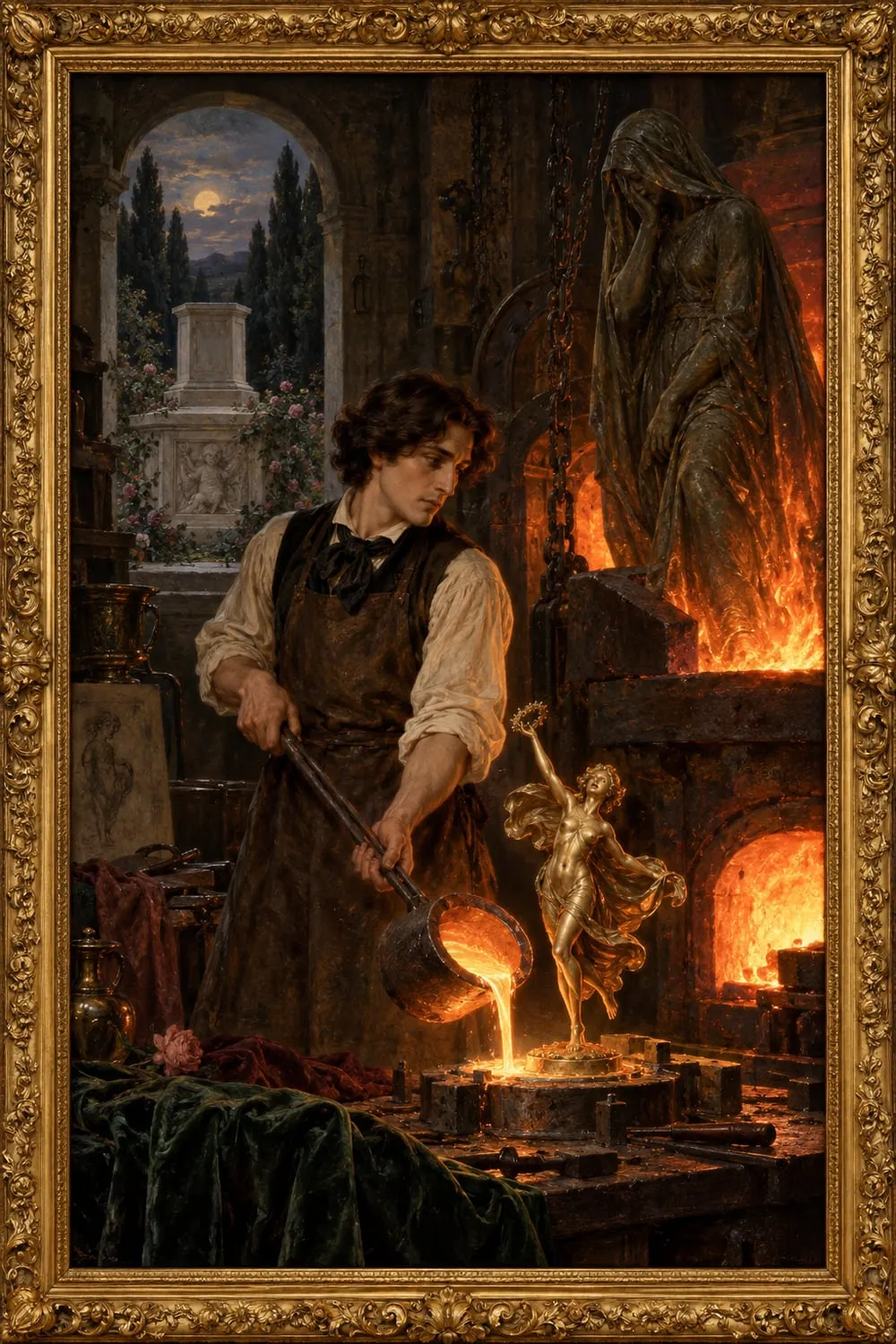
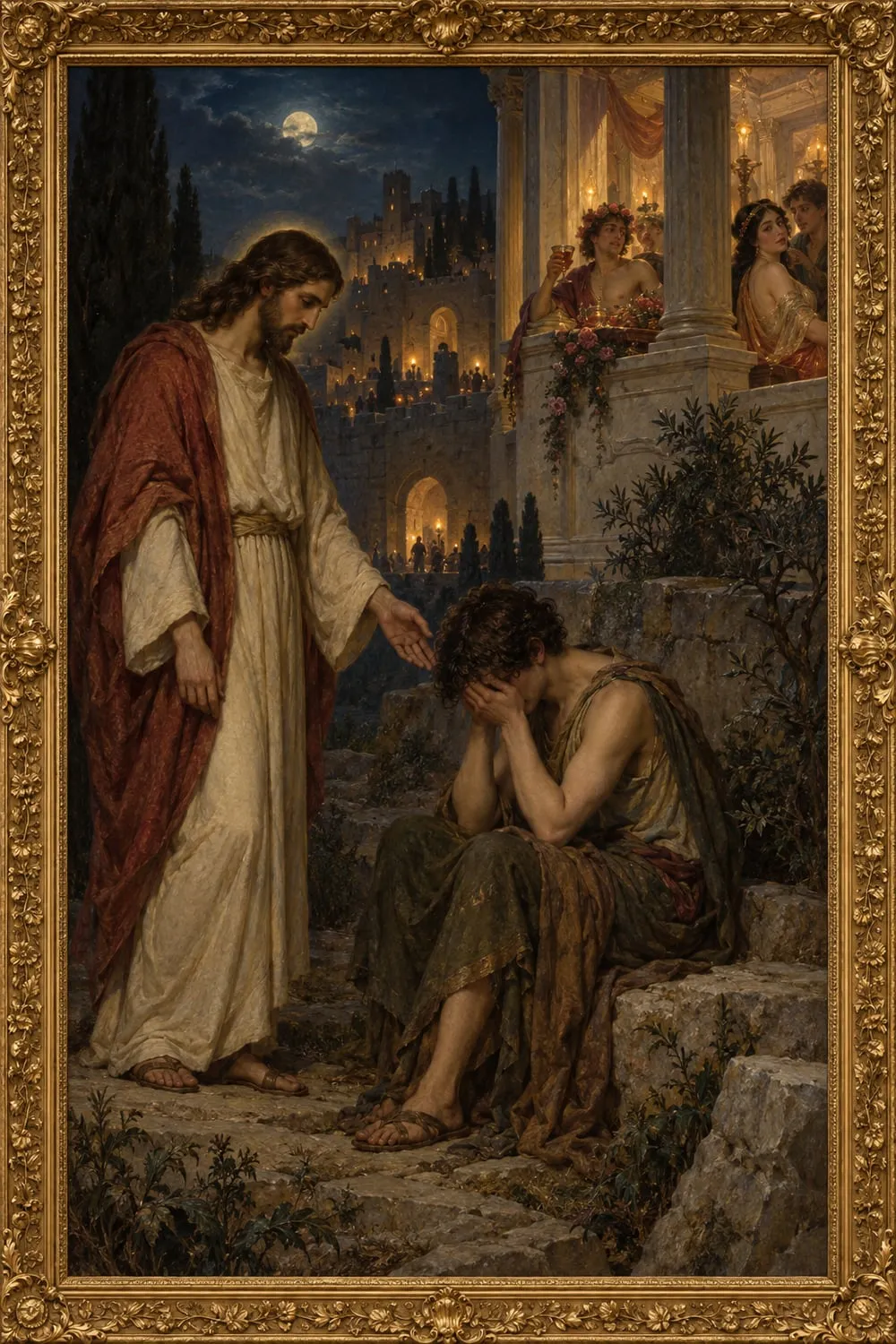
Summary
From childhood the hero has had 'the perfect knowledge of God'. Grown to manhood, he goes out barefoot to teach it, and in eleven cities he wins a disciple in each and great crowds besides, while the priests of the idols lose half their gain. Yet his sorrow grows. On a mountain beyond the eleventh city he asks his Soul why, and the Soul answers that he has divided 'the pearl of great price': 'He who giveth away wisdom robbeth himself.' He refuses to speak of God again. His disciples go away sadly, and of the hungry multitude sent home, many die on the way.
After seven moons of silence he becomes a Hermit in a desert cavern where a Centaur once lived. A young robber 'of evil and beautiful face' passes each evening and returns each morning with purple and pearls. When the robber demands to know what he sees in the Hermit's eyes, the Hermit says it is pity, for the robber has no knowledge of God, more precious than purple and pearls. The robber draws a sword and demands it; the Hermit offers his life but not his knowledge, and the robber sets off for the City of the Seven Sins.
For three days the Hermit follows, begging him to turn back, but refuses the one thing he asks. At the scarlet gates, as the robber moves to knock, the Hermit catches his raiment and gives him 'what remains to me of the knowledge of God'. The robber stops. The Hermit falls weeping in darkness, until One with 'feet of brass and hair like fine wool' raises him: 'Now thou shalt have the perfect love of God.'
Characters
The Teacher, later the Hermit
Keeper of divine knowledge
Filled from childhood with 'the perfect knowledge of God', he preaches through eleven cities, then grows sorrowful and falls silent on his Soul's advice. As a hermit he refuses to share what remains of his knowledge until he gives it all to save a young robber, and receives the perfect love of God.
His Soul
The voice of warning
The Teacher's Soul, which answers when he asks why he is sad. It tells him he has divided 'the pearl of great price' and parted 'the vesture without seam', warns that giving away wisdom robs the giver, and complains, 'I was rich once, and thou hast made me poor.'
The young Robber
Evil and beautiful
A young man 'of evil and beautiful face' who robs the caravans of merchants and returns each morning with purple and pearls. Troubled by the Hermit's pitying gaze, he demands the knowledge of God at sword-point, then sets off for the City of the Seven Sins, until the Hermit's last gift stops him at the gate.
The disciples and the multitude
Followers sent away
A disciple from each of the eleven cities, and great crowds besides, follow the Teacher. When he will not speak of God they are angry, complaining that he has led them into the desert and given them no food. They go home sadly, and many die on the way.
The One beside him
The divine visitor
The figure who stands beside the weeping Hermit, with 'feet of brass and hair like fine wool', words the Book of Revelation uses of Christ. He raises the Hermit up, tells him he shall now have 'the perfect love of God', and kisses him.
Themes
Knowledge and love
The story ends by setting two gifts side by side: 'Before this time thou hadst the perfect knowledge of God. Now thou shalt have the perfect love of God.' The Hermit's knowledge was a thing to hoard, shrinking each time he shared it. Love comes only when he gives the last of it away to save one sinner, so the loss he feared becomes the way to something greater.
Wisdom as treasure
The Soul's warning, 'He who giveth away wisdom robbeth himself', treats knowledge of God as property, 'the pearl of great price' that must not be divided. The Hermit accepts this and falls silent, and the cost is heavy: his followers are sent away hungry, 'And many died on the way.' The robber, too, asks whether this knowledge is 'a precious thing'. The ending overturns their shared reckoning.
Pity for the sinner
In his silence the Hermit keeps one bond with the world: pity. He pities the young robber 'of evil and beautiful face' without a word, until the robber, troubled, asks what he sees in his eyes. Pity makes him follow the robber for three days and, at the gates of the City of the Seven Sins, give everything away. Compassion, not doctrine, stops the robber and wins the Hermit the love of God.
Context
The Teacher of Wisdom is one of the six Poems in Prose first published together in the Fortnightly Review in July 1894, and much the longest of them. It borrows the language of the Gospels, 'the pearl of great price', 'the vesture without seam', a hungry multitude in the desert, and ends with a figure whose 'feet of brass and hair like fine wool' echo the vision of Christ in the Book of Revelation.
About this edition
- Text: the complete work from Standard Ebooks, released into the public domain (CC0 1.0). We change only the layout.
- Download the EPUB of the whole book it comes from, free, for any e-reader.
- Every quotation and glossary word in these notes is checked against the text.