Christ of lilies, not of wrath
Sonnet: On Hearing the Dies Irae Sung in the Sistine Chapel
"I think it is of Thee the sparrows sing."
Poem
On Hearing the Dies Irae Sung in the Sistine Chapel
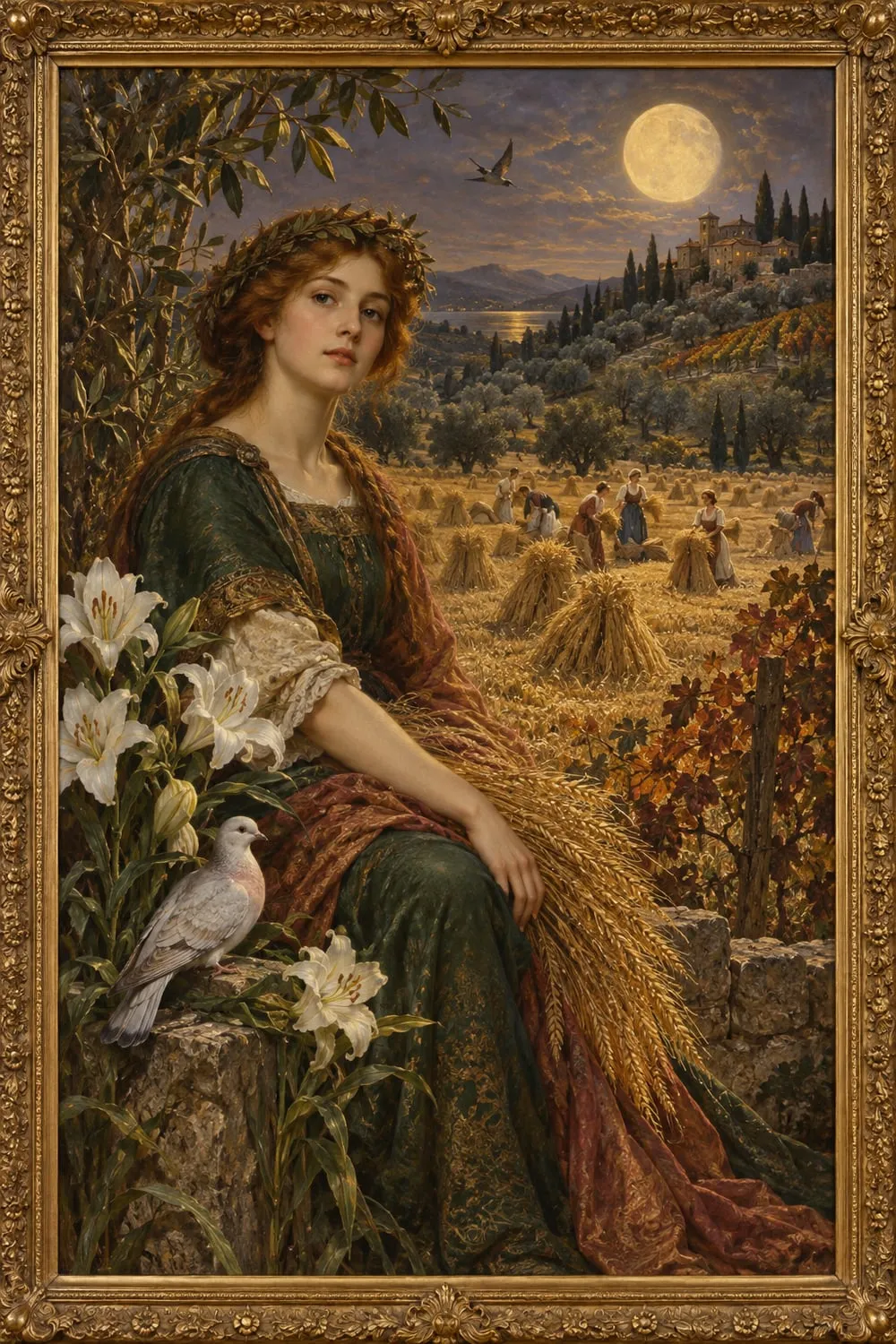
Nay, Lord, not thus! white lilies in the spring,Sad olive-groves, or silver-breasted dove,Teach me more clearly of Thy life and loveThan terrors of red flame and thundering.The hillside vines dear memories of Thee bring:A bird at evening flying to its nestTells me of One who had no place of rest:I think it is of Thee the sparrows sing.Come rather on some autumn afternoon,When red and brown are burnished on the leaves,And the fields echo to the gleaner’s song,Come when the splendid fullness of the moonLooks down upon the rows of golden sheaves,And reap Thy harvest: we have waited long.
In brief
SummaryListening to the Dies Irae, the medieval hymn of the Day of Judgement, in the Sistine Chapel, the speaker rejects its picture of God. 'Nay, Lord, not thus!' he says: lilies, olive groves, doves, vines and a bird flying home at evening teach him more of Christ's life and love than 'terrors of red flame and thundering'. In the last six lines he asks Christ to come at the end not in fire but at harvest, on an autumn afternoon or under a full moon over the sheaves, and to 'reap Thy harvest: we have waited long'.
Key themes
"Nay, Lord, not thus! white lilies in the spring,"

Summary
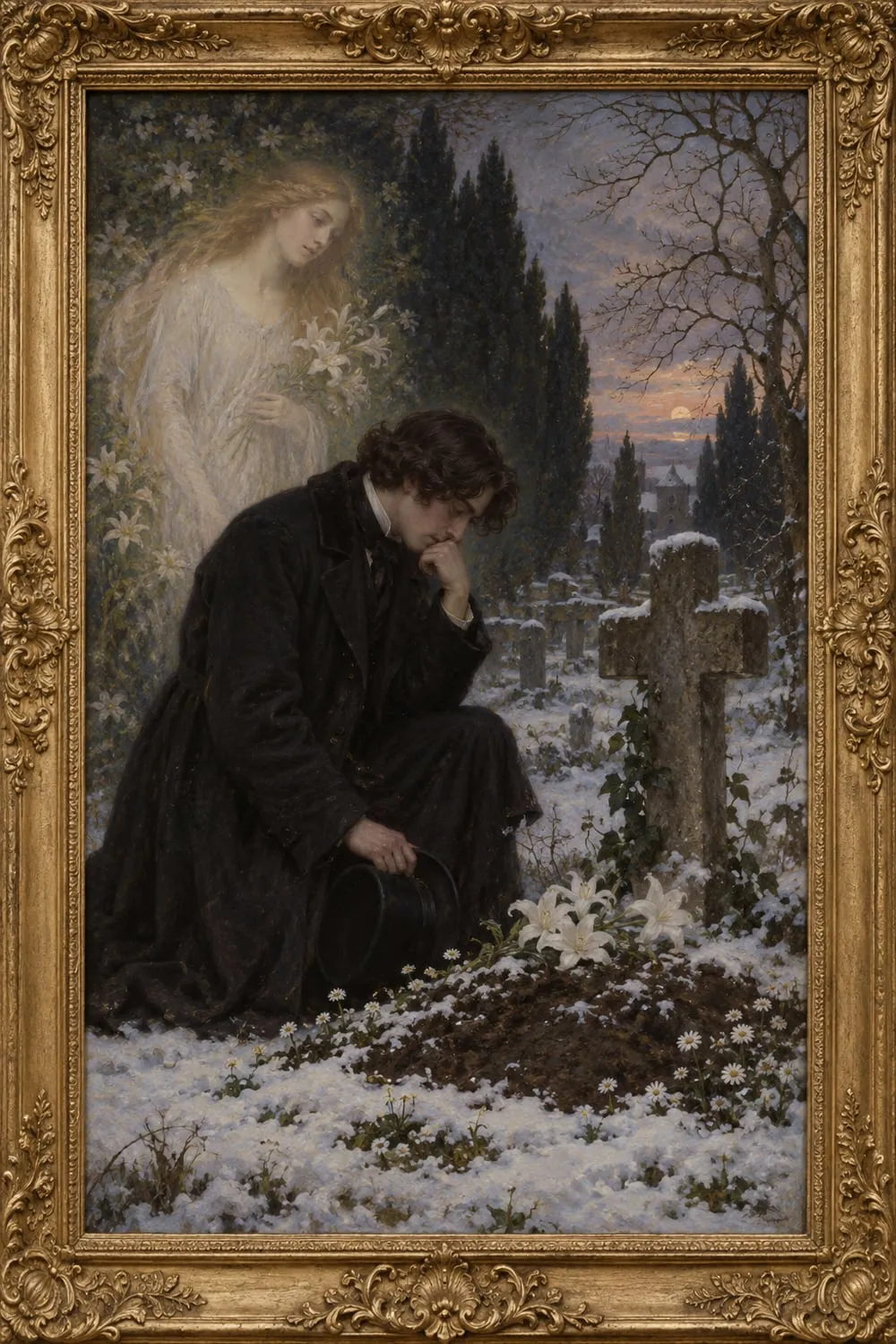
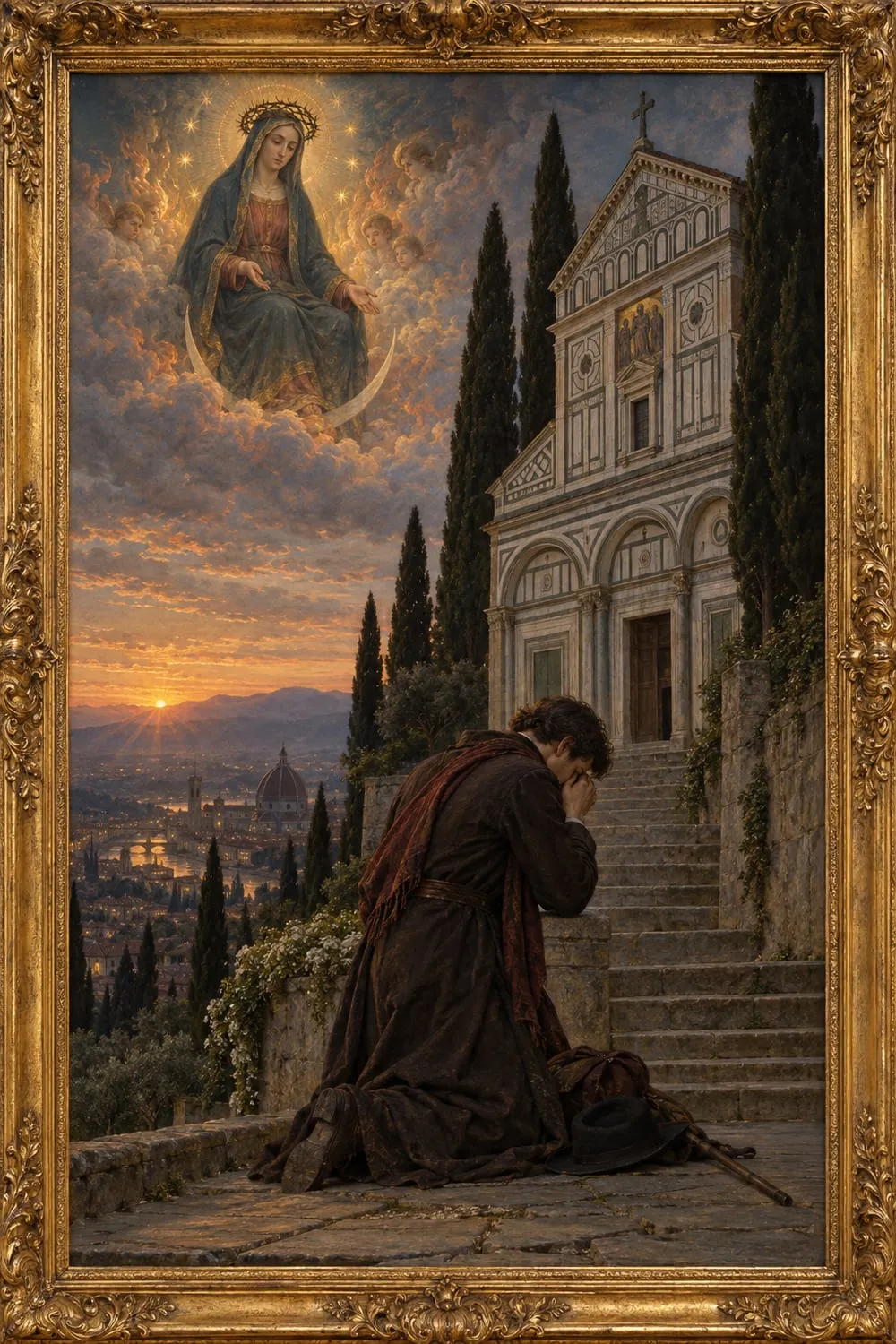
The title places the speaker in the Sistine Chapel, hearing the Dies Irae, the 'Day of Wrath', a Latin hymn about the Last Judgement. The sonnet opens with a protest: 'Nay, Lord, not thus!' Gentle things, 'white lilies in the spring, Sad olive-groves, or silver-breasted dove', teach him more clearly of Christ's life and love than the hymn's 'terrors of red flame and thundering'.
The next lines gather more of these quiet lessons. 'The hillside vines dear memories of Thee bring'; a bird flying to its nest at evening tells him 'of One who had no place of rest'; and he thinks that it is of Christ 'the sparrows sing'. Nature, not the thunder of the hymn, is where he finds his Lord.
The last six lines turn the Judgement into a harvest. The speaker asks Christ to 'Come rather on some autumn afternoon', when red and brown are 'burnished on the leaves' and the fields echo to 'the gleaner's song', or when the full moon looks down 'upon the rows of golden sheaves'. Then He may 'reap Thy harvest'. The final words, 'we have waited long', make the end of the world something longed for rather than feared.
Characters
The speaker
The listener in the chapel
A listener in the Sistine Chapel who is troubled by the Dies Irae's picture of a wrathful Judgement. He answers it with memories of lilies, vines and birds, and asks Christ to come at harvest time instead, admitting that 'we have waited long'.
Christ
The Lord addressed
The 'Lord' to whom the whole sonnet speaks. The speaker knows him best through gentle things and through the Gospel picture of 'One who had no place of rest', and asks him to come not in flame but as a reaper gathering 'Thy harvest'.
Themes
Gentleness against terror
The poem answers one religious picture with another. The hymn offers 'terrors of red flame and thundering'; the speaker prefers lilies, olive groves, a dove and 'hillside vines'. He finds Christ in the images of the Gospels and the countryside, the bird at its nest recalling 'One who had no place of rest'. Love, not fear, is what teaches him 'more clearly'.
The Judgement as harvest
The Dies Irae imagines the last day as wrath. The last six lines recast it as a farming season: 'the gleaner's song', 'the rows of golden sheaves', the full moon of autumn. The command 'reap Thy harvest' borrows the Gospel image of the end of the world as a harvest but strips it of fear, and 'we have waited long' makes it a homecoming.
Liturgy and personal faith
The setting is the Sistine Chapel, at the heart of the Church, and the hymn belongs to its solemn liturgy. Yet the speaker's faith is fed elsewhere: 'The hillside vines dear memories of Thee bring', and 'I think it is of Thee the sparrows sing'. The sonnet quietly prefers a personal, pastoral religion to the one being sung around him.
Context
The sonnet is part of the Rosa Mystica group in Wilde's Poems (1881). The Dies Irae, 'Day of Wrath', is a medieval Latin hymn describing the Last Judgement, long sung in the Requiem Mass for the dead; the Sistine Chapel is the Pope's chapel in the Vatican. The title sets the scene, and the whole sonnet is the speaker's reply to the hymn.
About this edition
- Text: the complete work from Standard Ebooks, released into the public domain (CC0 1.0). We change only the layout.
- Download the EPUB of the whole book it comes from, free, for any e-reader.
- Every quotation and glossary word in these notes is checked against the text.