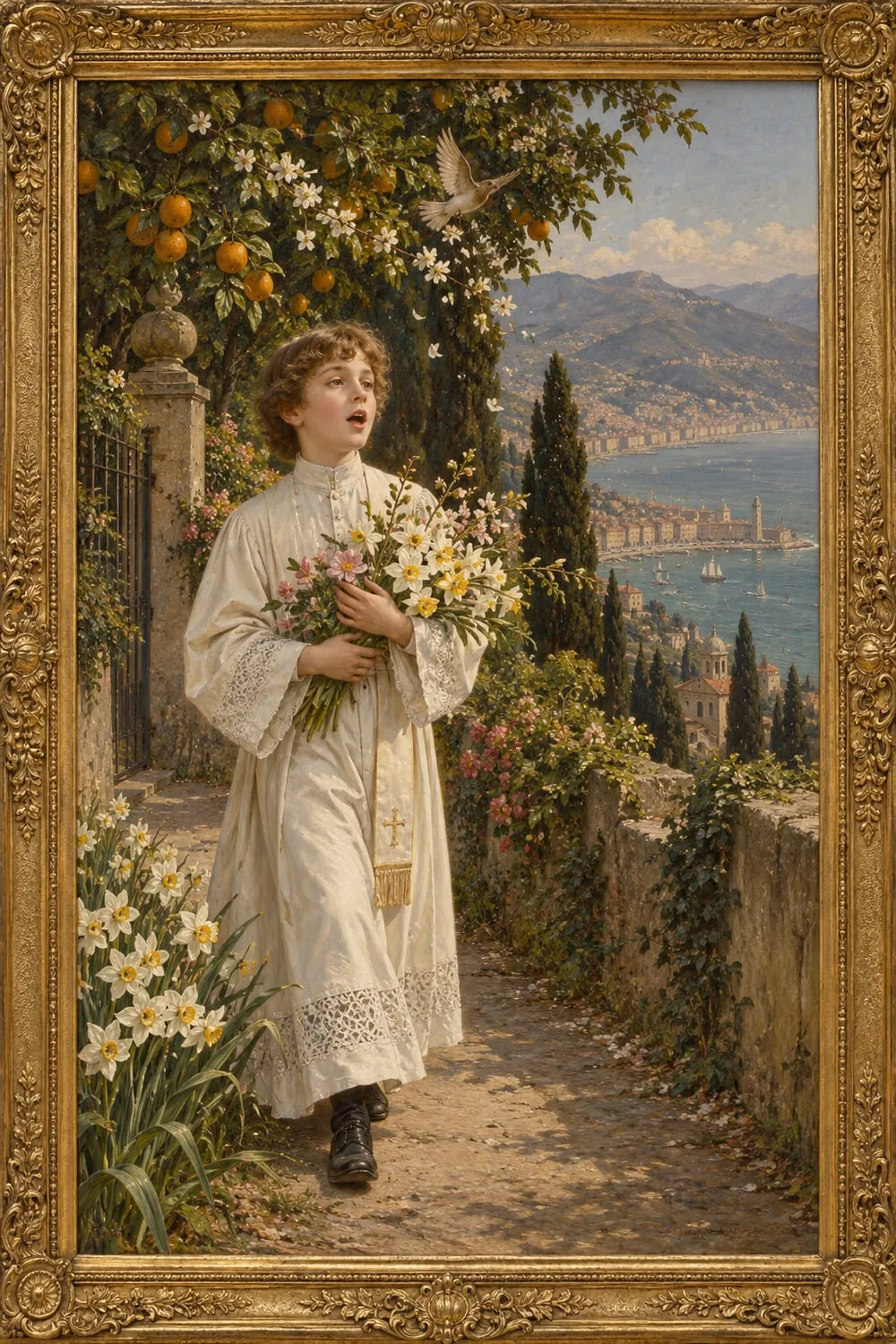
A sunlit garden and a forgotten Cross
Sonnet: Written in Holy Week at Genoa
"Laughed i' the sun, and life seemed very sweet."
Poem
Written in Holy Week at Genoa
I wandered through Scoglietto’s far retreat,The oranges on each o’erhanging sprayBurned as bright lamps of gold to shame the day;Some startled bird with fluttering wings and fleetMade snow of all the blossoms; at my feetLike silver moons the pale narcissi lay:And the curved waves that streaked the great green bayLaughed i’ the sun, and life seemed very sweet.Outside the young boy-priest passed singing clear,“Jesus the son of Mary has been slain,O come and fill His sepulchre with flowers.”Ah, God! Ah, God! those dear Hellenic hoursHad drowned all memory of Thy bitter pain,The Cross, the Crown, the Soldiers and the Spear.
In brief
SummaryDuring Holy Week, the week before Easter that recalls Christ's suffering and death, the speaker wanders through a sunlit garden at Genoa. Oranges burn like golden lamps, a startled bird shakes blossom down like snow, narcissi lie like moons and the waves of the bay laugh in the sun. Then a young priest passes outside, singing that Jesus has been slain and calling on all to fill His tomb with flowers. The speaker is struck with remorse: his 'Hellenic hours' of pleasure had made him forget the Cross, the Crown, the Soldiers and the Spear.
Key themes
"Laughed i' the sun, and life seemed very sweet."
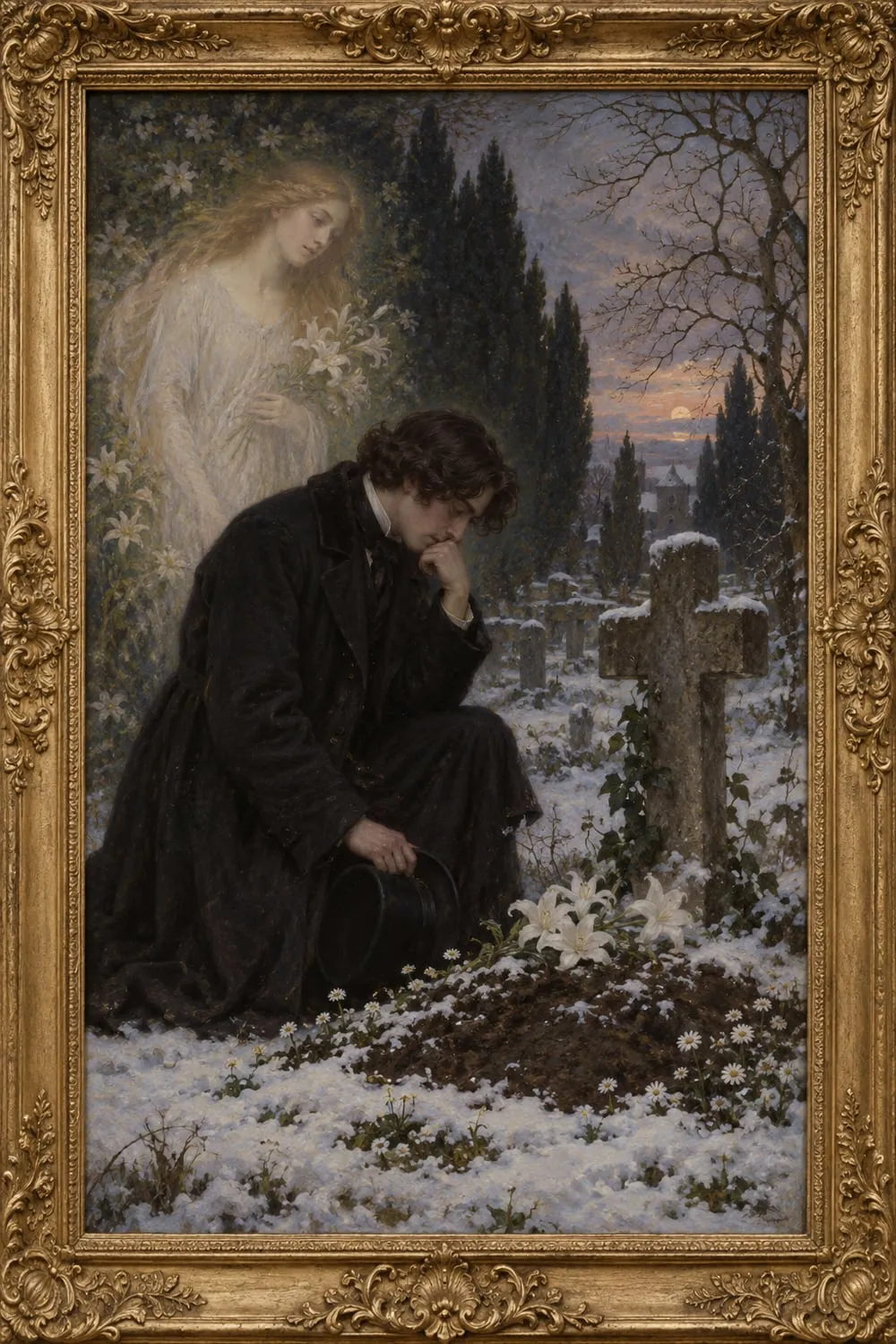
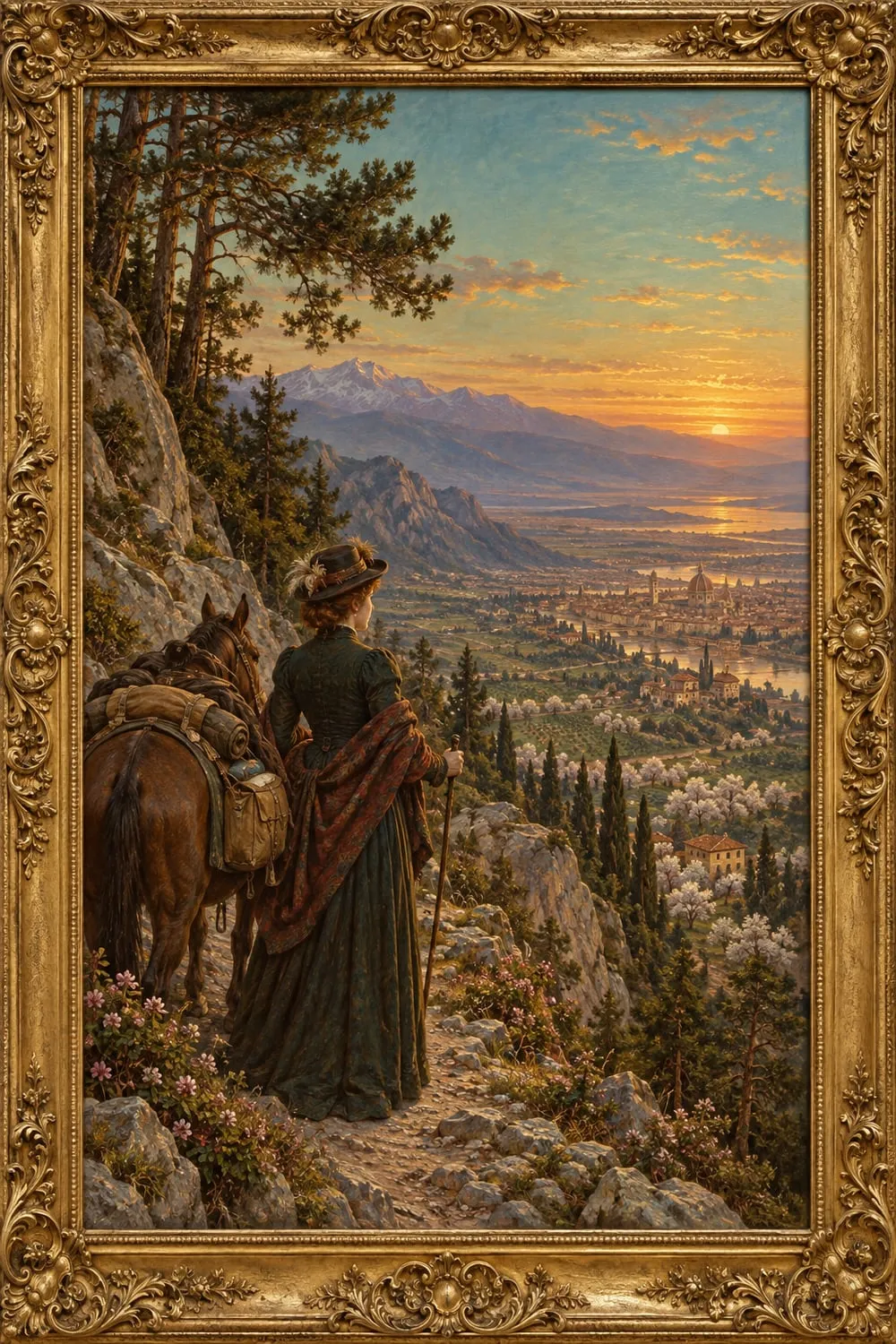
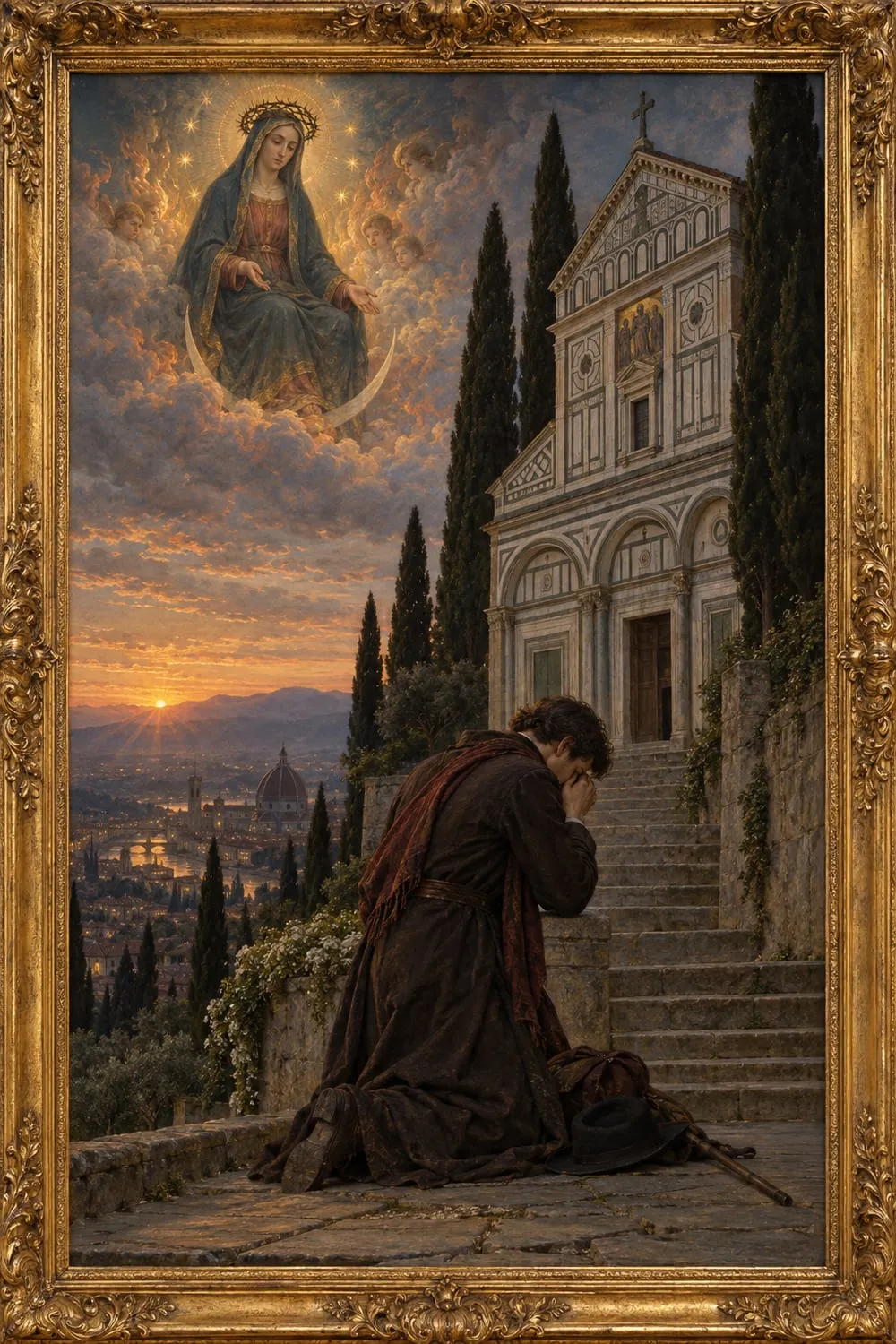
Summary
The first eight lines are a picture of delight. The speaker wanders through 'Scoglietto's far retreat', where the oranges on the overhanging branches 'Burned as bright lamps of gold to shame the day'. A startled bird takes off and 'Made snow of all the blossoms', pale narcissi lie at his feet 'Like silver moons', and the curved waves of 'the great green bay' laugh in the sun. The eighth line sums up his mood: 'life seemed very sweet'.
The last six lines bring a sound from beyond the garden. A young 'boy-priest' passes outside, singing clearly: 'Jesus the son of Mary has been slain, O come and fill His sepulchre with flowers.' The speaker cries 'Ah, God! Ah, God!' and confesses that 'those dear Hellenic hours', the Greek-seeming pleasure of the morning, had 'drowned all memory' of Christ's 'bitter pain'. The final line names the instruments of the Passion as if recovering them one by one: 'The Cross, the Crown, the Soldiers and the Spear.'
The subtitle fixes the moment: Holy Week, at Genoa. The priest's song asks for flowers for a tomb, while the speaker's flowers have been only for his own enjoyment.
Characters
The speaker
The distracted wanderer
A visitor to Genoa who spends a Holy Week morning lost in the beauty of an orange garden by the sea. The boy-priest's song shocks him into remorse, and he turns to God with 'Ah, God! Ah, God!', admitting that pleasure had made him forget Christ's suffering.
The boy-priest
The singer outside
A young priest who passes outside the garden 'singing clear' a Holy Week hymn: 'Jesus the son of Mary has been slain'. He never sees the speaker, but his song breaks the spell of the morning and brings the Passion back to mind.
Christ
The forgotten sufferer
The crucified Christ of Holy Week, the subject of the boy-priest's song and the 'Thee' of the speaker's cry. He appears through the signs of his death, 'The Cross, the Crown, the Soldiers and the Spear', which the speaker's 'Hellenic hours' had driven from his mind.
Themes
Beauty that makes one forget
The garden is so full of colour and life, with oranges 'as bright lamps of gold' and narcissi 'Like silver moons', that the speaker forgets the season entirely. The poem does not condemn the beauty; it records how completely it absorbed him, until those hours 'Had drowned all memory of Thy bitter pain'. The word 'dear' shows that he still loves what he now regrets.
Greek pleasure and Christian sorrow
The speaker calls the garden hours 'Hellenic', linking the sunlit, sensuous morning with ancient Greece. Against it stands Holy Week, remembered through the boy-priest's song and the list of 'The Cross, the Crown, the Soldiers and the Spear'. The two worlds are only a wall apart: the song comes from 'Outside', and it breaks into the garden.
Flowers for the tomb
Flowers run through the sonnet in two senses. In the first half blossom and narcissi are part of the speaker's pleasure, 'snow' and 'silver moons' for him to admire. The priest's song gives flowers a sacred use: 'O come and fill His sepulchre with flowers.' The same natural beauty that distracted the speaker becomes, in the song, an offering to the dead Christ.
Context
The sonnet belongs to the Rosa Mystica group of Wilde's Poems (1881). Its subtitle, 'Written in Holy Week at Genoa', sets it in the Italian port during the week before Easter, when the Church remembers the arrest, trial and crucifixion of Christ. It follows the Italian pattern of the sonnet, with eight lines of description and a turn at the ninth line, where the priest's song breaks in.
About this edition
- Text: the complete work from Standard Ebooks, released into the public domain (CC0 1.0). We change only the layout.
- Download the EPUB of the whole book it comes from, free, for any e-reader.
- Every quotation and glossary word in these notes is checked against the text.