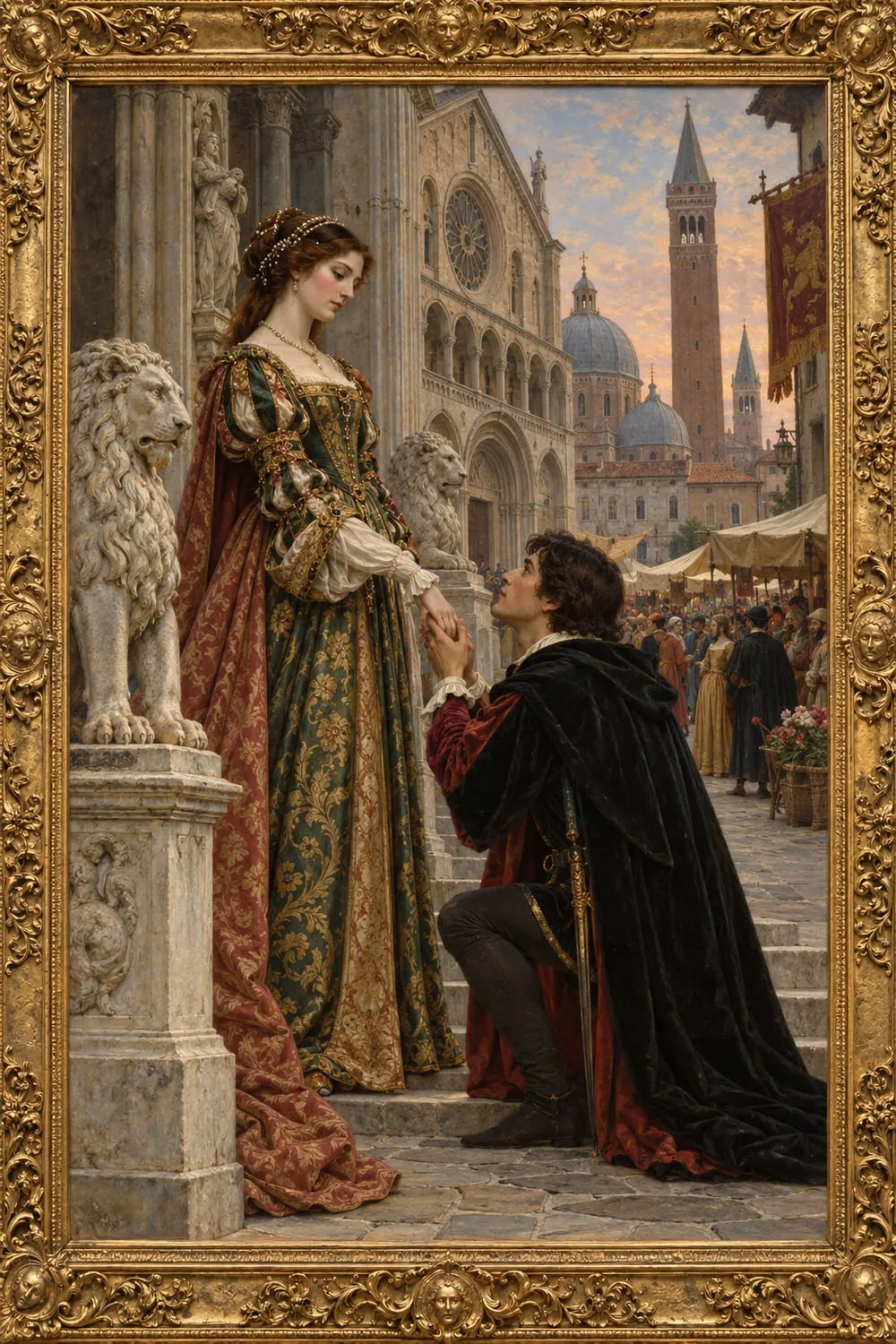
A tragedy of vengeance, love and guilt
The Duchess of Padua
"Love is the sacrament of life"
The story in brief
SummaryGuido Ferranti, a young man raised on a farm near Perugia, comes to Padua to learn the secret of his birth. Count Moranzone tells him that his father, Duke Lorenzo of Parma, was sold to his death by a trusted friend, and that the friend is Simone Gesso, now Duke of Padua. Guido swears to wait for a sign, his father's dagger, and enters the Duke's household. In the same moment he sees the Duke's young wife, Beatrice.
Beatrice pities the starving poor and is treated with contempt by her husband. Guido declares his love and she returns it, but the dagger arrives and he leaves her, saying a barrier lies between them. That night he comes to the palace meaning to spare the Duke as a nobler vengeance. Beatrice has already stabbed her husband in his sleep to remove the barrier. When Guido turns from her in horror, she has him seized as the murderer.
At the trial Beatrice tries to keep Guido silent, but when he is allowed to speak he claims the murder himself to shield her, and is condemned to die that night. She comes to his cell in disguise with her ring and cloak so that he can escape, having first drunk the poison left for him. He refuses to go. They are reconciled, kiss, and she dies; Guido stabs himself with her dagger, and her dead face is found at peace.
Key themes
"We are each our own devil, and we make This world our hell."
Related works
Explore more of Wilde's writing Lady Windermere's FanA young wife suspects her husband of an affair with a woman of doubtful reputation, and one birthday ball and a forgotten fan decide everything. Wilde's first society comedy.Read more
 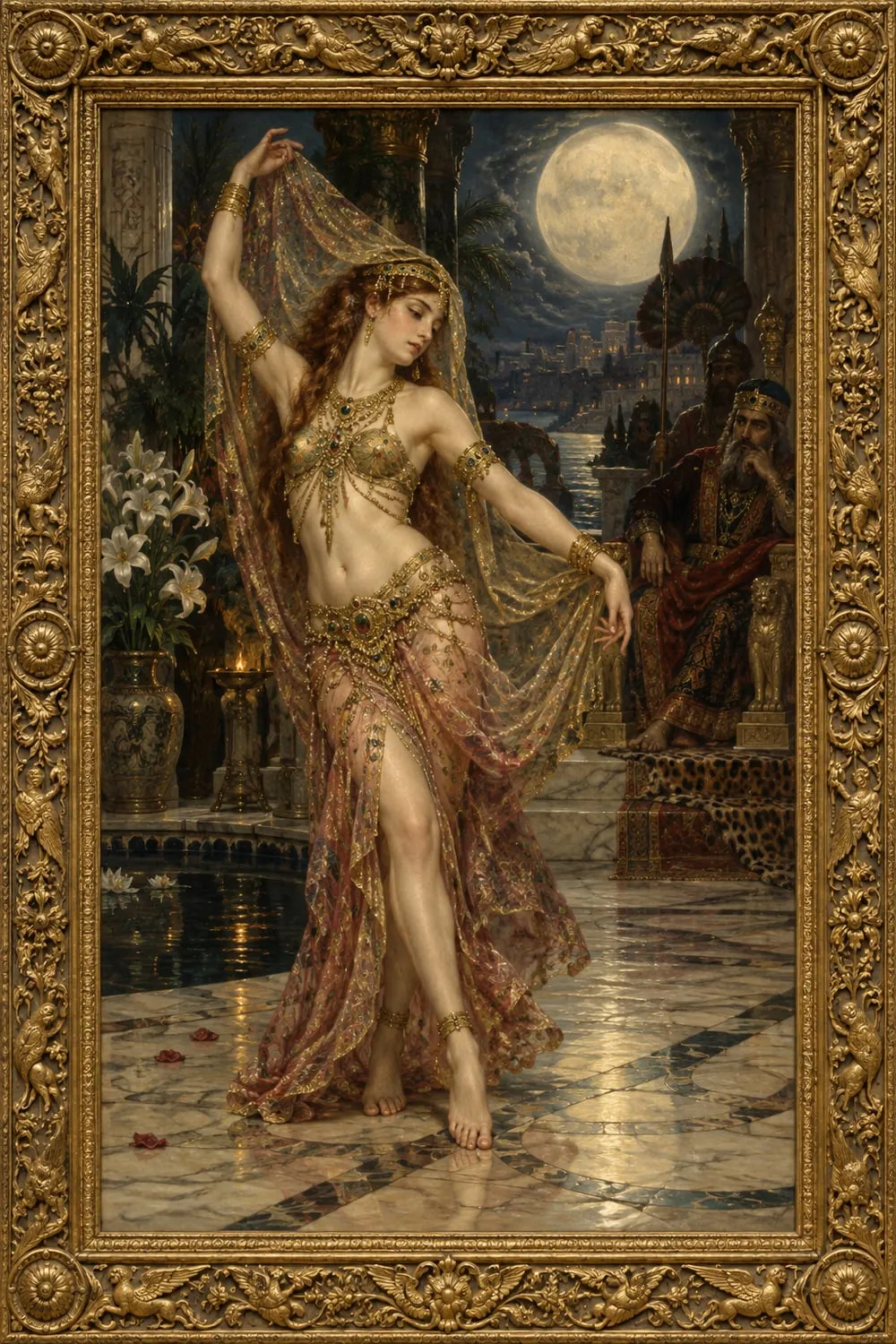 SaloméPrincess Salome dances for her stepfather Herod and demands the head of the prophet who refused her. A one-act tragedy, banned in London, that Wilde wrote in French.Read more
  The Importance of Being EarnestTwo young men invent imaginary people to escape their obligations, and both end up engaged under the name Ernest. Wilde's most famous play and his funniest.Read more
 Context
The Duchess of Padua is a tragedy in five acts, written mostly in blank verse, with the citizens and soldiers speaking prose. It is set in Padua in the latter half of the sixteenth century, and the list of scenes gives a playing time for each act, from twenty-five minutes for the market place to thirty-six for the palace.
Wilde wrote the play in Paris in 1883 for the American actress Mary Anderson, who turned it down.
It was first performed at the Broadway Theatre in New York in January 1891, under the title Guido Ferranti and without Wilde's name. This text follows the Methuen edition of 1916.
A blank-verse tragedy written in Paris in 1883 and first performed in New York in 1891 under the title Guido Ferranti.
About this edition
- Text: Methuen & Co., 1916. Public domain. We change only the layout.
- Audiobook: a full-cast reading by volunteers for LibriVox, in the public domain.
- Every quotation and glossary word in these notes is checked against the text.